Center of Gerontology and Geriatrics, West China Hospital, Sichuan University, Chengdu, China.
Clinical Research Center for Respiratory Diseases, West China Hospital, Sichuan University, Chengdu, China.
Int J Med Sci. 2021 Mar 25;18(10):2228-2234. doi: 10.7150/ijms.56928. eCollection 2021.
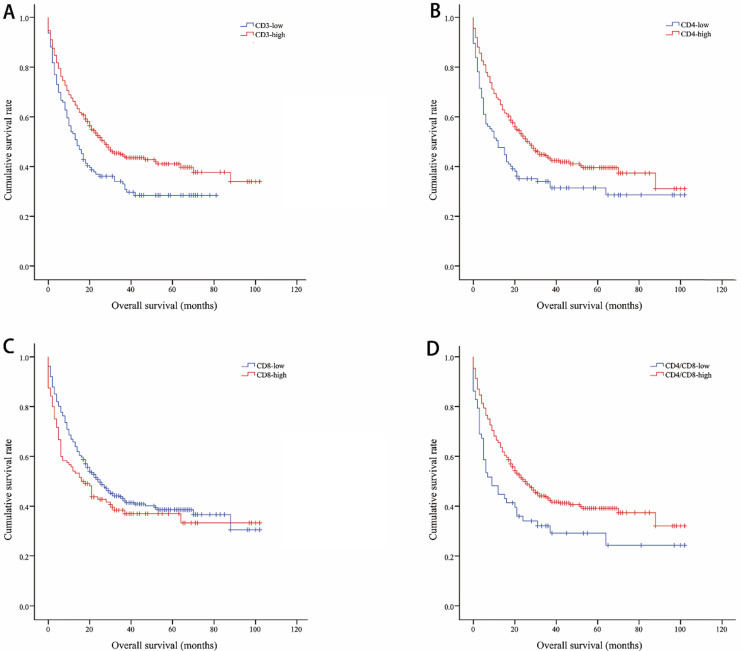
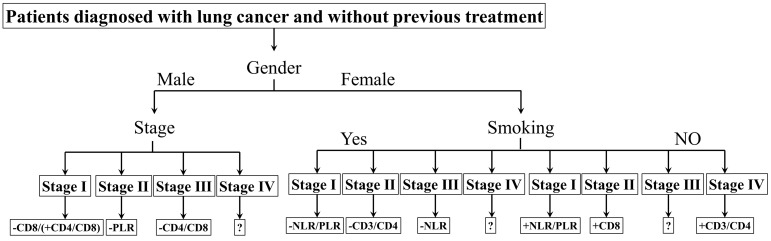
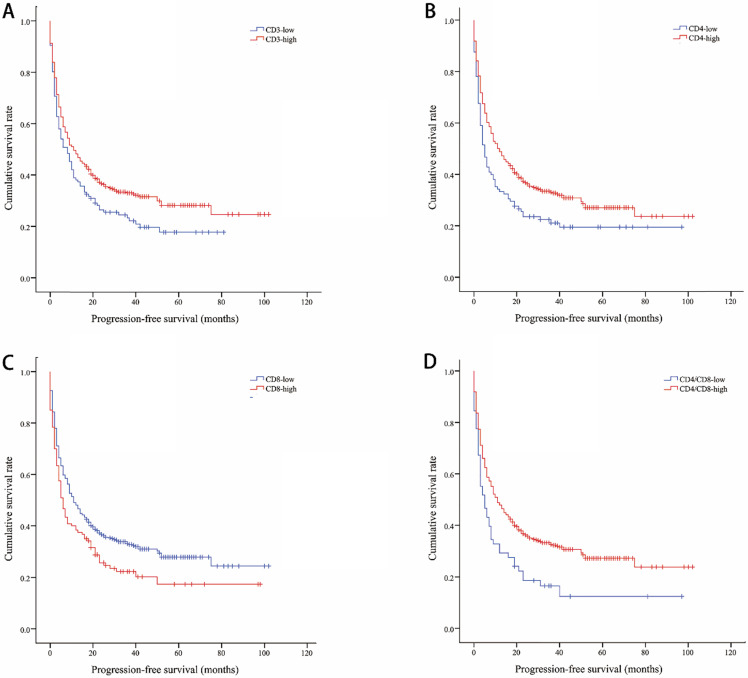
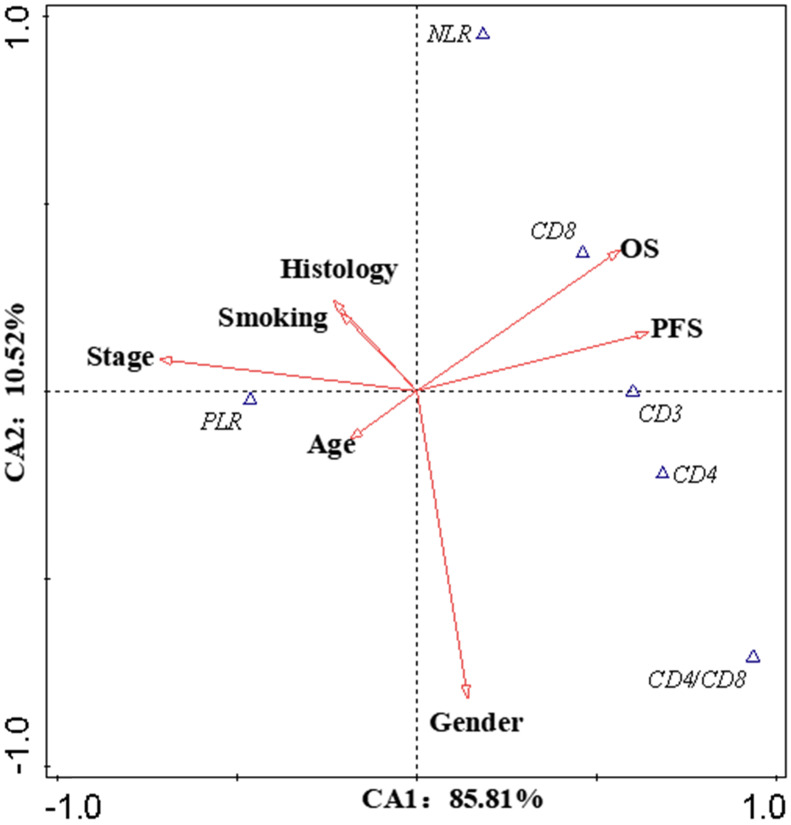
It has been shown that the prognosis of malignant tumors was closely related to the composition and function of immune system, which was associated with genomic features. However, the prognostic value of peripheral T lymphocyte subsets and its relationship with genomic features in lung cancer has not been analyzed extensively. Therefore, this study was intended to evaluate the relationship between lymphocyte subsets and the prognosis and genomic features of lung cancer. 598 lung cancer patients with complete data were included in this study between 2011 and 2018. Kaplan-Meier method and Pearson analyses were conducted to study the prognostic value of CD3+, CD4+, CD8+ T lymphocytes and the rate of CD4/CD8. Patients with mutation has lower mean percentage of CD8+ lymphocytes than patients with wild-type (24.71 versus 26.62, respectively, =0.041). Patients with high CD3 had better OS than those with low (27 versus 14 months, =0.002). Patients with higher CD4 and CD4/CD8 rate had longer OS than with lower (27 versus 12 months, =0.002; 25 versus 9 months, =0.008, respectively). Patients with high CD8 had poor PFS than low group (6 versus 11 months, =0.009). There was a negative correlation between CD3+ and CD4+ cells and OS in smoking stage Ⅱ female lung cancer patients (PCC = 0.626, <0.05; PCC = 0.534, <0.05, respectively). In stage Ⅰ male lung cancer patients, CD8+T cell is negatively correlated with OS and PFS (PCC = 0.295, <0.05; PCC = 0.280, <0.05, respectively) Lung cancer patients with mutation had lower percentage of CD8+ lymphocytes. Lymphocyte subsets might be potential prognostic biomarkers of lung cancer, but they are affected by gender and tumor stage.
已经表明,恶性肿瘤的预后与免疫系统的组成和功能密切相关,而免疫系统与基因组特征有关。然而,外周 T 淋巴细胞亚群的预后价值及其与肺癌基因组特征的关系尚未得到广泛分析。因此,本研究旨在评估淋巴细胞亚群与肺癌的预后和基因组特征的关系。
本研究纳入了 2011 年至 2018 年间的 598 例具有完整数据的肺癌患者。采用 Kaplan-Meier 法和 Pearson 分析方法研究 CD3+、CD4+、CD8+T 淋巴细胞的预后价值及 CD4/CD8 比值。结果显示,与野生型相比, 突变患者的 CD8+淋巴细胞平均百分比较低(分别为 24.71%和 26.62%,=0.041)。CD3 较高的患者 OS 优于 CD3 较低的患者(27 个月与 14 个月,=0.002)。CD4 和 CD4/CD8 比值较高的患者 OS 长于 CD4 和 CD4/CD8 比值较低的患者(27 个月与 12 个月,=0.002;25 个月与 9 个月,=0.008)。CD8 较高的患者 PFS 短于 CD8 较低的患者(6 个月与 11 个月,=0.009)。在吸烟的Ⅱ期女性肺癌患者中,CD3+和 CD4+细胞与 OS 呈负相关(PCC = 0.626,<0.05;PCC = 0.534,<0.05)。在Ⅰ期男性肺癌患者中,CD8+T 细胞与 OS 和 PFS 呈负相关(PCC = 0.295,<0.05;PCC = 0.280,<0.05)。 突变的肺癌患者 CD8+淋巴细胞的百分比较低。淋巴细胞亚群可能是肺癌潜在的预后生物标志物,但它们受性别和肿瘤分期的影响。