Yang Xinting, Sun Jiahong, Zhao Guiping, Li Wei, Tan Xiaodong, Zheng Maiqing, Feng Furong, Liu Dawei, Wen Jie, Liu Ranran
State Key Laboratory of Animal Nutrition, Key Laboratory of Animal (Poultry) Genetics Breeding and Reproduction, Ministry of Agriculture, Institute of Animal Sciences, Chinese Academy of Agricultural Sciences, Beijing, China.
Foshan Gaoming Xinguang Agricultural and Animal Industrials Corporation, Foshan, China.
Front Genet. 2021 Mar 30;12:645107. doi: 10.3389/fgene.2021.645107. eCollection 2021.
Carcass traits are crucial characteristics of broilers. However, the underlying genetic mechanisms are not well understood. In the current study, significant loci and major-effect candidate genes affecting nine carcass traits related to meat production were analyzed in 873 purebred broilers using an imputation-based genome-wide association study.
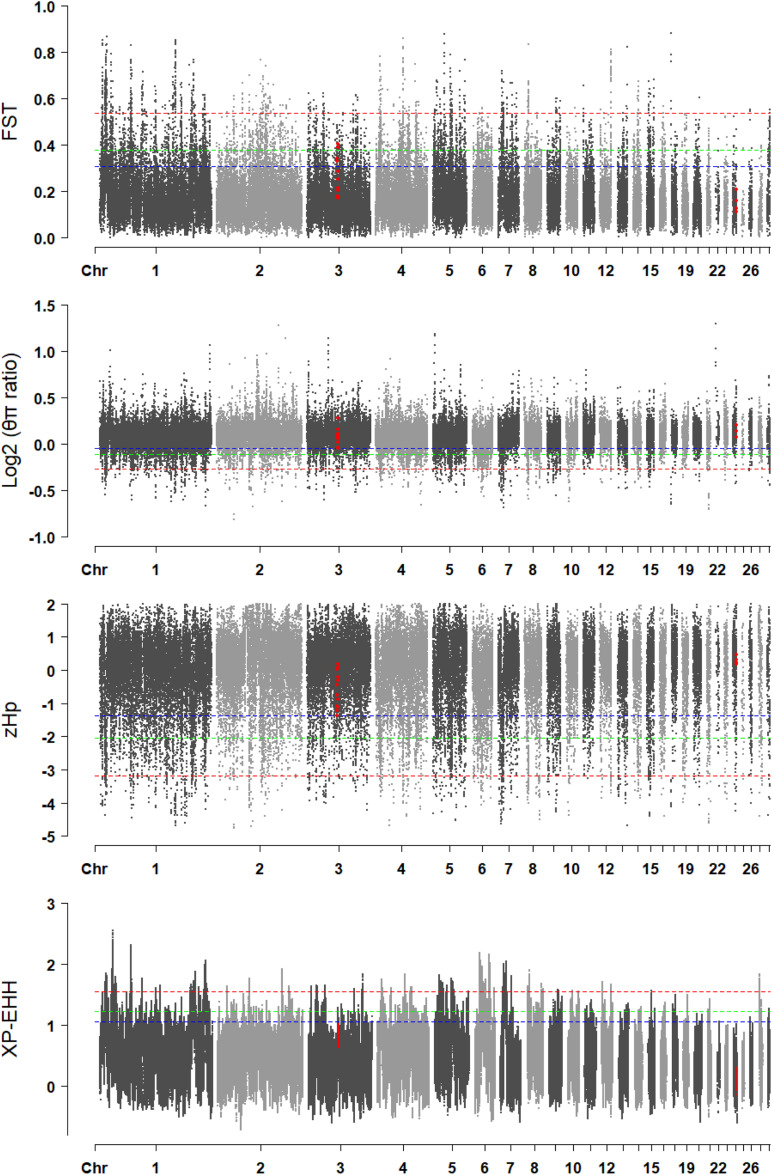
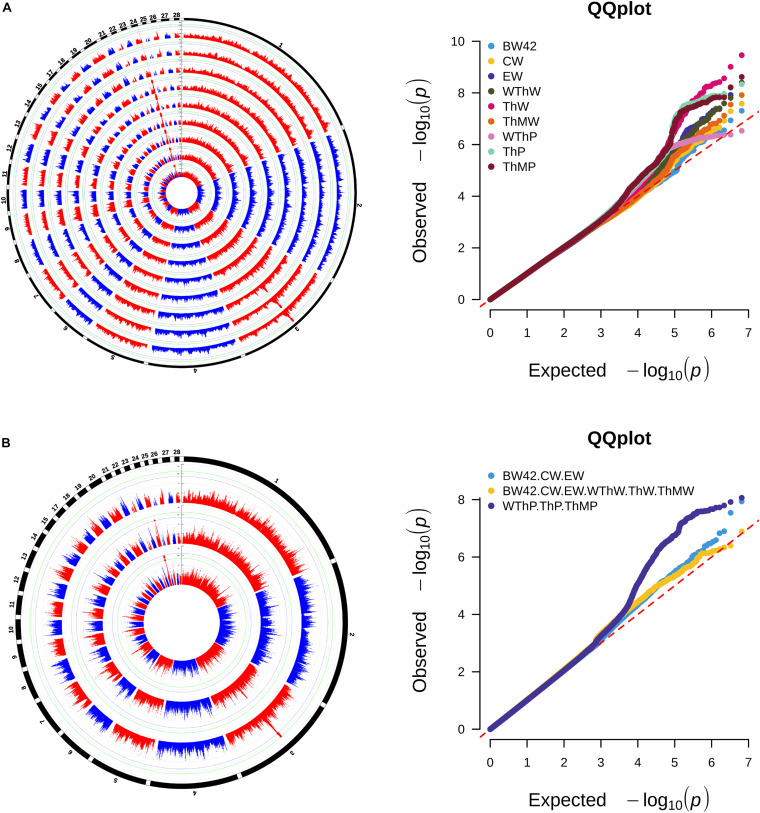
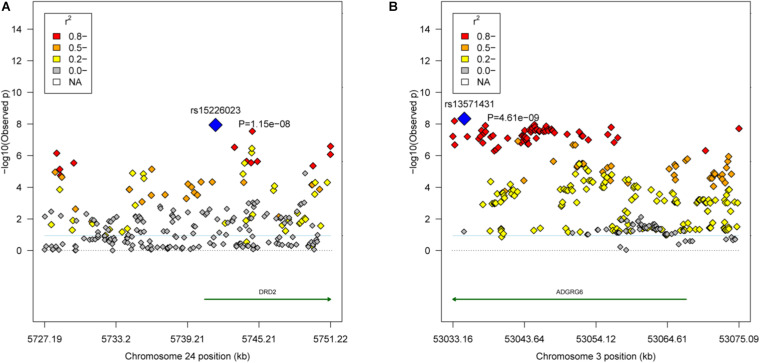
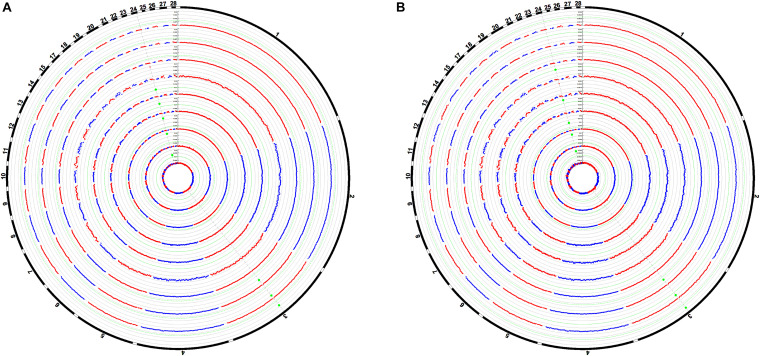
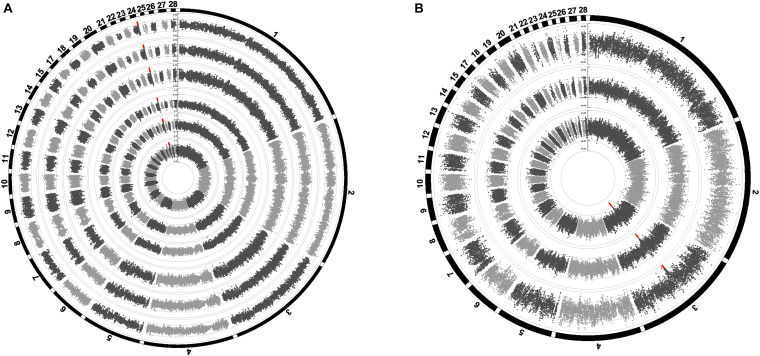
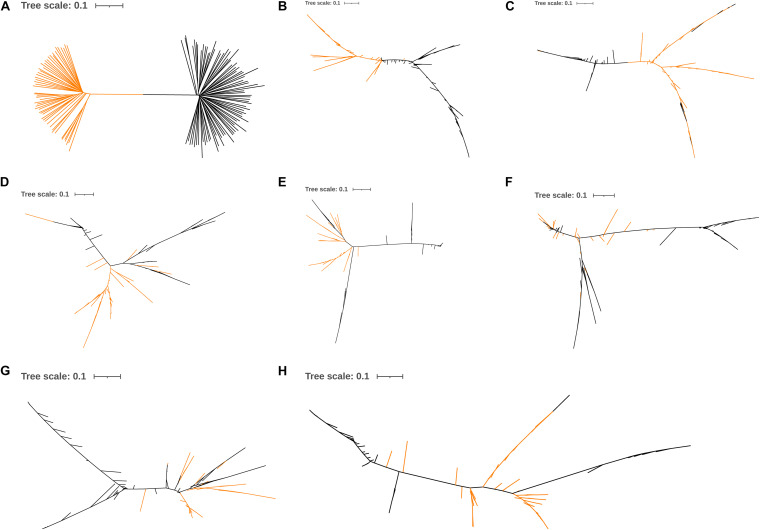
The heritability estimates of nine carcass traits, including carcass weight, thigh muscle weight, and thigh muscle percentage, were moderate to high and ranged from 0.21 to 0.39. Twelve genome-wide significant SNPs and 118 suggestively significant SNPs of 546,656 autosomal variants were associated with carcass traits. All SNPs for six weight traits (body weight at 42 days of age, carcass weight, eviscerated weight, whole thigh weight, thigh weight, and thigh muscle weight) were clustered around the 24.08 Kb region (GGA24: 5.73-5.75 Mb) and contained only one candidate gene (). The most significant SNP, rs15226023, accounted for 4.85-7.71% of the estimated genetic variance of the six weight traits. The remaining SNPs for carcass composition traits (whole thigh percentage and thigh percentage) were clustered around the 42.52 Kb region (GGA3: 53.03-53.08 Mb) and contained only one candidate gene (). The most significant SNP in this region, rs13571431, accounted for 11.89-13.56% of the estimated genetic variance of two carcass composition traits. Some degree of genetic differentiation in between large and small breeds was observed.
We identified one 24.08 Kb region for weight traits and one 42.52 Kb region for thigh-related carcass traits. was the major-effect candidate gene for weight traits, and was the major-effect candidate gene for carcass composition traits. Our results supply essential information for causative mutation identification of carcass traits in broilers.
屠体性状是肉鸡的关键特征。然而,其潜在的遗传机制尚未得到充分了解。在本研究中,利用基于填充的全基因组关联研究,对873只纯种肉鸡中影响与肉类生产相关的9种屠体性状的显著位点和主要效应候选基因进行了分析。
包括屠体重、大腿肌肉重和大腿肌肉百分比在内的9种屠体性状的遗传力估计值为中度到高度,范围在0.21至0.39之间。546,656个常染色体变异中的12个全基因组显著单核苷酸多态性(SNP)和1个118个暗示性显著SNP与屠体性状相关。6个重量性状(42日龄体重、屠体重、去内脏重、全大腿重、大腿重和大腿肌肉重)的所有SNP都聚集在24.08 Kb区域(鸡24号染色体:5.73 - 5.75 Mb)周围,且仅包含一个候选基因()。最显著的SNP,rs15226023,占6个重量性状估计遗传方差的4.85 - 7.71%。其余与屠体组成性状(全大腿百分比和大腿百分比)相关的SNP聚集在42.52 Kb区域(鸡3号染色体:53.03 - 53.08 Mb)周围,且仅包含一个候选基因()。该区域最显著的SNP,rs13571431,占两个屠体组成性状估计遗传方差的11.89 - 13.56%。在大小品种之间观察到了一定程度的遗传分化。
我们确定了一个与重量性状相关的24.08 Kb区域和一个与大腿相关屠体性状相关的42.52 Kb区域。()是重量性状的主要效应候选基因,()是屠体组成性状的主要效应候选基因。我们的结果为肉鸡屠体性状致病突变的鉴定提供了重要信息。