Tse Hubert M, Gardner Graeme, Dominguez-Bendala Juan, Fraker Christopher A
Department of Microbiology, The University of Alabama at Birmingham, Birmingham, AL, United States.
Department of Surgery, Diabetes Research Institute, Leonard M. Miller School of Medicine, University of Miami, Coral Gables, FL, United States.
Front Bioeng Biotechnol. 2021 Mar 30;9:634403. doi: 10.3389/fbioe.2021.634403. eCollection 2021.
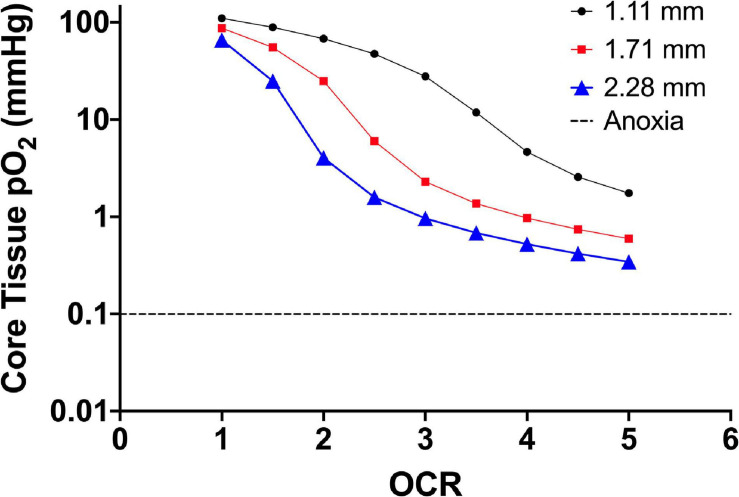
Cell culture typically employs inexpensive, disposable plasticware, and standard humidified CO/room air incubators (5% CO, ∼20% oxygen). These methods have historically proven adequate for the maintenance of viability, function, and proliferation of many cell types, but with broad variation in culture practices. With technological advances it is becoming increasingly clear that cell culture is not a "one size fits all" procedure. Recently, there is a shift toward comprehension of the individual physiological niches of cultured cells. As scale-up production of single cell and 3D aggregates for therapeutic applications has expanded, researchers have focused on understanding the role of many environmental metabolites/forces on cell function and viability. Oxygen, due to its role in cell processes and the requirement for adequate supply to maintain critical energy generation, is one such metabolite gaining increased focus. With the advent of improved sensing technologies and computational predictive modeling, it is becoming evident that parameters such as cell seeding density, culture media height, cellular oxygen consumption rate, and aggregate dimensions should be considered for experimental reproducibility. In this review, we will examine the role of oxygen in 3D cell culture with particular emphasis on primary islets of Langerhans and stem cell-derived insulin-producing SC-β cells, both known for their high metabolic demands. We will implement finite element modeling (FEM) to simulate historical and current culture methods in referenced manuscripts and innovations focusing on oxygen distribution. Our group and others have shown that oxygen plays a key role in proliferation, differentiation, and function of these 3D aggregates. Their culture in plastic consistently results in core regions of hypoxia/anoxia exacerbated by increased media height, aggregate dimensions, and oxygen consumption rates. Static gas permeable systems ameliorate this problem. The use of rotational culture and other dynamic culture systems also have advantages in terms of oxygen supply but come with the caveat that these endocrine aggregates are also exquisitely sensitive to mechanical perturbation. As recent work demonstrates, there is a strong rationale for the use of alternate systems to maintain physio-normal environments for cell growth and function for better phenotypic approximation of counterparts.
细胞培养通常使用价格低廉的一次性塑料制品,以及标准的加湿二氧化碳/空气培养箱(5%二氧化碳,约20%氧气)。从历史上看,这些方法已被证明足以维持许多细胞类型的活力、功能和增殖,但培养方法存在很大差异。随着技术的进步,越来越明显的是,细胞培养并非“一刀切”的程序。最近,人们开始转向理解培养细胞的个体生理微环境。随着用于治疗应用的单细胞和三维聚集体的扩大生产,研究人员专注于了解许多环境代谢物/力量对细胞功能和活力的作用。氧气因其在细胞过程中的作用以及维持关键能量产生所需的充足供应,成为此类受到越来越多关注的代谢物之一。随着改进的传感技术和计算预测模型的出现,越来越明显的是,为了实现实验的可重复性,应考虑细胞接种密度、培养基高度、细胞耗氧率和聚集体尺寸等参数。在本综述中,我们将研究氧气在三维细胞培养中的作用,特别强调朗格汉斯胰岛和干细胞衍生的胰岛素分泌SC-β细胞,这两种细胞都以其高代谢需求而闻名。我们将实施有限元建模(FEM),以模拟参考文献手稿中历史和当前的培养方法以及专注于氧气分布的创新方法。我们团队和其他团队已经表明,氧气在这些三维聚集体的增殖、分化和功能中起关键作用。它们在塑料中的培养始终会导致缺氧/无氧的核心区域,培养基高度增加、聚集体尺寸增大和耗氧率升高会加剧这种情况。静态透气系统可改善此问题。旋转培养和其他动态培养系统在氧气供应方面也有优势,但需要注意的是,这些内分泌聚集体对机械扰动也非常敏感。正如最近的工作所表明的,使用替代系统来维持细胞生长和功能的生理正常环境,以更好地模拟对应物的表型,是有充分理由的。