Alnasser Sulaiman Mohammed
Department of Pharmacology and Toxicology, College of Pharmacy, Qassim University, 51452, Buraydah, Qassim, Saudi Arabia.
Stem Cell Res Ther. 2025 Mar 26;16(1):150. doi: 10.1186/s13287-025-04264-y.
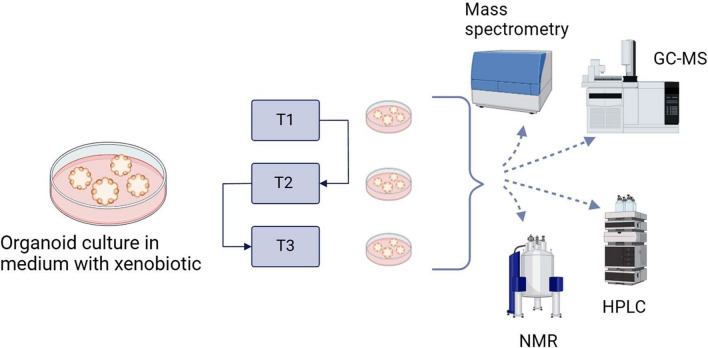
Traditional toxicological assessment relied heavily on 2D cell cultures and animal models of study, which were inadequate for the precise prediction of human response to chemicals. Researchers have now shifted focus on organoids for toxicological assessment. Organoids are 3D structures produced from stem cells that mimic the shape and functionality of human organs and have a number of advantages compared to traditional models of study. They have the capacity to replicate the intricate cellular microenvironment and in vivo interactions. They offer a physiologically pertinent platform that is useful for the researchers to monitor cellular responses in a more realistic manner and evaluate drug toxicity. Additionally, organoids can be created from cells unique to a patient, allowing for individualized toxicological research and providing understanding of the inter-individual heterogeneity in drug responses. Recent developments in the use of gut and liver organoids for assessment of the xenobiotics (environmental toxins and drugs) is reviewed in this article. Gut organoids can reveal potential damage to the digestive system and how xenobiotics affect nutrient absorption and barrier function. Liver is the primary site of detoxification and metabolism of xenobiotics, usually routed from the gut. Hence, these are linked and crucial for evaluating chemical or pollutant induced organ toxicity, forecasting their metabolism and pharmacokinetics. When incorporated into the drug development process, organoid models have the potential to improve the accuracy and efficiency of drug safety assessments, leading to safer and more effective treatments. We also discuss the limitations of using organoid-based toxicological assays, and future prospects, including the need for standardized protocols for overcoming reproducibility issues.
传统的毒理学评估在很大程度上依赖于二维细胞培养和动物研究模型,而这些模型不足以精确预测人类对化学物质的反应。研究人员现在已将重点转移到用于毒理学评估的类器官上。类器官是由干细胞产生的三维结构,可模拟人体器官的形状和功能,与传统研究模型相比具有许多优势。它们有能力复制复杂的细胞微环境和体内相互作用。它们提供了一个生理相关的平台,有助于研究人员以更真实的方式监测细胞反应并评估药物毒性。此外,类器官可以由患者特有的细胞创建,从而实现个性化毒理学研究,并有助于理解药物反应中的个体间异质性。本文综述了肠道和肝脏类器官在评估异源生物(环境毒素和药物)方面的最新进展。肠道类器官可以揭示对消化系统的潜在损害以及异源生物如何影响营养吸收和屏障功能。肝脏是异源生物解毒和代谢的主要部位,这些异源生物通常来自肠道。因此,它们相互关联,对于评估化学物质或污染物诱导的器官毒性、预测其代谢和药代动力学至关重要。当类器官模型被纳入药物研发过程时,它们有可能提高药物安全性评估的准确性和效率,从而带来更安全、更有效的治疗方法。我们还讨论了使用基于类器官的毒理学检测方法的局限性以及未来前景,包括需要标准化方案来克服可重复性问题。