Department of Quality Control, The First Affiliated Hospital of Zhengzhou University, Zhengzhou 450052, China.
Department of Gynecology, The First Affiliated Hospital of Zhengzhou University, Zhengzhou 450052, China.
Biosci Rep. 2021 Apr 30;41(4). doi: 10.1042/BSR20210362.
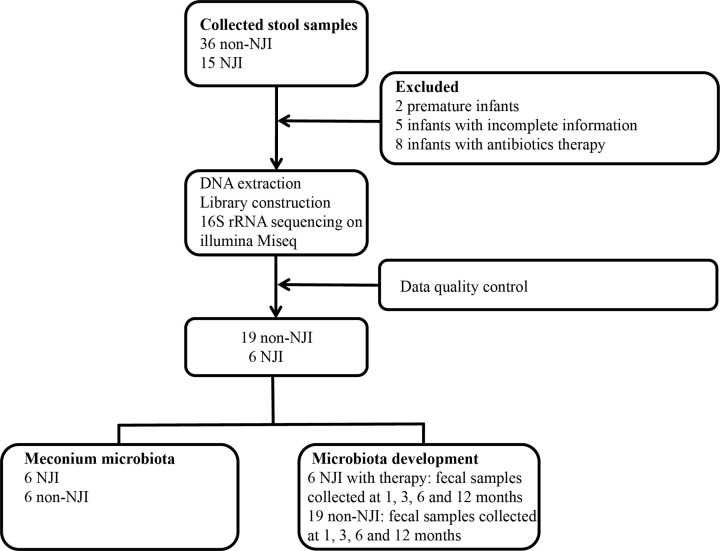
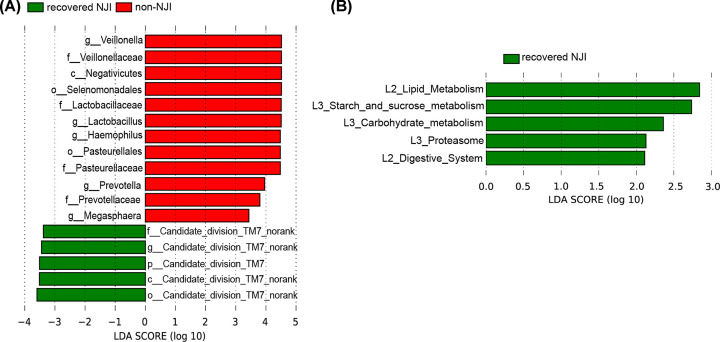
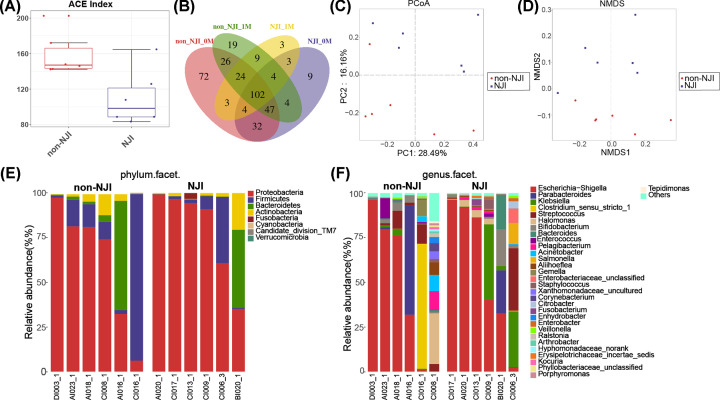
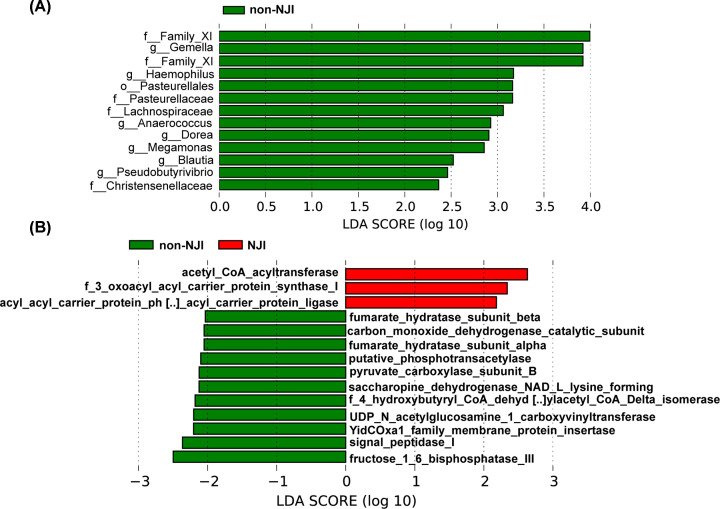
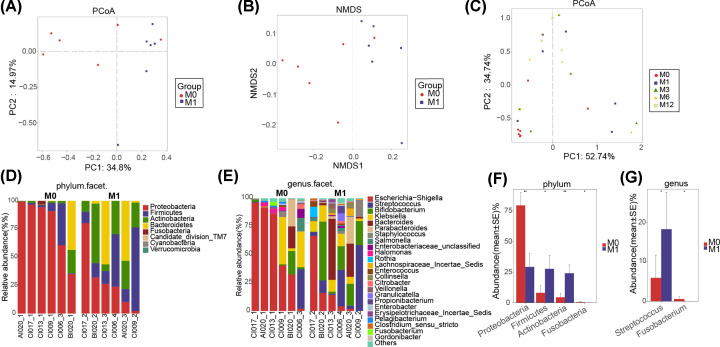
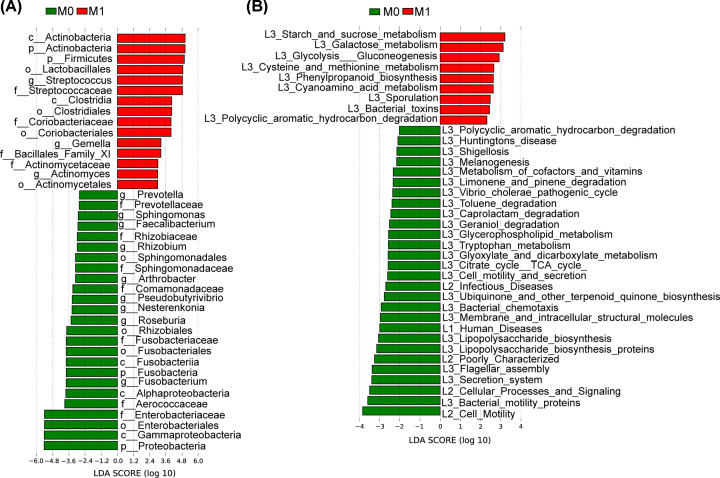
Neonatal jaundice is a common disease that affects up to 60% of newborns. Herein, we performed a comparative analysis of the gut microbiome in neonatal jaundice and non-neonatal jaundice infants (NJIs) and identified gut microbial alterations in neonatal jaundice pre- and post-treatment. We prospectively collected 232 fecal samples from 51 infants at five time points (0, 1, 3, 6, and 12 months). Finally, 114 samples from 6 NJIs and 19 non-NJI completed MiSeq sequencing and analysis. We characterized the gut microbiome and identified microbial differences and gene functions. Meconium microbial diversity from NJI was decreased compared with that from non-NJI. The genus Gemella was decreased in NJI versus non-NJI. Eleven predicted microbial functions, including fructose 1,6-bisphosphatase III and pyruvate carboxylase subunit B, decreased, while three functions, including acetyl-CoA acyltransferase, increased in NJI. After treatments, the microbial community presented significant alteration-based β diversity. The phyla Firmicutes and Actinobacteria were increased, while Proteobacteria and Fusobacteria were decreased. Microbial alterations were also analyzed between 6 recovered NJI and 19 non-NJI. The gut microbiota was unique in the meconium microbiome from NJI, implying that early gut microbiome intervention could be promising for the management of neonatal jaundice. Alterations of gut microbiota from NJI can be of great value to bolster evidence-based prevention against 'bacterial dysbiosis'.
新生儿黄疸是一种常见疾病,影响多达 60%的新生儿。在此,我们对新生儿黄疸和非新生儿黄疸婴儿(NJIs)的肠道微生物组进行了比较分析,并确定了新生儿黄疸治疗前后肠道微生物的变化。我们前瞻性地收集了 51 名婴儿在五个时间点(0、1、3、6 和 12 个月)的 232 个粪便样本。最后,114 个样本来自 6 个 NJI 和 19 个非 NJI 完成了 MiSeq 测序和分析。我们描述了肠道微生物组并确定了微生物差异和基因功能。与非 NJI 相比,NJI 的胎粪微生物多样性降低。与非 NJI 相比,NJIs 中的 Gemella 属减少。11 个预测的微生物功能,包括果糖 1,6-二磷酸酶 III 和丙酮酸羧化酶亚基 B,减少,而三个功能,包括乙酰辅酶 A 酰基转移酶,增加在 NJI。治疗后,微生物群落呈现出显著的基于β多样性的改变。厚壁菌门和放线菌门增加,而变形菌门和梭杆菌门减少。还分析了 6 个恢复的 NJI 和 19 个非 NJI 之间的微生物变化。NJI 的胎粪微生物组中的肠道微生物群是独特的,这表明早期肠道微生物组干预可能对新生儿黄疸的管理有很大的希望。NJIs 的肠道微生物群的改变对于支持基于证据的预防“细菌失调”具有重要价值。