Department of Biomedical Engineering, Duke University, Durham, NC, USA.
Division of Human Biology, Fred Hutchinson Cancer Research Center, Seattle, WA, USA.
Nat Biomed Eng. 2021 Apr;5(4):346-359. doi: 10.1038/s41551-021-00710-3. Epub 2021 Apr 16.
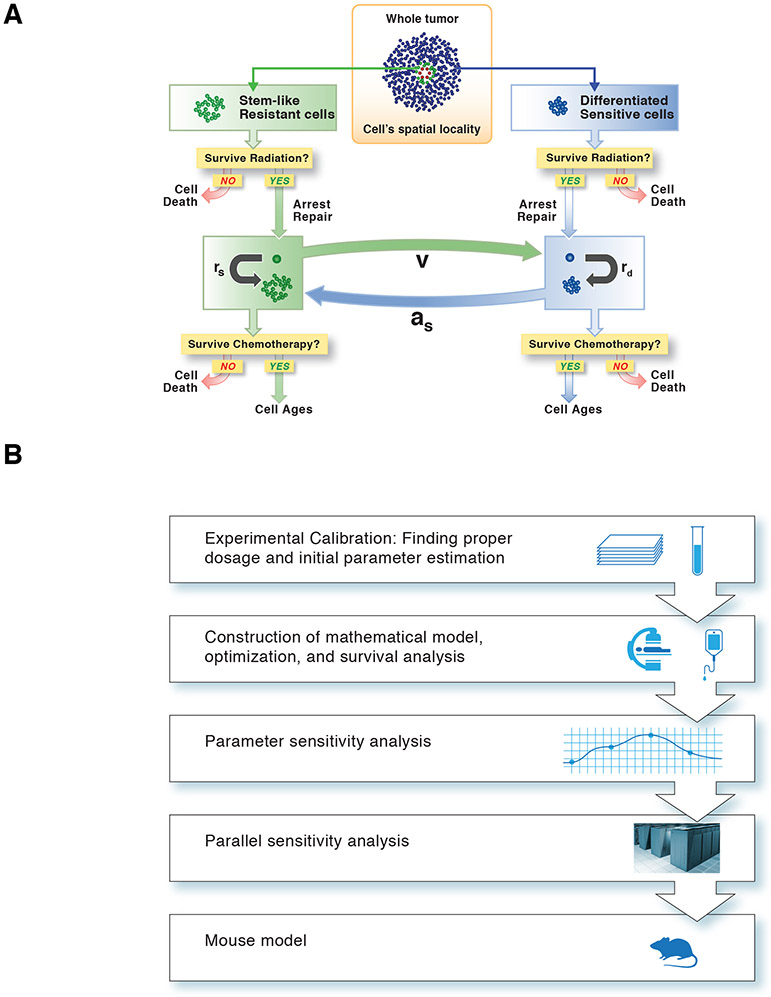
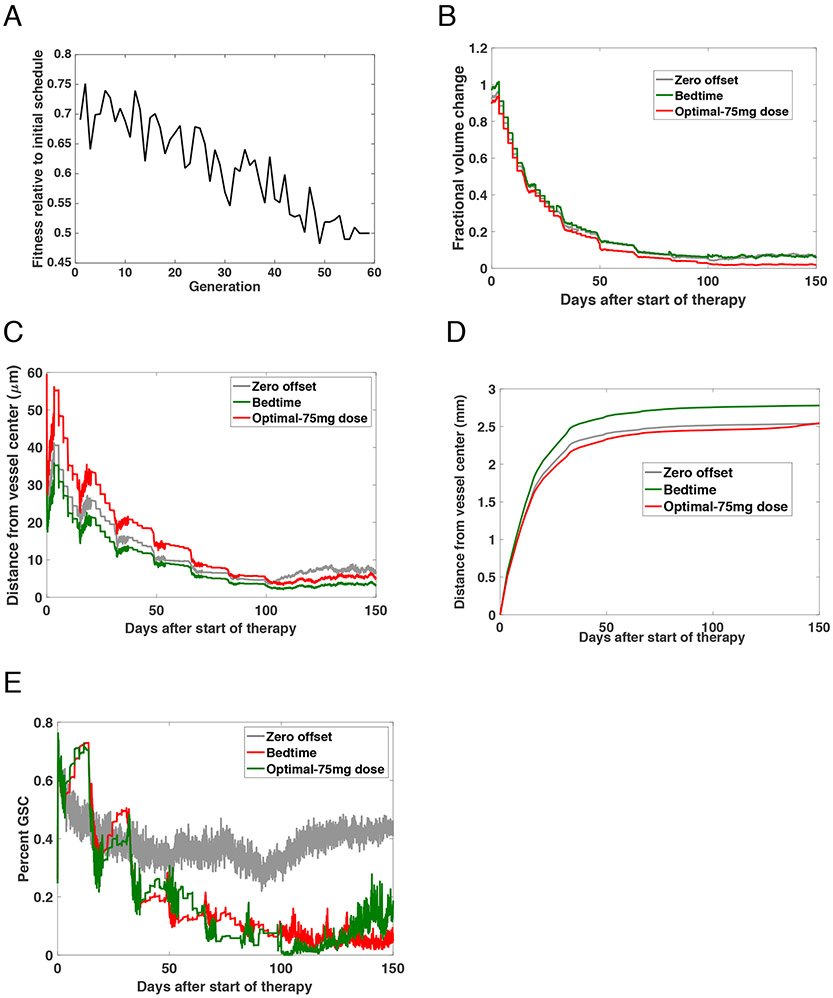
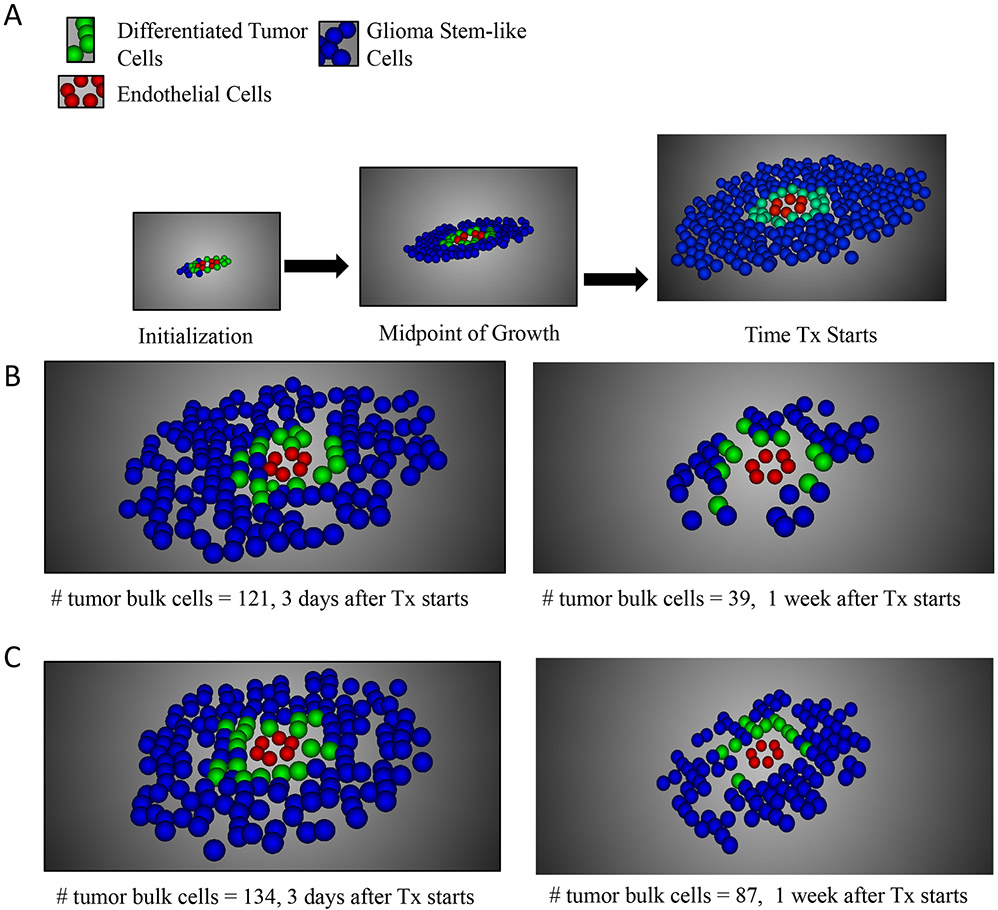
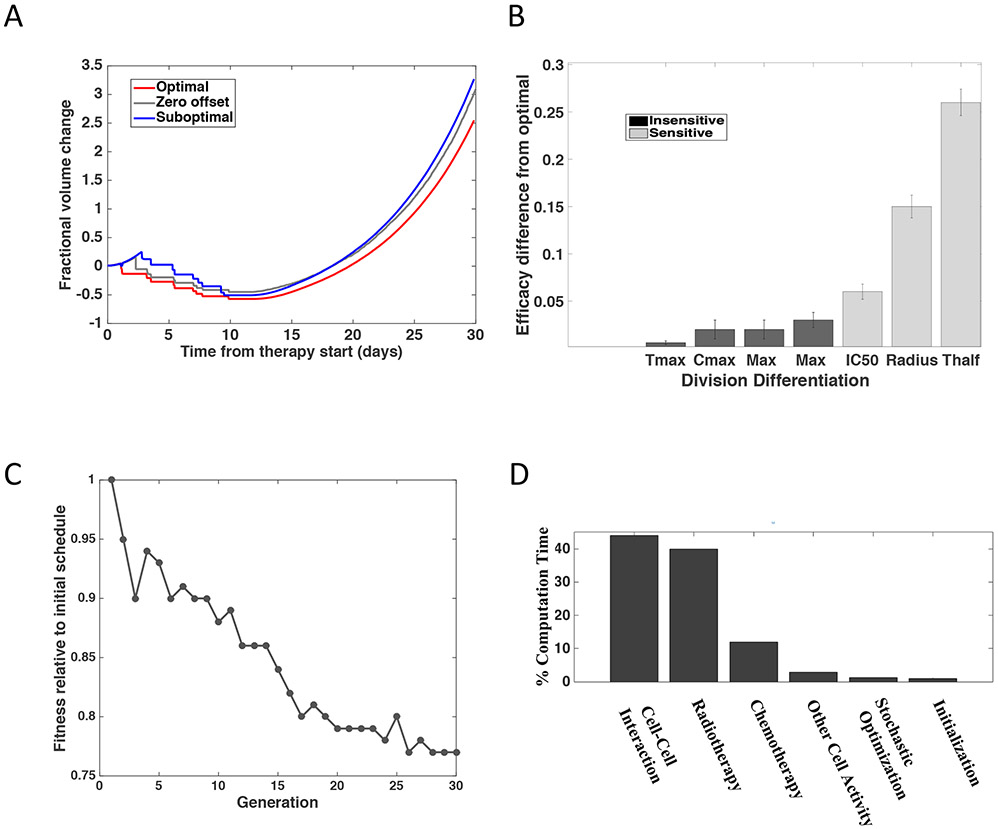
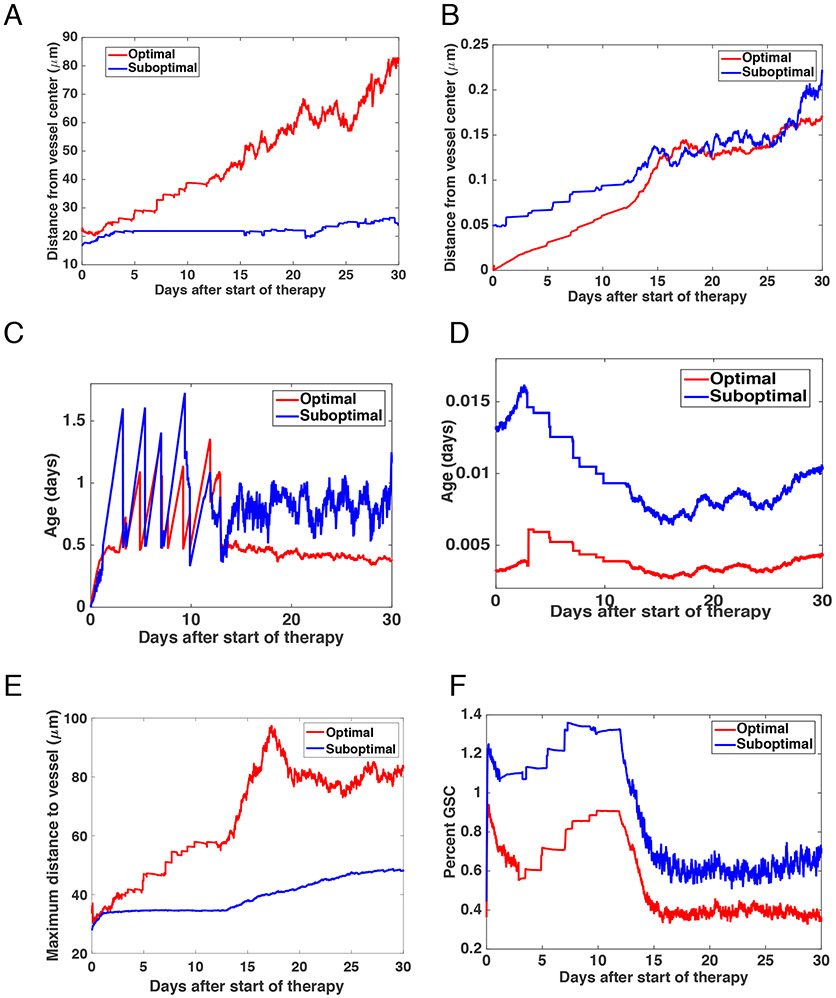
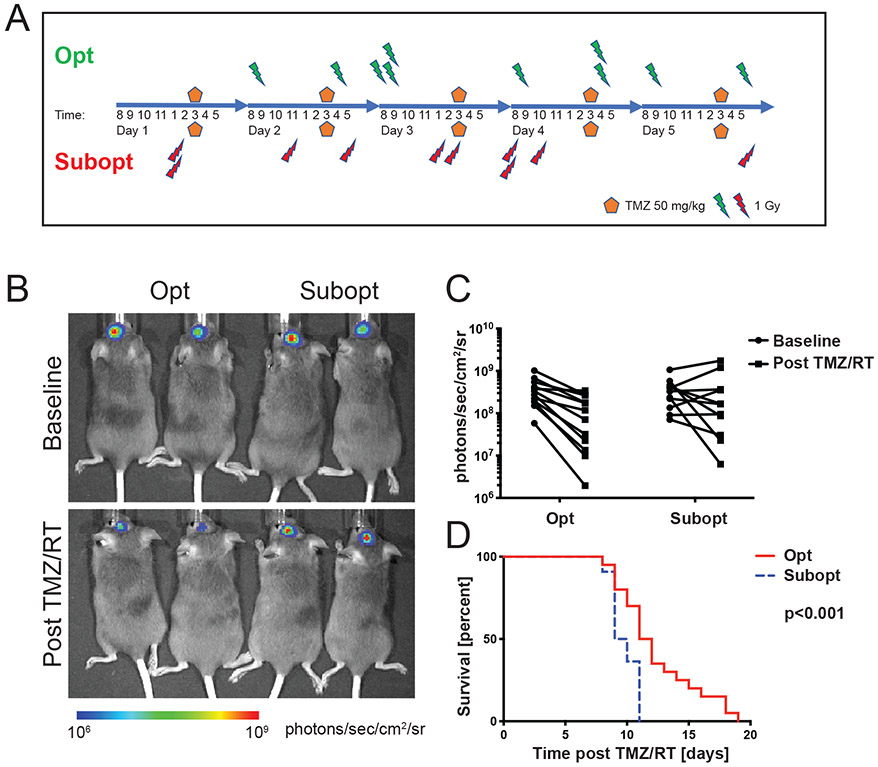
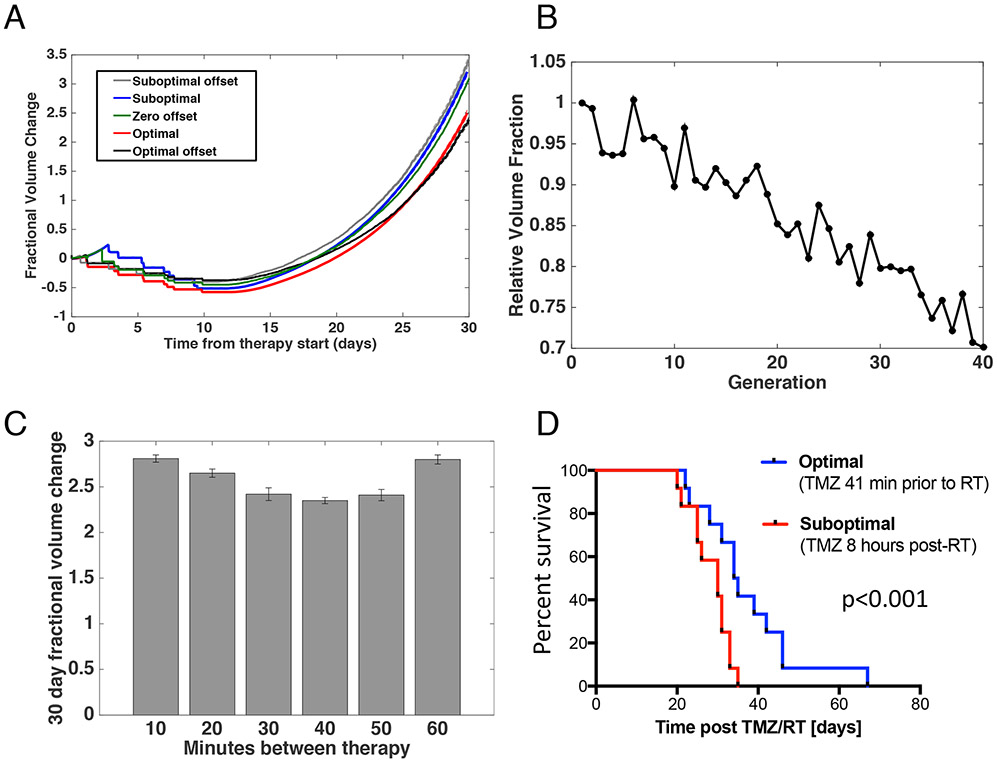
Glioblastoma stem-like cells dynamically transition between a chemoradiation-resistant state and a chemoradiation-sensitive state. However, physical barriers in the tumour microenvironment restrict the delivery of chemotherapy to tumour compartments that are distant from blood vessels. Here, we show that a massively parallel computational model of the spatiotemporal dynamics of the perivascular niche that incorporates glioblastoma stem-like cells and differentiated tumour cells as well as relevant tissue-level phenomena can be used to optimize the administration schedules of concurrent radiation and temozolomide-the standard-of-care treatment for glioblastoma. In mice with platelet-derived growth factor (PDGF)-driven glioblastoma, the model-optimized treatment schedule increased the survival of the animals. For standard radiation fractionation in patients, the model predicts that chemotherapy may be optimally administered about one hour before radiation treatment. Computational models of the spatiotemporal dynamics of the tumour microenvironment could be used to predict tumour responses to a broader range of treatments and to optimize treatment regimens.
神经胶质瘤干细胞样细胞在化学放射抵抗状态和化学放射敏感状态之间动态转换。然而,肿瘤微环境中的物理屏障限制了化疗药物向远离血管的肿瘤部位的输送。在这里,我们展示了一种大规模并行计算模型,该模型可以模拟血管周围小生境的时空动态,其中包含神经胶质瘤干细胞样细胞和分化的肿瘤细胞以及相关的组织水平现象,可用于优化同时进行放射治疗和替莫唑胺(胶质母细胞瘤的标准治疗方法)的管理方案。在血小板衍生生长因子(PDGF)驱动的神经胶质瘤小鼠中,模型优化的治疗方案增加了动物的存活率。对于患者的标准放射分割,该模型预测化疗可能在放射治疗前约一小时最佳给药。肿瘤微环境时空动态的计算模型可用于预测肿瘤对更广泛治疗的反应,并优化治疗方案。