German Centre for Heart and Circulatory Research (DZHK) Partner Site, Berlin, Berlin, Germany.
Cardio Centrum, Berlin, Germany.
Heart Fail Rev. 2022 Jul;27(4):1325-1339. doi: 10.1007/s10741-021-10108-7. Epub 2021 Apr 17.
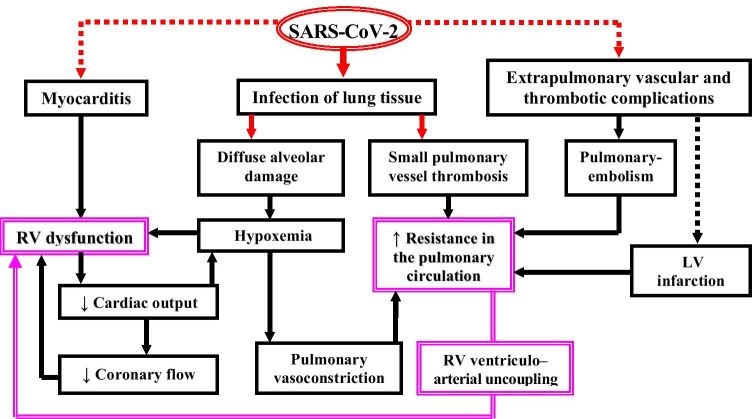
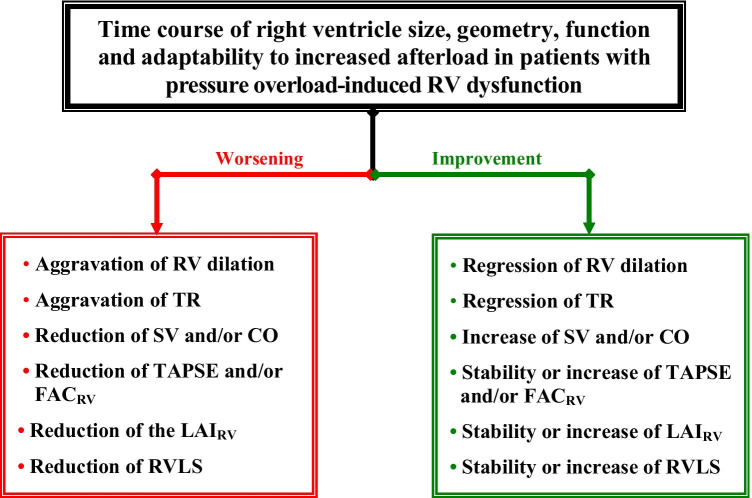
Due to the SARS-CoV-2 infection-related severe pulmonary tissue damages associated with a relative specific widespread thrombotic microangiopathy, the pathophysiologic role of heart-lung interactions becomes crucial for the development and progression of right ventricular (RV) dysfunction. The high resistance in the pulmonary circulation, as a result of small vessel thrombosis and hypoxemia, is the major cause of right heart failure associated with a particularly high mortality in severe COVID-19. Timely identification of patients at high risk for RV failure, optimization of mechanical ventilation to limit its adverse effects on RV preload and afterload, avoidance of medication-related increase in the pulmonary vascular resistance, and the use of extracorporeal membrane oxygenation in refractory respiratory failure with hemodynamic instability, before RV failure develops, can improve patient survival. Since it was confirmed that the right-sided heart is particularly involved in the clinical deterioration of patients with COVID-19 and pressure overload-induced RV dysfunction plays a key role for patient outcome, transthoracic echocardiography (TTE) received increasing attention. Limited TTE focused on the right heart appears highly useful in hospitalized COVID-19 patients and particularly beneficial for monitoring of critically ill patients. In addition to detection of right-sided heart dilation and RV dysfunction, it enables assessment of RV-pulmonary arterial coupling and evaluation of RV adaptability to pressure loading which facilitate useful prognostic statements to be made. The increased use of bedside TTE focused on the right heart could facilitate more personalized management and treatment of hospitalized patients and can contribute towards reducing the high mortality associated with SARS-CoV-2 infection.
由于与相对特定的广泛血栓性微血管病相关的 SARS-CoV-2 感染引起的严重肺组织损伤,心肺相互作用的病理生理作用对于右心室 (RV) 功能障碍的发展和进展变得至关重要。由于小血管血栓形成和低氧血症导致肺循环阻力增加,是与严重 COVID-19 相关的右心衰竭的主要原因,其死亡率特别高。及时识别 RV 衰竭风险高的患者,优化机械通气以限制其对 RV 前负荷和后负荷的不利影响,避免药物相关的肺血管阻力增加,以及在 RV 衰竭发生之前使用体外膜氧合治疗难治性呼吸衰竭伴血流动力学不稳定,可提高患者生存率。由于已经证实右侧心脏在 COVID-19 患者的临床恶化中特别受累,并且压力超负荷诱导的 RV 功能障碍对患者预后起着关键作用,因此经胸超声心动图(TTE)受到越来越多的关注。针对右心的有限 TTE 似乎对住院 COVID-19 患者非常有用,对重症患者的监测特别有益。除了检测右侧心脏扩张和 RV 功能障碍外,它还能够评估 RV-肺动脉耦合,并评估 RV 对压力负荷的适应性,从而做出有用的预后陈述。增加针对右心的床边 TTE 的使用可以促进对住院患者进行更个性化的管理和治疗,并有助于降低与 SARS-CoV-2 感染相关的高死亡率。