Paris Gustavo C, Azevedo Aline A, Ferreira Adriana L, Azevedo Yanca M A, Rainho Mateus A, Oliveira Genilza P, Silva Karina R, Cortez Erika A C, Stumbo Ana C, Carvalho Simone N, de Carvalho Lais, Thole Alessandra A
LPCT - Laboratory of Stem Cell Research, Histology and Embryology Department, Biology Institute, State University of Rio de Janeiro, Rio de Janeiro, RJ, Brazil.
LPCT - Laboratory of Stem Cell Research, Histology and Embryology Department, Biology Institute, State University of Rio de Janeiro, Rio de Janeiro, RJ, Brazil.
Life Sci. 2021 Aug 1;278:119510. doi: 10.1016/j.lfs.2021.119510. Epub 2021 Apr 15.
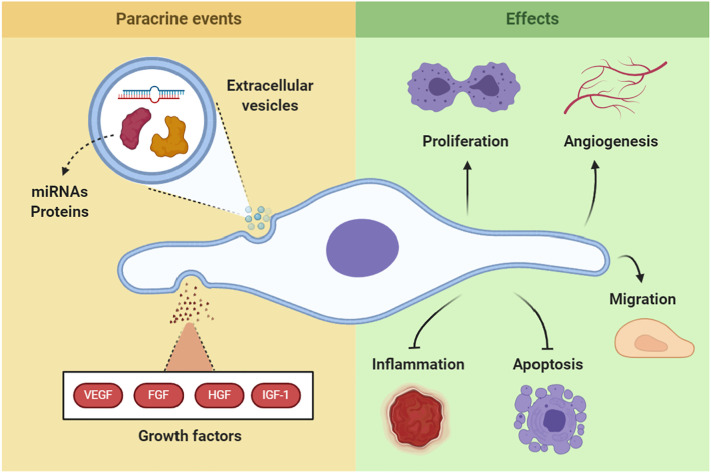
Currently, the world has been devastated by an unprecedented pandemic in this century. The Severe Acute Respiratory Syndrome Coronavirus 2 (SARS-CoV-2), the agent of coronavirus disease 2019 (COVID-19), has been causing disorders, dysfunction and morphophysiological alterations in multiple organs as the disease evolves. There is a great scientific community effort to obtain a therapy capable of reaching the multiple affected organs in order to contribute for tissue repair and regeneration. In this regard, mesenchymal stem cells (MSCs) have emerged as potential candidates concerning the promotion of beneficial actions at different stages of COVID-19. MSCs are promising due to the observed therapeutic effects in respiratory preclinical models, as well as in cardiac, vascular, renal and nervous system models. Their immunomodulatory properties and secretion of paracrine mediators, such as cytokines, chemokines, growth factors and extracellular vesicles allow for long range tissue modulation and, particularly, blood-brain barrier crossing. This review focuses on SARS-CoV-2 impact to lungs, kidneys, heart, vasculature and central nervous system while discussing promising MSC's therapeutic mechanisms in each tissue. In addition, MSC's therapeutic effects in high-risk groups for COVID-19, such as obese, diabetic and hypertensive patients are also explored.
当前,本世纪一场前所未有的大流行已使世界陷入灾难。严重急性呼吸综合征冠状病毒2(SARS-CoV-2),即2019冠状病毒病(COVID-19)的病原体,随着疾病的发展,已在多个器官中引发紊乱、功能障碍和形态生理改变。科学界正在做出巨大努力,以寻求一种能够作用于多个受影响器官的疗法,从而促进组织修复和再生。在这方面,间充质干细胞(MSCs)已成为在COVID-19不同阶段发挥有益作用的潜在候选者。由于在呼吸临床前模型以及心脏、血管、肾脏和神经系统模型中观察到的治疗效果,MSCs颇具前景。它们的免疫调节特性以及细胞因子、趋化因子、生长因子和细胞外囊泡等旁分泌介质的分泌,使得其能够进行远距离组织调节,尤其是穿越血脑屏障。本综述聚焦于SARS-CoV-2对肺、肾、心脏、血管系统和中枢神经系统的影响,同时探讨MSCs在每个组织中颇具前景的治疗机制。此外,还探讨了MSCs对COVID-19高危人群,如肥胖、糖尿病和高血压患者的治疗效果。