Department of Computational Medicine and Bioinformatics, University of Michigan, Ann Arbor, Michigan, USA.
Department of Internal Medicine, Division of Nephrology, University of Michigan, Ann Arbor, Michigan, USA.
Kidney Int. 2020 Dec;98(6):1502-1518. doi: 10.1016/j.kint.2020.09.015. Epub 2020 Oct 8.
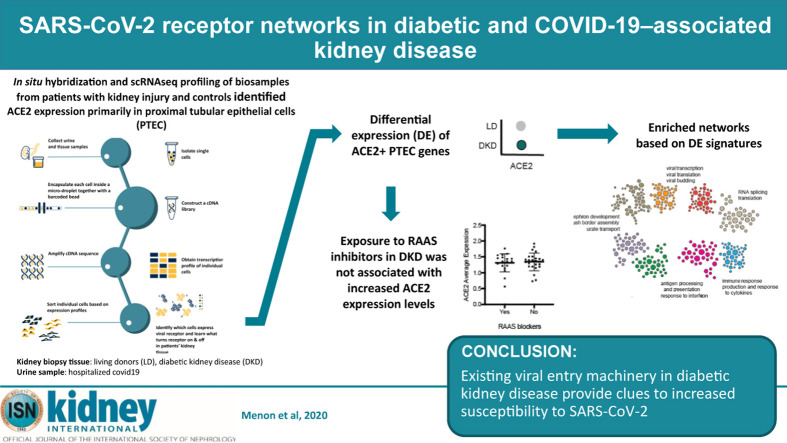
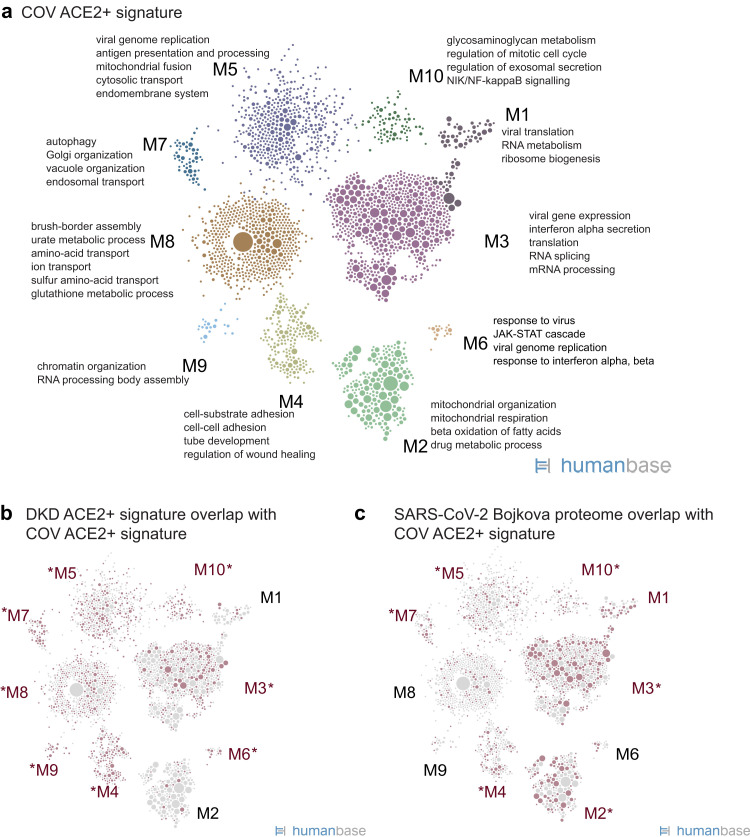
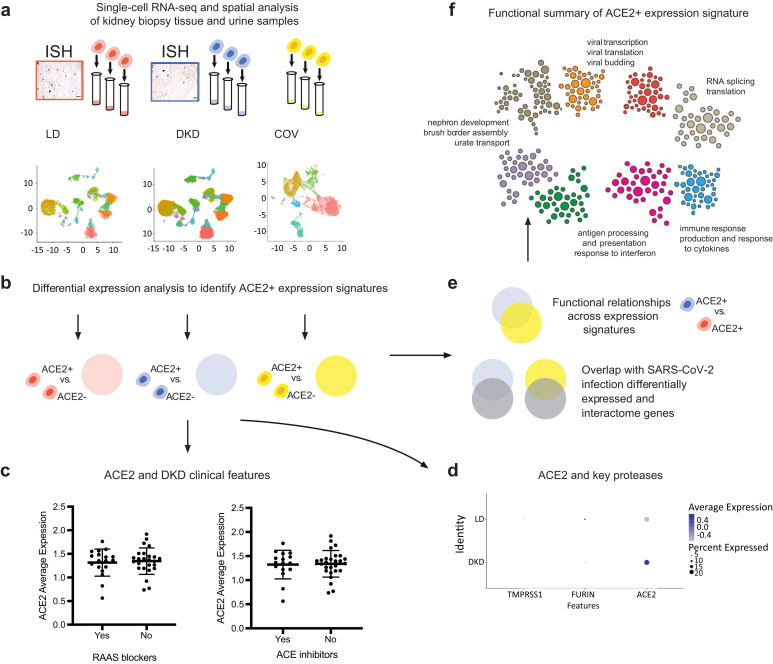
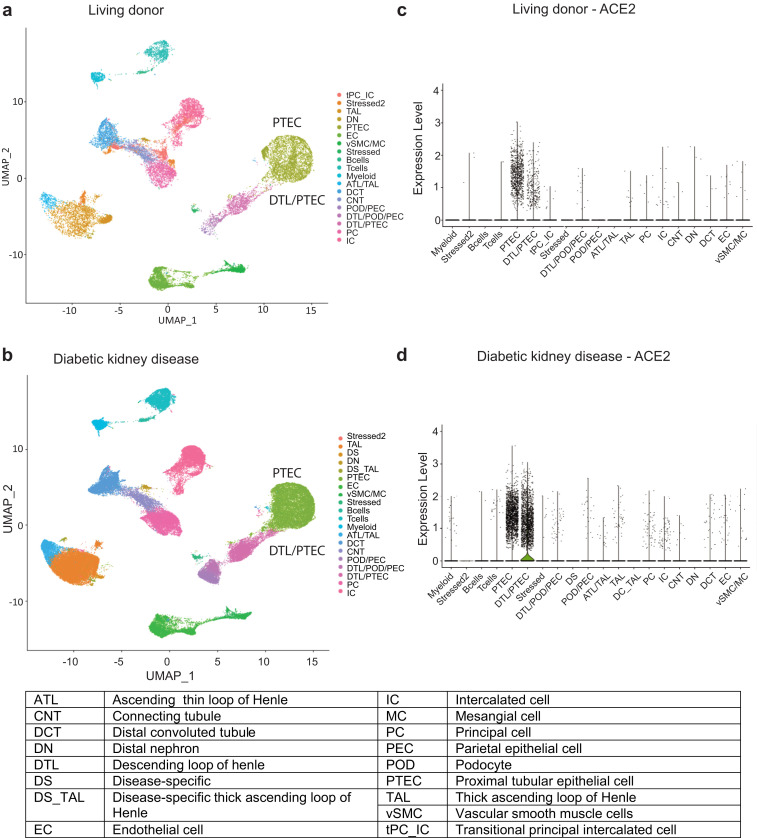
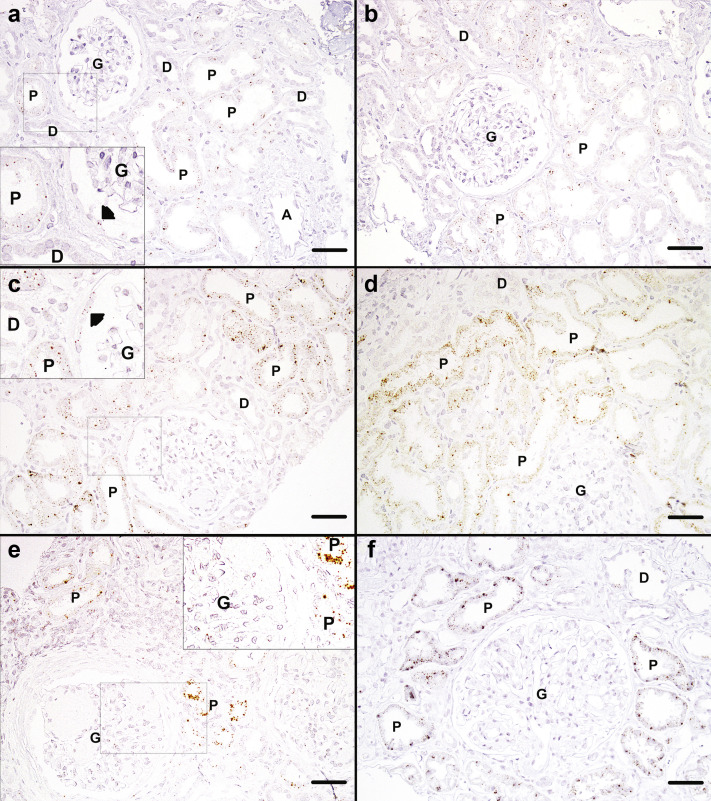
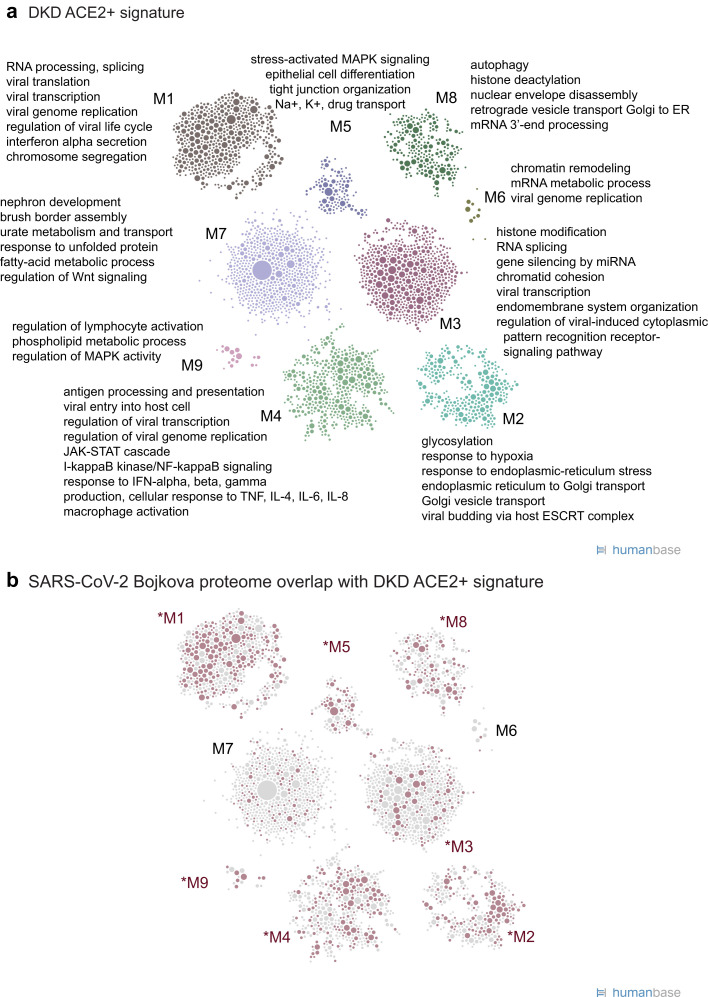
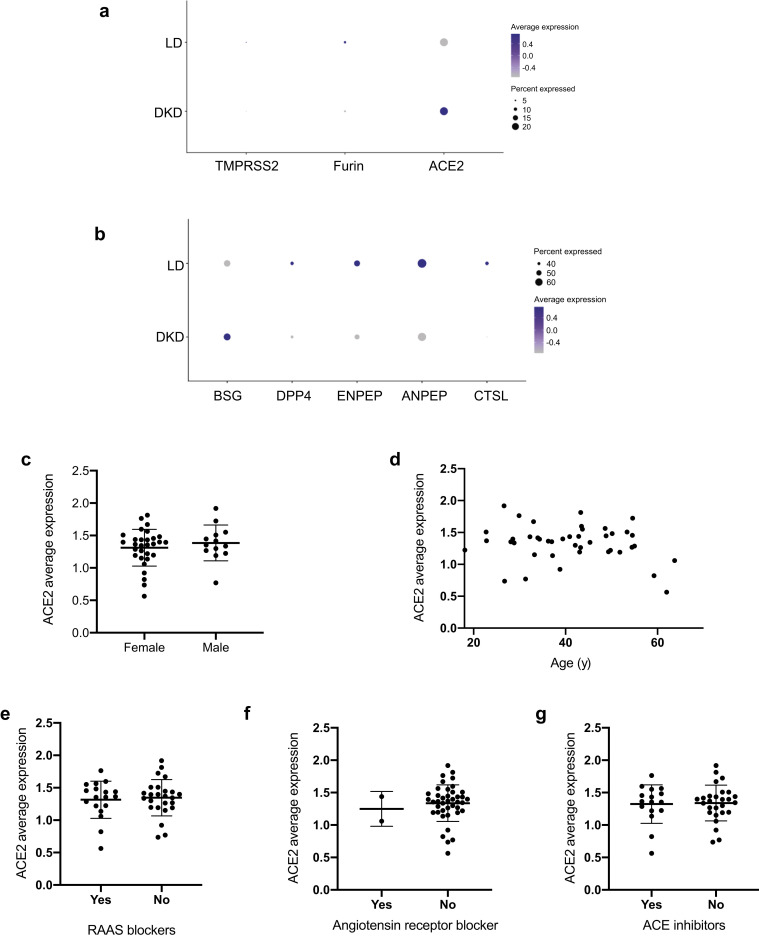
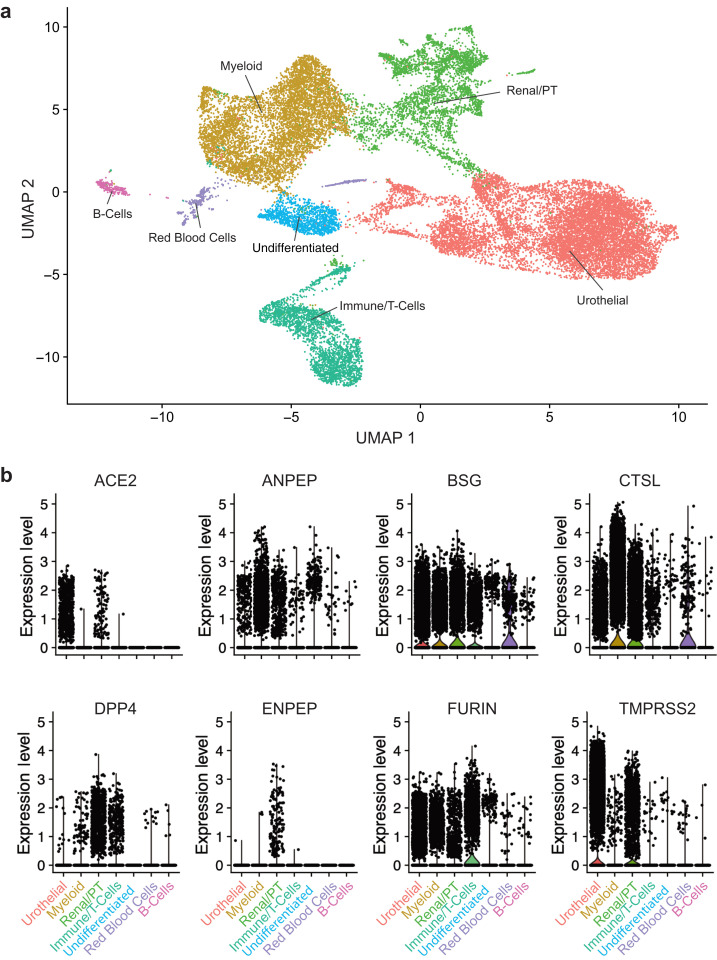
COVID-19 morbidity and mortality are increased via unknown mechanisms in patients with diabetes and kidney disease. SARS-CoV-2 uses angiotensin-converting enzyme 2 (ACE2) for entry into host cells. Because ACE2 is a susceptibility factor for infection, we investigated how diabetic kidney disease and medications alter ACE2 receptor expression in kidneys. Single cell RNA profiling of kidney biopsies from healthy living donors and patients with diabetic kidney disease revealed ACE2 expression primarily in proximal tubular epithelial cells. This cell-specific localization was confirmed by in situ hybridization. ACE2 expression levels were unaltered by exposures to renin-angiotensin-aldosterone system inhibitors in diabetic kidney disease. Bayesian integrative analysis of a large compendium of public -omics datasets identified molecular network modules induced in ACE2-expressing proximal tubular epithelial cells in diabetic kidney disease (searchable at hb.flatironinstitute.org/covid-kidney) that were linked to viral entry, immune activation, endomembrane reorganization, and RNA processing. The diabetic kidney disease ACE2-positive proximal tubular epithelial cell module overlapped with expression patterns seen in SARS-CoV-2-infected cells. Similar cellular programs were seen in ACE2-positive proximal tubular epithelial cells obtained from urine samples of 13 hospitalized patients with COVID-19, suggesting a consistent ACE2-coregulated proximal tubular epithelial cell expression program that may interact with the SARS-CoV-2 infection processes. Thus SARS-CoV-2 receptor networks can seed further research into risk stratification and therapeutic strategies for COVID-19-related kidney damage.
新型冠状病毒肺炎(COVID-19)患者的糖尿病和肾病会通过未知机制导致发病率和死亡率增加。严重急性呼吸综合征冠状病毒 2(SARS-CoV-2)利用血管紧张素转换酶 2(ACE2)进入宿主细胞。由于 ACE2 是感染的易感性因素,我们研究了糖尿病肾病及其药物如何改变肾脏中 ACE2 受体的表达。来自健康供体和糖尿病肾病患者的肾脏活检的单细胞 RNA 分析显示 ACE2 主要在近端肾小管上皮细胞中表达。原位杂交证实了这种细胞特异性定位。在糖尿病肾病中,肾素-血管紧张素-醛固酮系统抑制剂的暴露并未改变 ACE2 的表达水平。对大型公共组学数据集的贝叶斯综合分析确定了在糖尿病肾病中 ACE2 表达的近端肾小管上皮细胞中诱导的分子网络模块(可在 hb.flatironinstitute.org/covid-kidney 上搜索),这些模块与病毒进入、免疫激活、内体膜重组和 RNA 处理有关。糖尿病肾病 ACE2 阳性近端肾小管上皮细胞模块与 SARS-CoV-2 感染细胞中观察到的表达模式重叠。在 13 名 COVID-19 住院患者的尿液样本中获得的 ACE2 阳性近端肾小管上皮细胞中也观察到类似的细胞程序,这表明存在一致的 ACE2 共调控的近端肾小管上皮细胞表达程序,可能与 SARS-CoV-2 感染过程相互作用。因此,SARS-CoV-2 受体网络可以为 COVID-19 相关肾脏损伤的风险分层和治疗策略提供进一步的研究。