Duan Jingwei, Li Xue, Zhang Junzhe, Cheng Baoping, Liu Shuhan, Li Hongmei, Zhou Quan, Chen Wenli
MOE Key Laboratory of Laser Life Science, Institute of Laser Life Science, College of Biophotonics, South China Normal University, Guangzhou, China.
Guangdong Provincial Key Laboratory of Laser Life Science, College of Biophotonics, South China Normal University, Guangzhou, China.
Front Plant Sci. 2021 Mar 31;12:643971. doi: 10.3389/fpls.2021.643971. eCollection 2021.
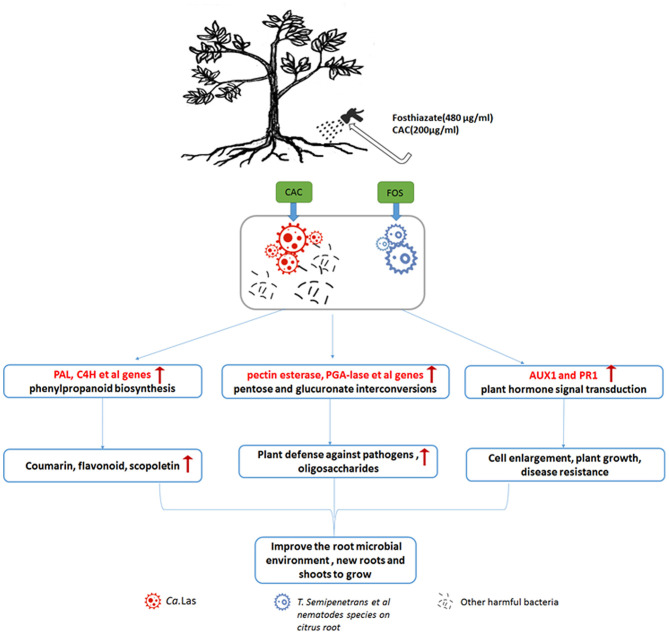
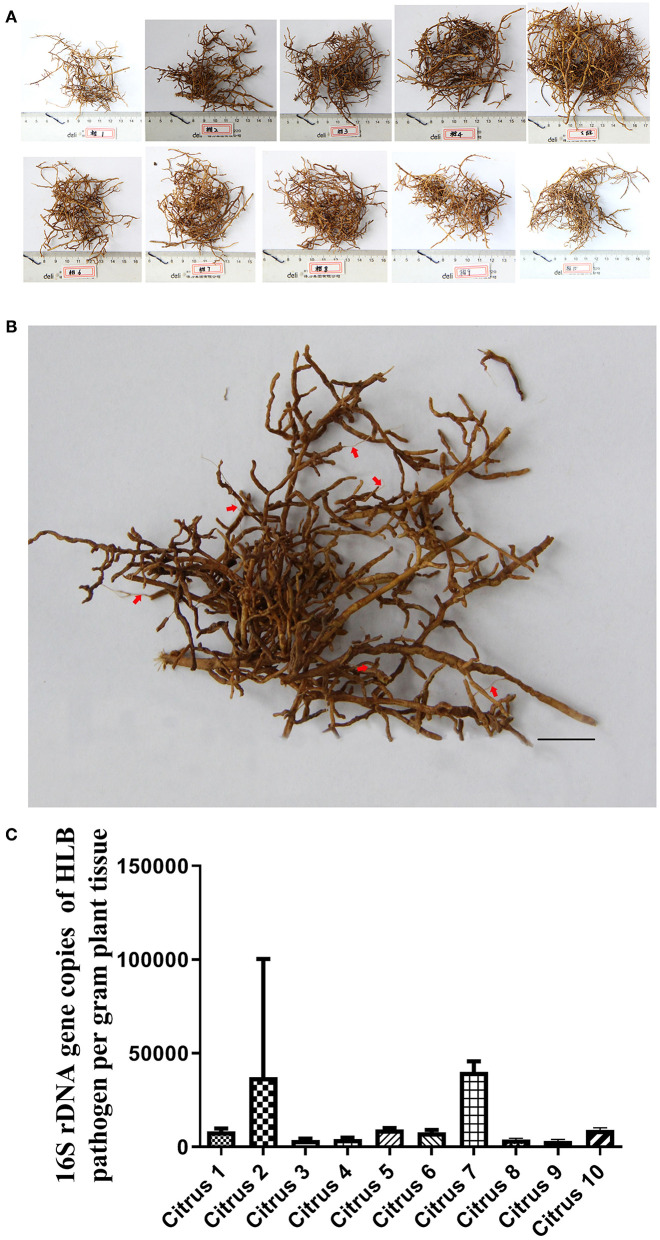
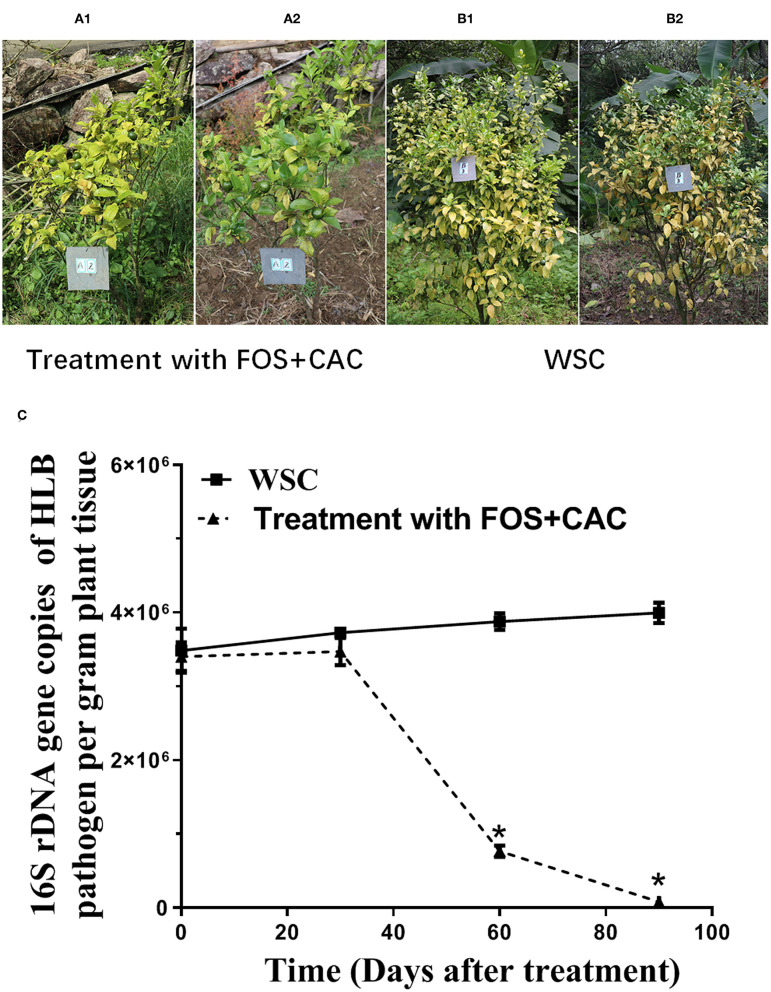
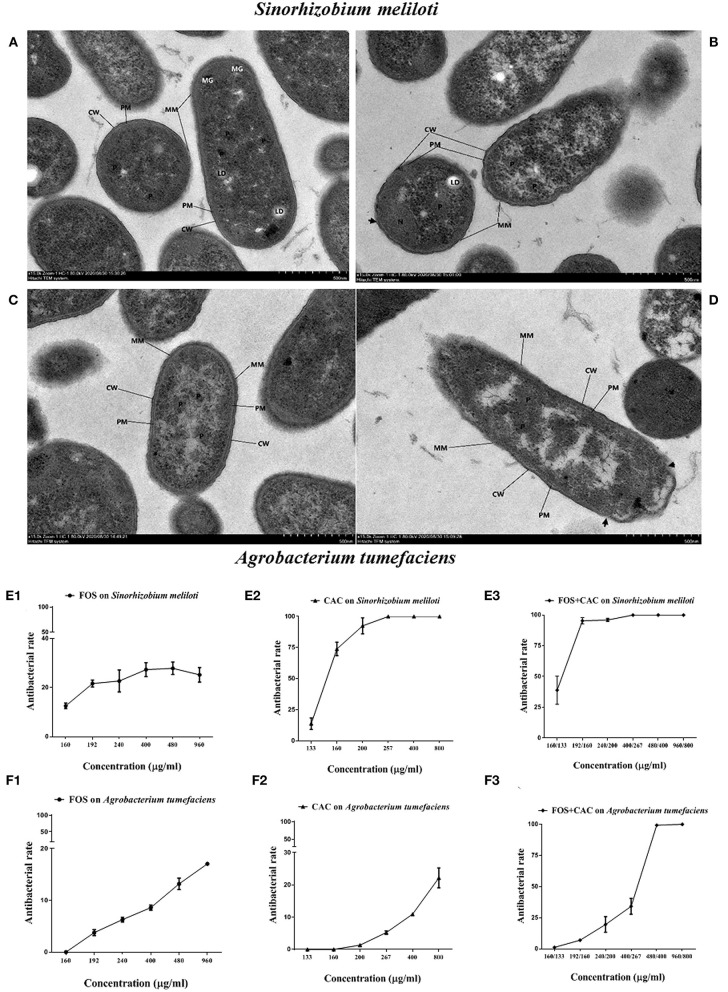
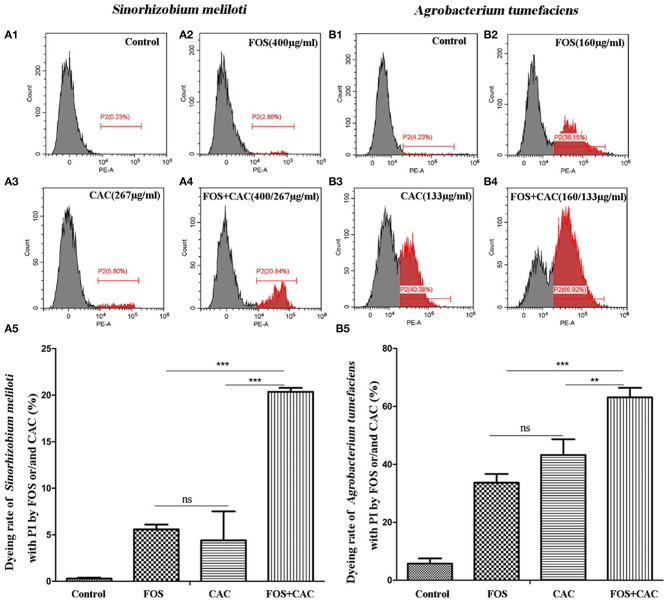
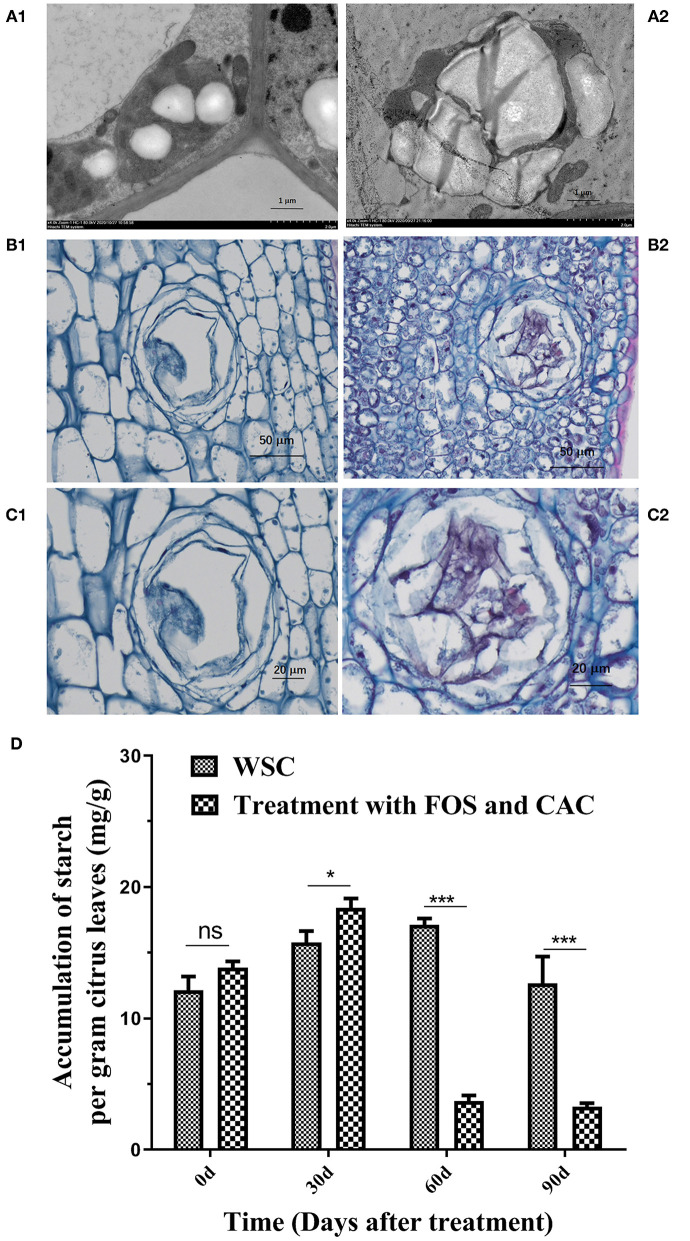
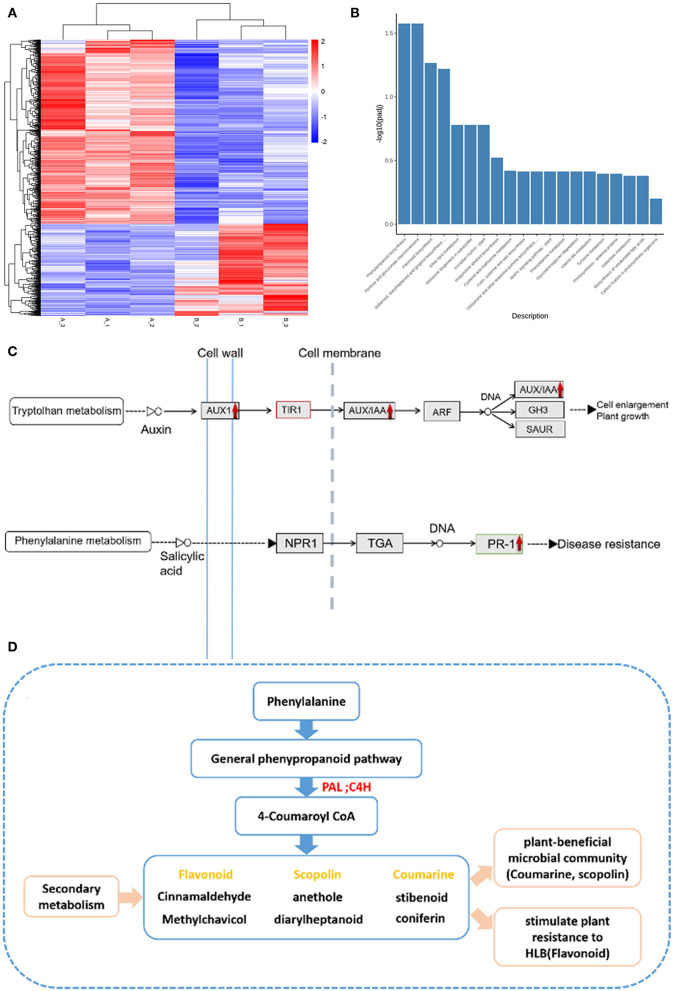
Huanglongbing (HLB) is a destructive citrus bacterial disease caused by Liberibacter asiaticus (.Las) and cannot be cured by current pesticides. Root lesion and juveniles were observed in HLB-affected citrus tree roots. We hypothesize that root treatment with fosthiazate (FOS) and Cupric-Ammonium Complex (CAC) will improve the root growth and inhibit HLB. CAC is a broad spectrum fungicide and can promote growth of crops. FOS kills and protects roots from damage by harmful bacteria such as .Las. After 90 days of combination treatment of FOS and CAC through root drenches, the citrus grew new roots and its leaves changed their color to green. The inhibition rate of .Las reached more than 90%. During treatment process, the chlorophyll content and the root vitality increased 396 and 151%, respectively, and starch accumulation decreased by 88%. Transmission electron microscopy (TEM) and plant tissue dyeing experiments showed that more irregular swollen starch granules existed in the chloroplast thylakoid system of the HLB-infected leaves. This is due to the blocking of their secretory tissue by starch. TEM and flow cytometry experiments showed the synergistic effects of FOS and CAC. A transcriptome analysis revealed that the treatment induced the differential expression of the genes which involved 103 metabolic pathways. These results suggested that the cocktail treatment of FOS and CAC may effectively kill various pathogens including .Las on citrus root and thus effectively control HLB.
黄龙病(HLB)是一种由亚洲韧皮杆菌(.Las)引起的具有破坏性的柑橘细菌性病害,目前的农药无法治愈。在受HLB影响的柑橘树根部观察到根部病变和根瘤。我们假设用噻唑膦(FOS)和铜铵络合物(CAC)进行根部处理将改善根系生长并抑制HLB。CAC是一种广谱杀菌剂,可促进作物生长。FOS能杀死并保护根系免受诸如.Las等有害细菌的侵害。通过根部浇灌对FOS和CAC进行联合处理90天后,柑橘长出了新根,其叶片颜色变为绿色。.Las的抑制率达到了90%以上。在处理过程中,叶绿素含量和根系活力分别增加了396%和151%,淀粉积累减少了88%。透射电子显微镜(TEM)和植物组织染色实验表明,受HLB感染的叶片的叶绿体类囊体系统中存在更多不规则肿胀的淀粉颗粒。这是由于淀粉对其分泌组织的阻塞所致。TEM和流式细胞术实验显示了FOS和CAC的协同作用。转录组分析表明,该处理诱导了涉及103条代谢途径的基因的差异表达。这些结果表明,FOS和CAC的联合处理可能有效杀死包括.Las在内的柑橘根部的各种病原体,从而有效控制HLB。