Citrus Research and Education Center, Department of Microbiology and Cell Science, University of Florida, Lake Alfred, Florida, United States of America.
PLoS One. 2013 Sep 13;8(9):e73742. doi: 10.1371/journal.pone.0073742. eCollection 2013.
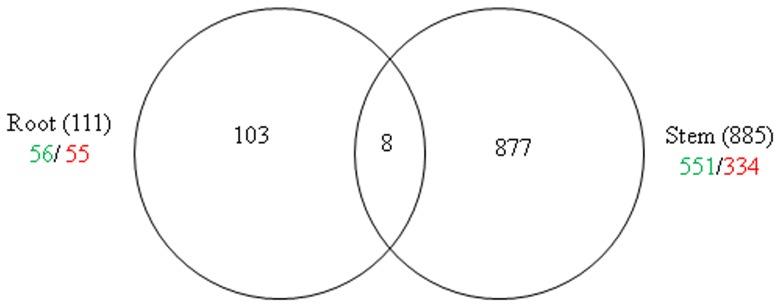
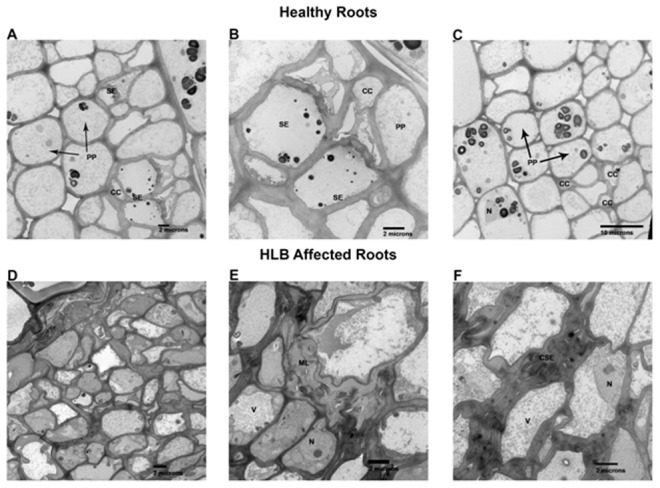
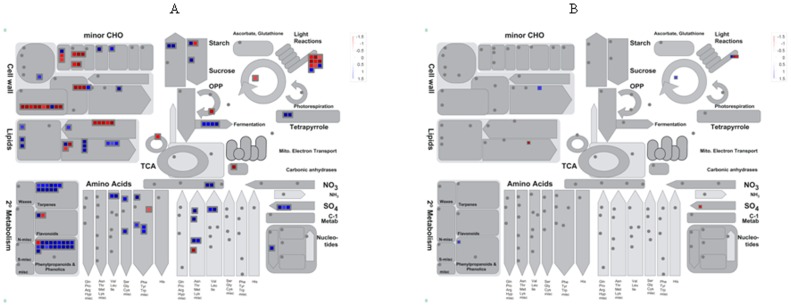
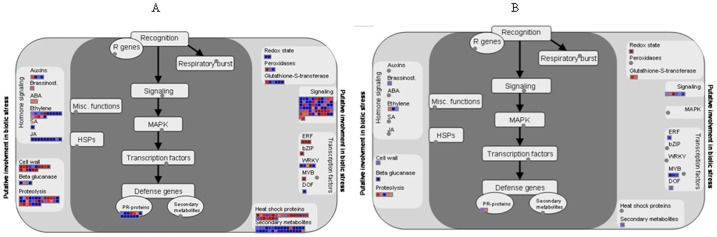
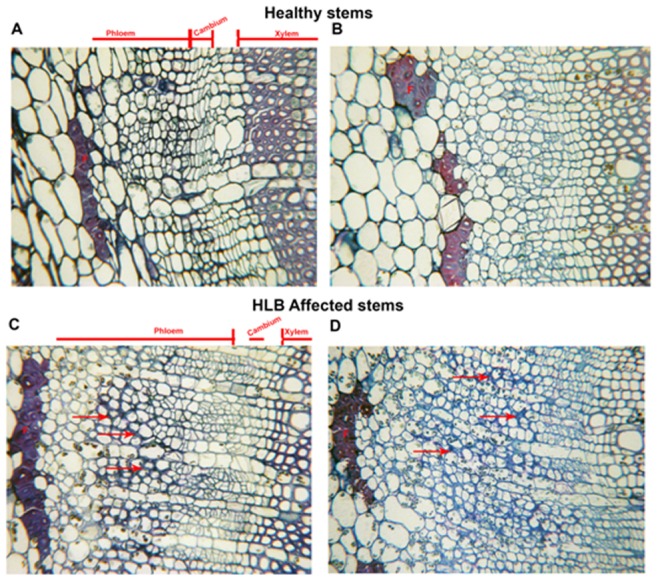
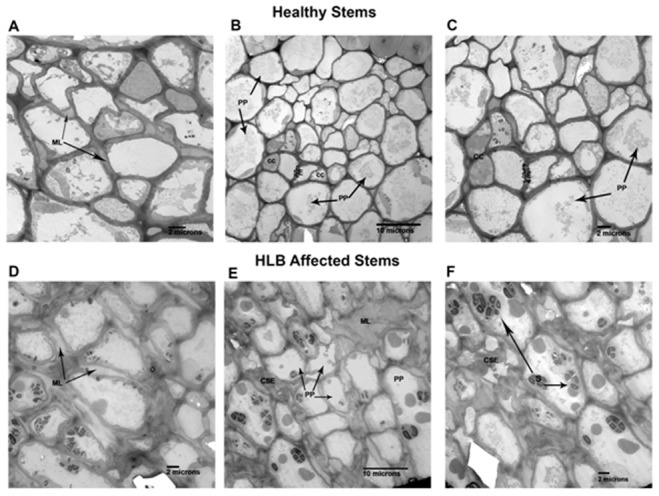
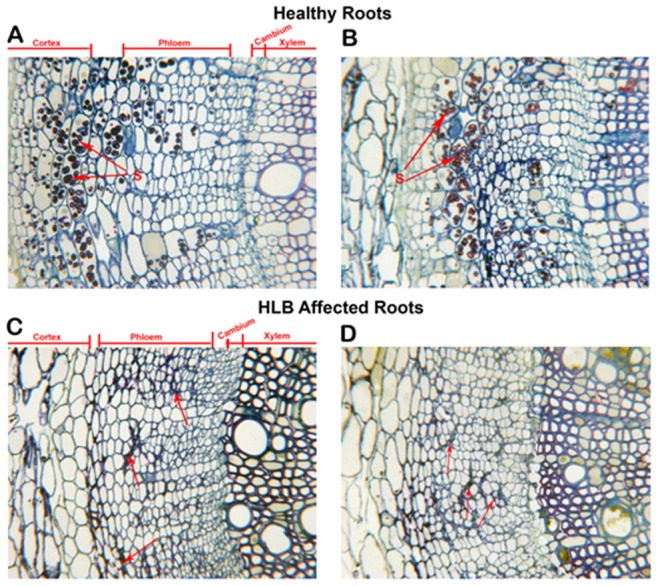
Huanglongbing (HLB) is the most destructive disease that affects citrus worldwide. The disease has been associated with Candidatus Liberibacter. HLB diseased citrus plants develop a multitude of symptoms including zinc and copper deficiencies, blotchy mottle, corky veins, stunting, and twig dieback. Ca. L. asiaticus infection also seriously affects the roots. Previous study focused on gene expression of leaves and fruit to Ca. L. asiaticus infection. In this study, we compared the gene expression levels of stems and roots of healthy plants with those in Ca. L. asiaticus infected plants using microarrays. Affymetrix microarray analysis showed a total of 988 genes were significantly altered in expression, of which 885 were in the stems, and 111 in the roots. Of these, 551 and 56 were up-regulated, while 334 and 55 were down-regulated in the stem and root samples of HLB diseased trees compared to healthy plants, respectively. Dramatic differences in the transcriptional responses were observed between citrus stems and roots to Ca. L. asiaticus infection, with only 8 genes affected in both the roots and stems. The affected genes are involved in diverse cellular functions, including carbohydrate metabolism, cell wall biogenesis, biotic and abiotic stress responses, signaling and transcriptional factors, transportation, cell organization, protein modification and degradation, development, hormone signaling, metal handling, and redox. Microscopy analysis showed the depletion of starch in the roots of the infected plants but not in healthy plants. Collapse and thickening of cell walls were observed in HLB affected roots, but not as severe as in the stems. This study provides insight into the host response of the stems and roots to Ca. L. asiaticus infection.
黄龙病(HLB)是影响全球柑橘的最具破坏性疾病。该疾病与候选病原体韧皮部杆菌属亚洲种(Ca. Liberibacter asiaticus)有关。HLB 患病的柑橘植物会出现多种症状,包括缺锌和缺铜、斑驳状花叶、木栓状脉、矮化和小枝枯萎。Ca. L. asiaticus 感染还会严重影响根系。先前的研究集中在叶片和果实对 Ca. L. asiaticus 感染的基因表达上。在这项研究中,我们使用微阵列比较了健康植株的茎和根与 Ca. L. asiaticus 感染植株的基因表达水平。Affymetrix 微阵列分析显示,共有 988 个基因的表达显著改变,其中 885 个在茎中,111 个在根中。其中,与健康植株相比,HLB 病树的茎和根样本中分别有 551 个和 56 个基因上调,334 个和 55 个基因下调。柑橘茎和根对 Ca. L. asiaticus 感染的转录反应存在显著差异,只有 8 个基因在根和茎中都受到影响。受影响的基因涉及多种细胞功能,包括碳水化合物代谢、细胞壁生物发生、生物和非生物胁迫反应、信号转导和转录因子、运输、细胞组织、蛋白质修饰和降解、发育、激素信号转导、金属处理和氧化还原。显微镜分析显示,感染植株的根中淀粉耗尽,但健康植株中没有。在 HLB 受影响的根中观察到细胞壁的崩溃和增厚,但不如茎中严重。这项研究为茎和根对 Ca. L. asiaticus 感染的宿主反应提供了深入了解。