König Ronny, Seifert Alexander
Institute of Sociology, University of Zurich, Zurich, Switzerland.
Center for Gerontology, University of Zurich, Zurich, Switzerland.
Front Sociol. 2020 Feb 18;5:4. doi: 10.3389/fsoc.2020.00004. eCollection 2020.
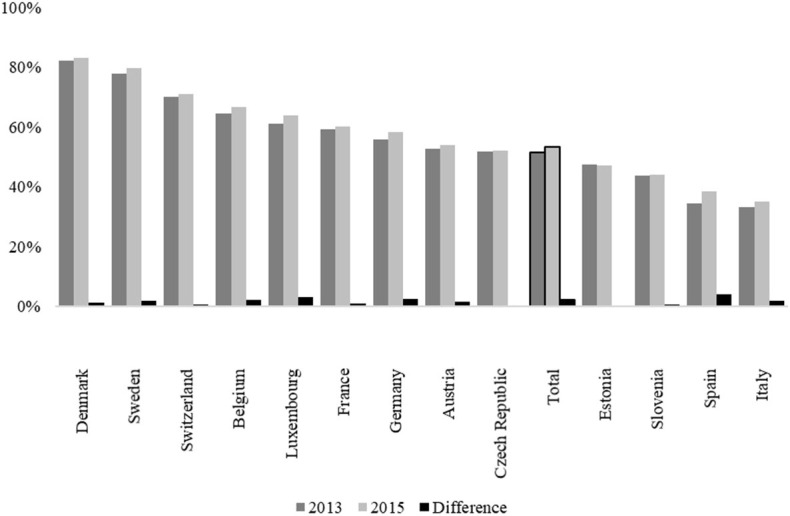
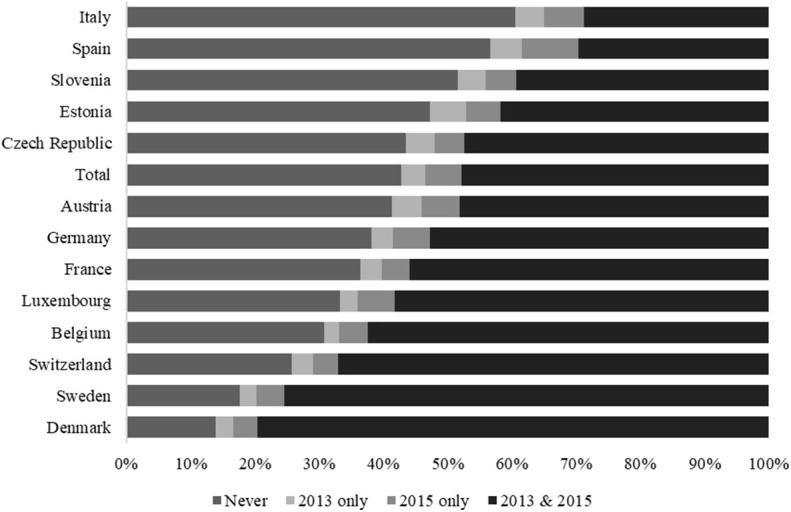
The internet can be a valuable source of social participation in modern society. Although increasing numbers of older adults are using the internet, numerous older adults also cease using the internet and become "offliners." The question of which factors in usage change (i.e., switching from onliner to offliner, and vice versa) are most influential remains unclear. This study investigates changes in internet use among the older European population using two waves of representative panel data for 13 countries from the Survey of Health, Aging and Retirement in Europe (SHARE). The analyses were based on 34,149 respondents aged 50 years and older. In general, the results indicate a positive trend by a slight (2%) increase in usage, from 51% in 2013 to 53% in 2015. However, the results also show that a total of 6% had not recently used the internet, although they had done so in the past. Our multilevel results suggest that both the onset of and cessation of internet usage are primarily driven by changes in socioeconomic resources (income and occupation), health resources (subjective health and grip strength), living situation (via relocation), and social factors (partnership and distance to children) as well as contextual factors such as country-specific wealth and social indexes and internet infrastructure. The study underlines the importance of investigating the influencing factors for commencing internet usage and of determining which factors lead to its increase.
在现代社会,互联网可以成为社会参与的宝贵资源。尽管越来越多的老年人在使用互联网,但也有许多老年人不再使用互联网,成为了“离线者”。关于使用变化中的哪些因素(即从在线者转变为离线者,反之亦然)最具影响力,这一问题仍不明确。本研究利用来自欧洲健康、老龄化与退休调查(SHARE)的针对13个国家的两波代表性面板数据,调查了欧洲老年人群体的互联网使用变化情况。分析基于34149名年龄在50岁及以上的受访者。总体而言,结果显示出一种积极趋势,使用率略有上升(2%),从2013年的51%升至2015年的53%。然而,结果也表明,尽管有6%的人过去使用过互联网,但最近没有使用。我们的多层次结果表明,互联网使用的开始和停止主要受社会经济资源(收入和职业)、健康资源(主观健康和握力)、生活状况(通过搬迁)、社会因素(伴侣关系和与子女的距离)以及诸如特定国家的财富和社会指数以及互联网基础设施等背景因素的变化驱动。该研究强调了调查开始使用互联网的影响因素以及确定哪些因素导致其增加的重要性。