Huang Zhusong, Lan Jinfu, Gao Xi
Department of Orthopaedics, Fuzhou Second Hospital of Xiamen University, No. 47 Shangteng Road, Cangshan District, Fuzhou, Fujian 350007, China.
ACS Omega. 2021 Mar 31;6(14):9442-9448. doi: 10.1021/acsomega.0c06066. eCollection 2021 Apr 13.
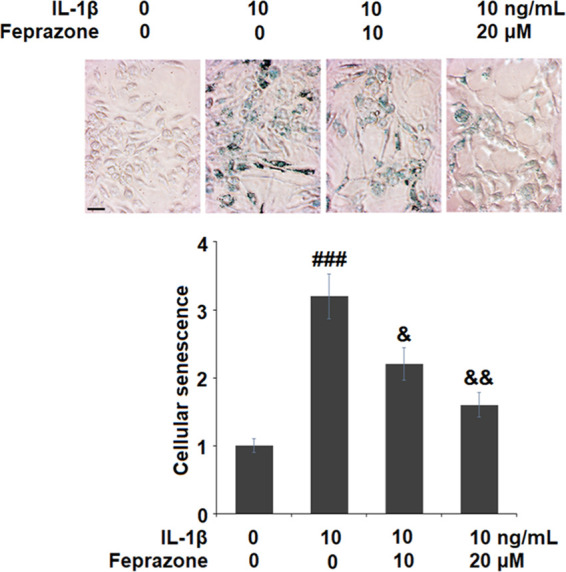
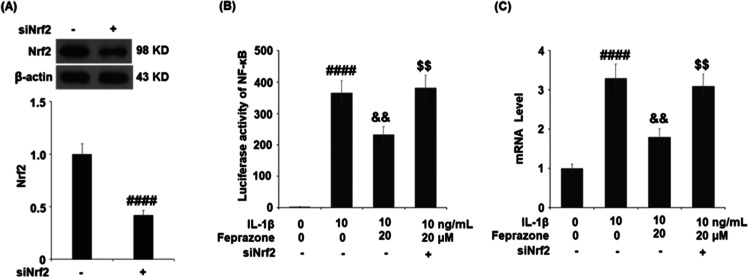
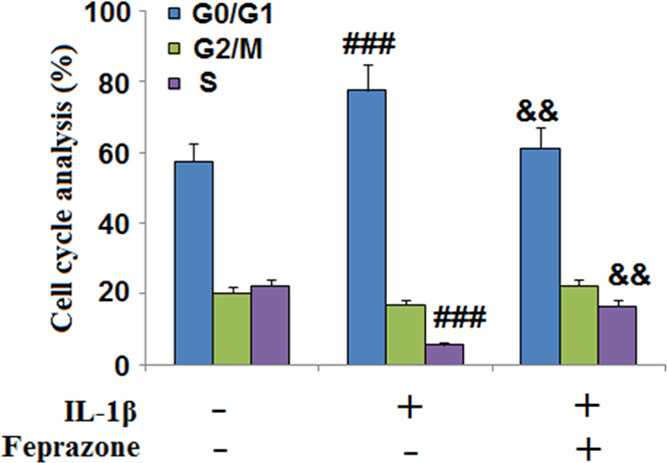
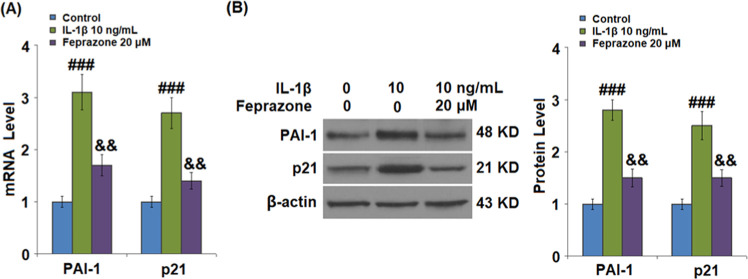
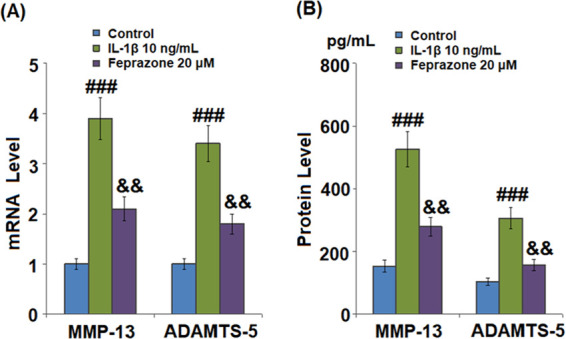
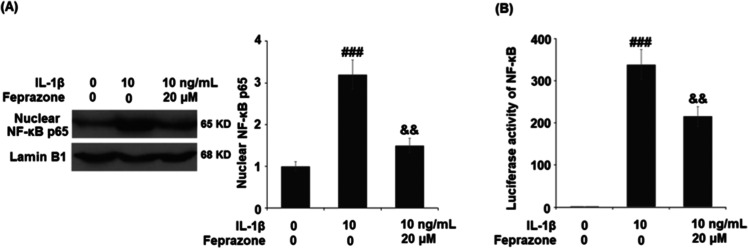
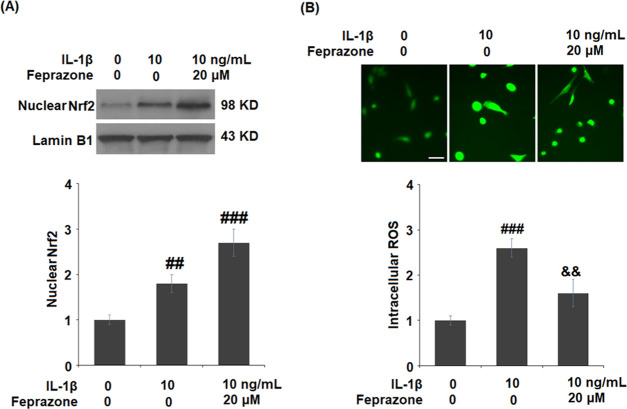
The proinflammatory cytokine interleukin-1 β (IL-1β)-mediated cellular senescence in chondrocytes is involved in the development and pathological progression of osteoarthritis (OA). Feprazone, a nonsteroidal anti-inflammatory drug (NSAID) and a cyclooxygenase (COX) inhibitor, is widely used in clinics. This study aims to investigate whether Feprazone has a protective effect against IL-1β-induced cellular senescence in human chondrocytes. In this study, C-28/I2 chondrocytes were stimulated with IL-1β (10 ng/mL) in the presence or absence of Feprazone (10 and 20 μM). Cellular senescence was assessed using senescence-associated β-galactosidase (SA-β-Gal) staining. The cell cycle was examined using flow cytometry. Gene and protein expressions were determined with real-time polymerase chain reaction (PCR) and western blot analysis. We found that treatment with Feprazone ameliorated IL-1β-induced increase in cellular senescence. Feprazone increased telomerase activity and prevented cell cycle arrest in the G0/G1 phase. We also found that Feprazone reduced the expressions of plasminogen activator inhibitor-1 (PAI-1) and p21, two important regulators of cellular senescence. Additionally, treatment with Feprazone reduced the expressions of matrix metalloprotein (MMP-13) and a disintegrin-like and metalloproteinase with thrombospondin type-1 motif-5 (ADAMTS-5). Interestingly, Feprazone prevented the activation of nuclear factor kappa-B (NF-κB) by preventing nuclear translocation of NF-κB p65 and the luciferase activity of the NF-κB promoter. The results also show that Feprazone increased nuclear levels of nuclear factor erythroid 2-related factor-2 (Nrf2) and reduced the production of reactive oxygen species (ROS). Importantly, silencing of Nrf2 abolished the protective effects of Feprazone against IL-1β-induced NF-κB activation and cellular senescence. These findings shed light on the potential use of Feprazone in the treatment of OA based on a novel mechanism.
促炎细胞因子白细胞介素-1β(IL-1β)介导的软骨细胞衰老参与骨关节炎(OA)的发生发展及病理进程。非甾体抗炎药(NSAID)及环氧化酶(COX)抑制剂非普拉宗在临床上广泛应用。本研究旨在探究非普拉宗对IL-1β诱导的人软骨细胞衰老是否具有保护作用。在本研究中,在存在或不存在非普拉宗(10和20 μM)的情况下,用IL-1β(10 ng/mL)刺激C-28/I2软骨细胞。使用衰老相关β-半乳糖苷酶(SA-β-Gal)染色评估细胞衰老。通过流式细胞术检测细胞周期。用实时聚合酶链反应(PCR)和蛋白质印迹分析确定基因和蛋白质表达。我们发现,非普拉宗处理改善了IL-1β诱导的细胞衰老增加。非普拉宗增加端粒酶活性并防止细胞周期停滞在G0/G1期。我们还发现,非普拉宗降低了纤溶酶原激活物抑制剂-1(PAI-1)和p21的表达,这是细胞衰老的两个重要调节因子。此外,非普拉宗处理降低了基质金属蛋白酶(MMP-13)和具有血小板反应蛋白基序的解聚素样金属蛋白酶-5(ADAMTS-5)的表达。有趣的是,非普拉宗通过阻止NF-κB p65的核转位和NF-κB启动子的荧光素酶活性来阻止核因子κB(NF-κB)的激活。结果还表明,非普拉宗增加了核因子红细胞2相关因子2(Nrf2)的核水平并减少了活性氧(ROS)的产生。重要的是,Nrf2沉默消除了非普拉宗对IL-1β诱导的NF-κB激活和细胞衰老的保护作用。这些发现基于一种新机制揭示了非普拉宗在OA治疗中的潜在用途。