Song Min, Meng Liukun, Liu Xiaoxi, Yang Yan
Adult Cardiac Surgery Center, State Key Laboratory of Cardiovascular Disease, National Center for Cardiovascular Diseases and Fuwai Hospital, CAMS and PUMC, Beijing 100037, China.
ACS Omega. 2021 Feb 9;6(7):4850-4856. doi: 10.1021/acsomega.0c05826. eCollection 2021 Feb 23.
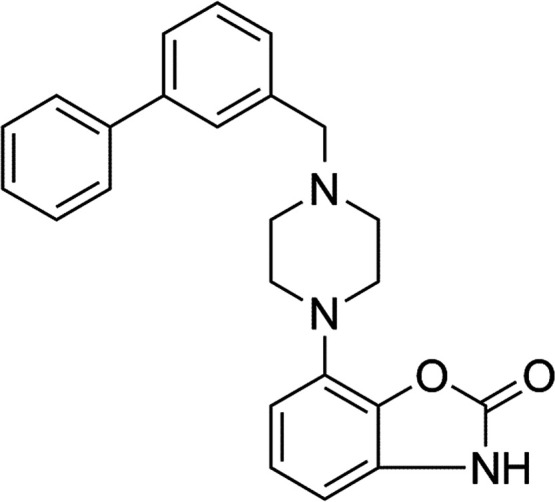
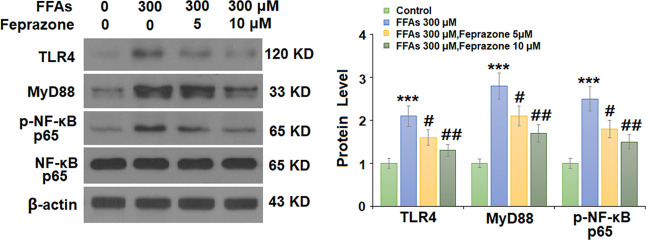
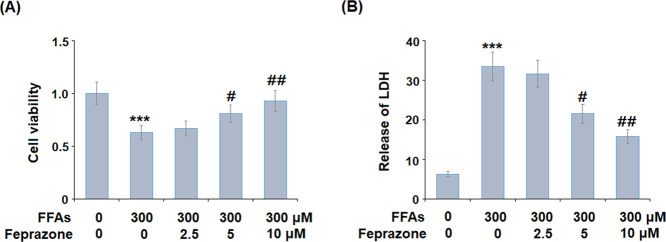
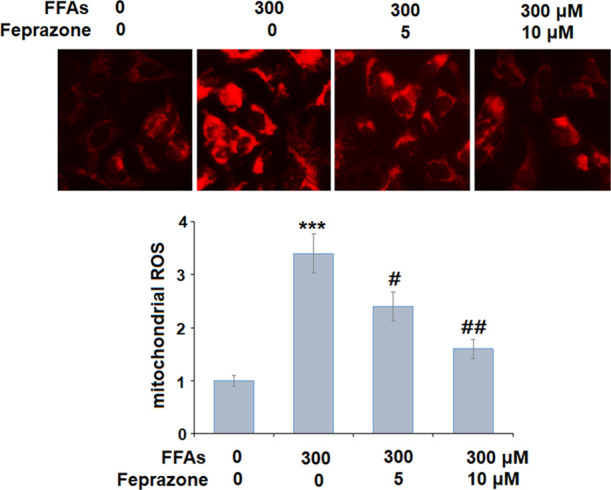
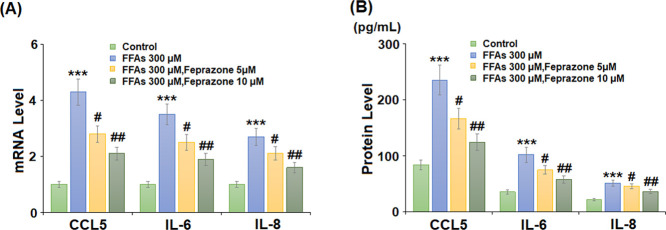
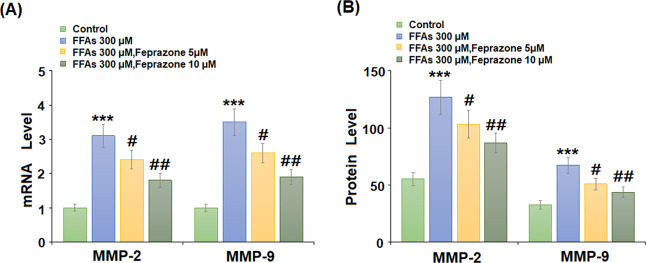
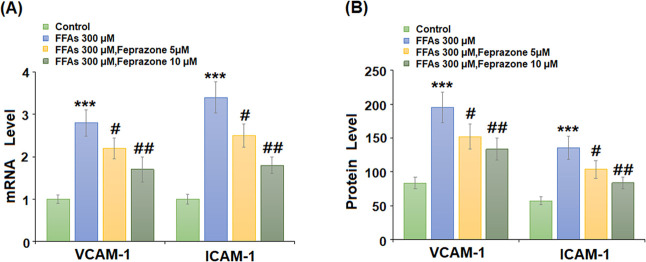
Increased levels of free fatty acid (FFA)-induced endothelial dysfunction play an important role in the initiation and development of atherosclerosis. Feprazone is a nonsteroidal anti-inflammatory compound. However, the beneficial effects of feprazone on FFA-induced endothelial dysfunction have not been reported before. In the current study, we found that treatment with feprazone ameliorated FFA-induced cell death of human aortic endothelial cells (HAECs) by restoring cell viability and reducing the release of lactate dehydrogenase (LDH). Importantly, we found that treatment with feprazone ameliorated FFA-induced oxidative stress by reducing the production of mitochondrial reactive oxygen species (ROS). In addition, feprazone prevented FFA-induced expression and secretion of proinflammatory cytokines and chemokines, such as chemokine ligand 5 (CCL5), interleukin-6 (IL-6), and interleukin-8 (IL-8). We also found that feprazone decreased the expression of matrix metalloproteinase-2 (MMP-2) and matrix metalloproteinase-9 (MMP-9). Interestingly, we found that feprazone reduced the expression of cell adhesion molecules, such as vascular cell adhesion molecule-1 (VCAM-1) and intercellular cell adhesion molecule-1 (ICAM-1). Our results also demonstrate that feprazone prevented FFA-induced activation of the toll-like receptor 4 (TLR4)/myeloid differentiation factor 88 (MyD88)/nuclear factor kappa-B (NF-κB) signaling pathway. These findings suggest that feprazone might serve as a potential agent for the treatment of atherosclerosis by improving the endothelial function.
游离脂肪酸(FFA)水平升高诱导的内皮功能障碍在动脉粥样硬化的发生和发展中起重要作用。非那宗是一种非甾体类抗炎化合物。然而,非那宗对FFA诱导的内皮功能障碍的有益作用此前尚未见报道。在本研究中,我们发现非那宗处理可通过恢复细胞活力和减少乳酸脱氢酶(LDH)释放来改善FFA诱导的人主动脉内皮细胞(HAECs)死亡。重要的是,我们发现非那宗处理可通过减少线粒体活性氧(ROS)的产生来改善FFA诱导的氧化应激。此外,非那宗可预防FFA诱导的促炎细胞因子和趋化因子的表达和分泌,如趋化因子配体5(CCL5)、白细胞介素-6(IL-6)和白细胞介素-8(IL-8)。我们还发现非那宗可降低基质金属蛋白酶-2(MMP-2)和基质金属蛋白酶-9(MMP-9)的表达。有趣的是,我们发现非那宗可降低细胞黏附分子的表达,如血管细胞黏附分子-1(VCAM-1)和细胞间黏附分子-1(ICAM-1)。我们的结果还表明,非那宗可预防FFA诱导的Toll样受体4(TLR4)/髓样分化因子88(MyD88)/核因子κB(NF-κB)信号通路的激活。这些发现表明,非那宗可能通过改善内皮功能而成为治疗动脉粥样硬化的潜在药物。