Vaught David B, Merkel Alyssa R, Lynch Conor C, Edwards James, Tantawy Mohammed Noor, Hilliard Timothy, Wang Shan, Peterson Todd, Johnson Rachelle W, Sterling Julie A, Brantley-Sieders Dana
Department of Cancer Biology Vanderbilt University School of Medicine Nashville TN USA.
Vanderbilt Center for Bone Biology Vanderbilt University School of Medicine Nashville TN USA.
JBMR Plus. 2021 Mar 9;5(4):e10465. doi: 10.1002/jbm4.10465. eCollection 2021 Apr.
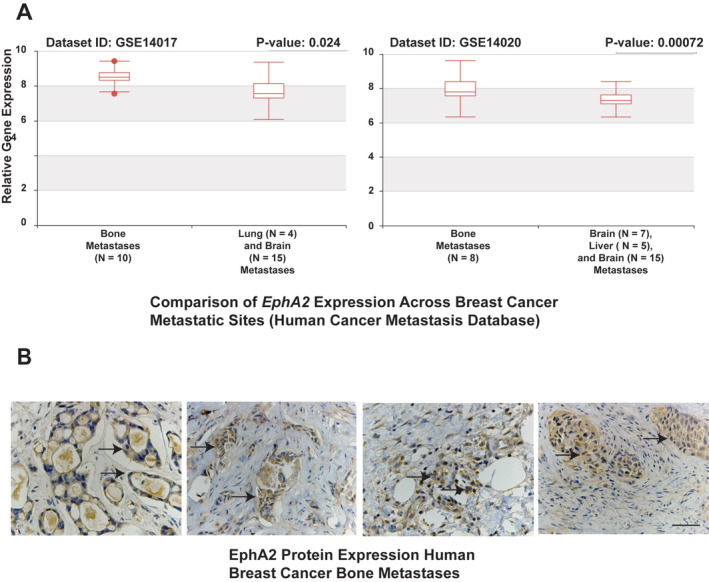
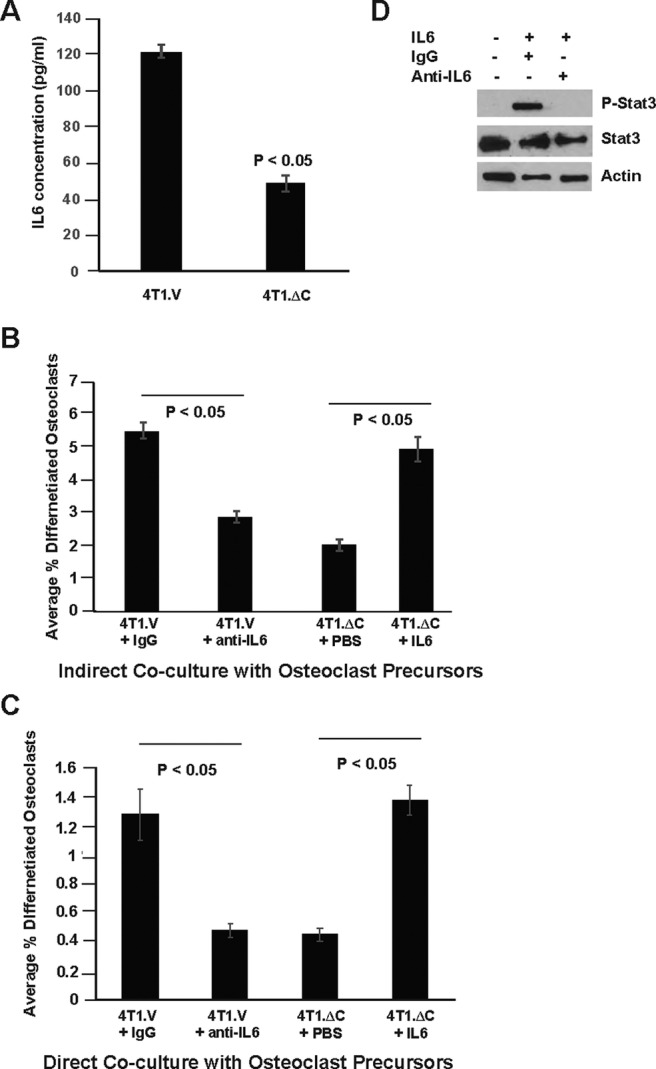
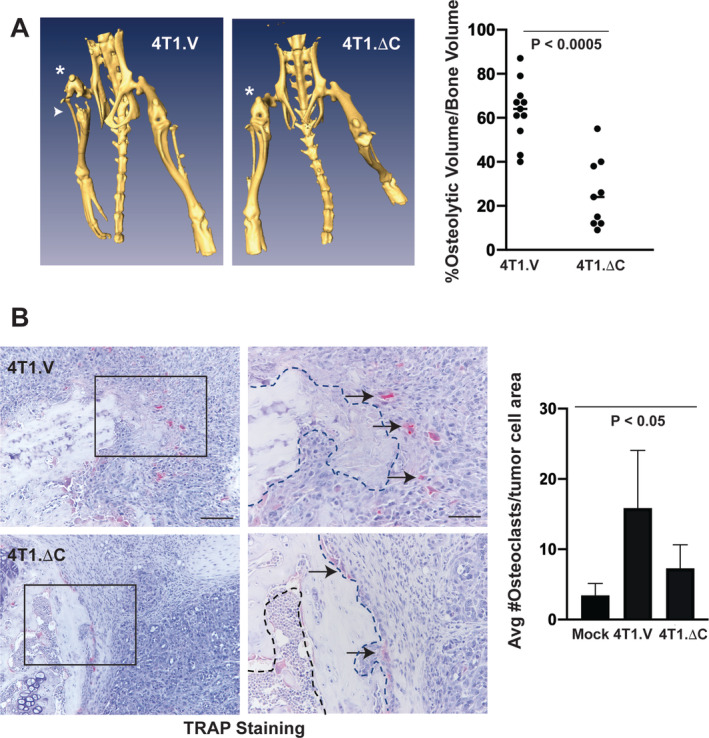
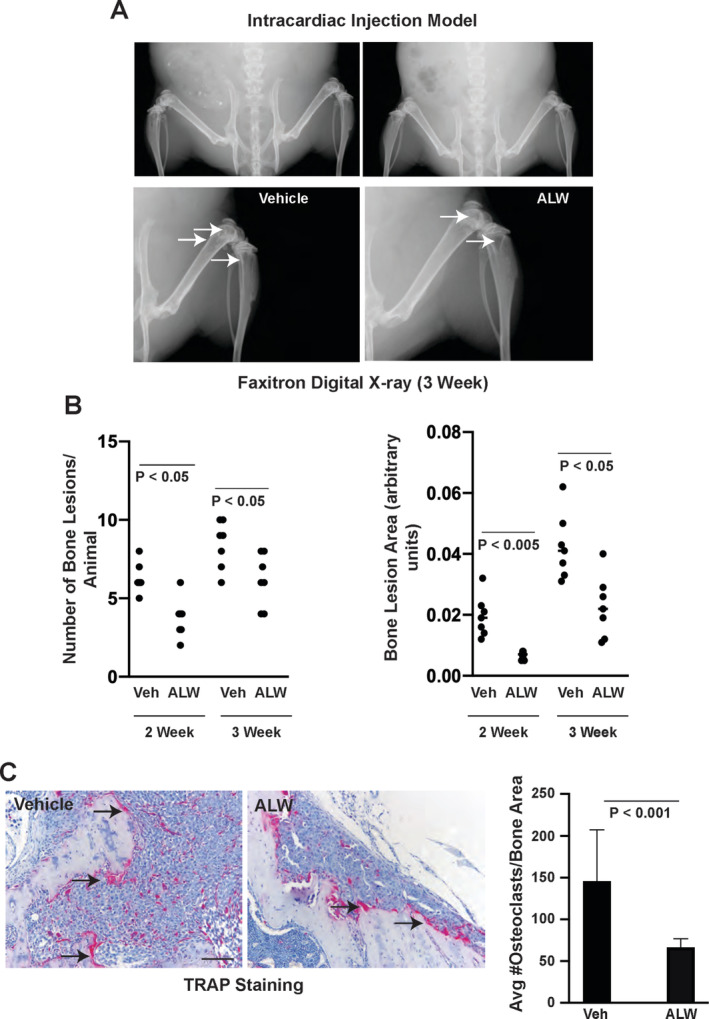
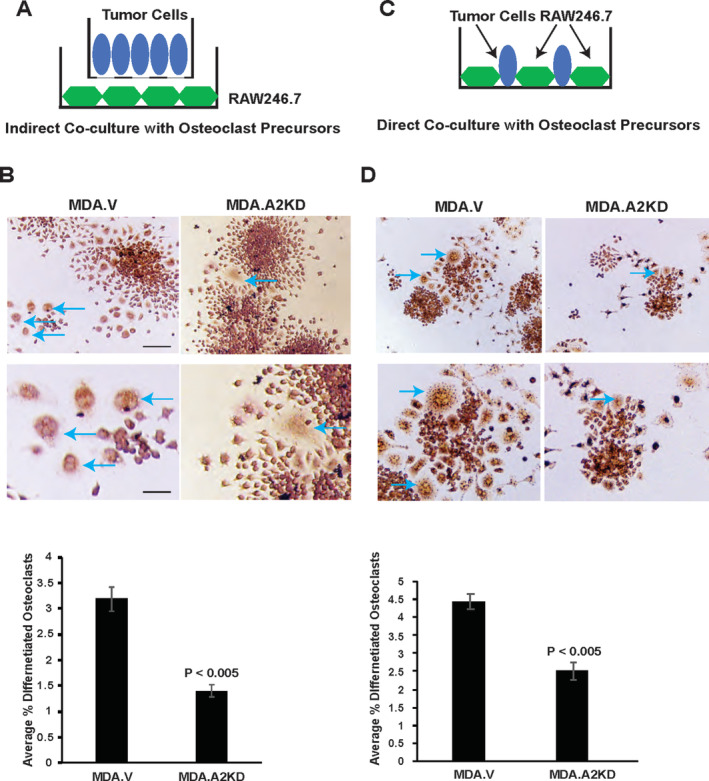
EphA2 receptor tyrosine kinase (RTK) is highly expressed in breast tumor cells across multiple molecular subtypes and correlates with poor patient prognosis. In this study, the potential role of EphA2 in this clinically relevant phenomenon is investigated as metastasis of breast cancer to bone is a major cause of morbidity and mortality in patients. It was found that the EphA2 function in breast cancer cells promotes osteoclast activation and the development of osteolytic bone disease. Blocking EphA2 function molecularly and pharmacologically in breast tumors reduced the number and size of bone lesions and the degree of osteolytic disease in intratibial and intracardiac mouse models, which correlated with a significant decrease in the number of osteoclasts at the tumor-bone interface. EphA2 loss of function in tumor cells impaired osteoclast progenitor differentiation in coculture, which is mediated, at least in part, by reduced expression of IL-6. transcript levels are enriched in human breast cancer bone metastatic lesions relative to visceral metastatic sites; EphA2 protein expression was detected in breast tumor cells in bone metastases in patient samples, supporting the clinical relevance of the study's findings. These data provide a strong rationale for the development and application of molecularly targeted therapies against EphA2 for the treatment of breast cancer bone metastatic disease. © 2021 The Authors. published by Wiley Periodicals LLC. on behalf of American Society for Bone and Mineral Research.
EphA2受体酪氨酸激酶(RTK)在多种分子亚型的乳腺肿瘤细胞中高表达,且与患者预后不良相关。在本研究中,鉴于乳腺癌骨转移是患者发病和死亡的主要原因,因此对EphA2在这一临床相关现象中的潜在作用进行了研究。研究发现,乳腺癌细胞中的EphA2功能可促进破骨细胞活化及溶骨性骨病的发展。在乳腺肿瘤中通过分子和药理学方法阻断EphA2功能,可减少胫骨内和心内小鼠模型中骨病变的数量和大小以及溶骨疾病的程度,这与肿瘤-骨界面处破骨细胞数量的显著减少相关。肿瘤细胞中EphA2功能丧失会损害共培养体系中破骨细胞前体的分化,这至少部分是由IL-6表达降低介导的。相对于内脏转移部位,EphA2转录水平在人乳腺癌骨转移灶中富集;在患者样本的骨转移乳腺肿瘤细胞中检测到EphA2蛋白表达,支持了该研究结果的临床相关性。这些数据为开发和应用针对EphA2的分子靶向疗法治疗乳腺癌骨转移疾病提供了有力的理论依据。© 2021作者。由Wiley Periodicals LLC代表美国骨与矿物质研究学会出版。