Public Laboratory, Tianjin Medical University Cancer Institute and Hospital, National Clinical Research Center for Cancer, Tianjin, 300060, China.
Key Laboratory of Cancer Prevention and Therapy, Tianjin, 300060, China.
Theranostics. 2022 May 13;12(9):4127-4146. doi: 10.7150/thno.72404. eCollection 2022.
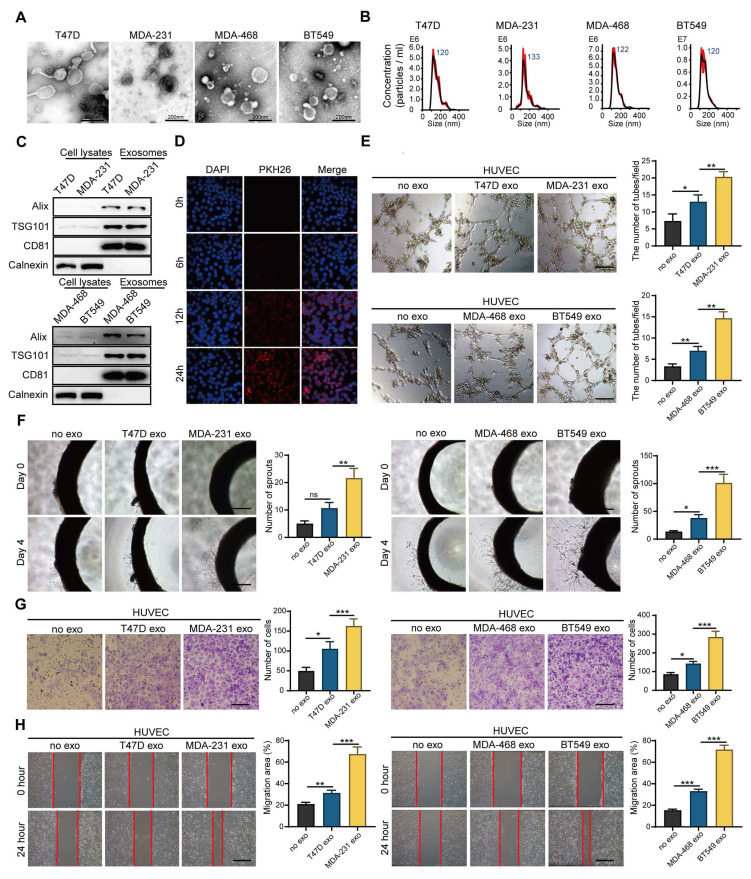
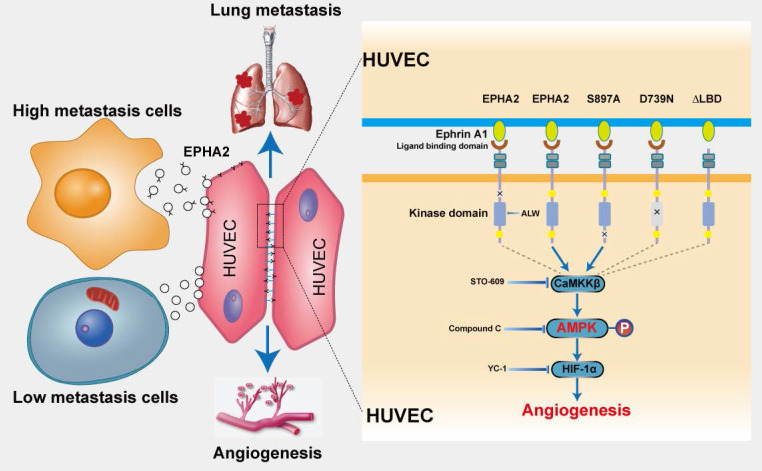
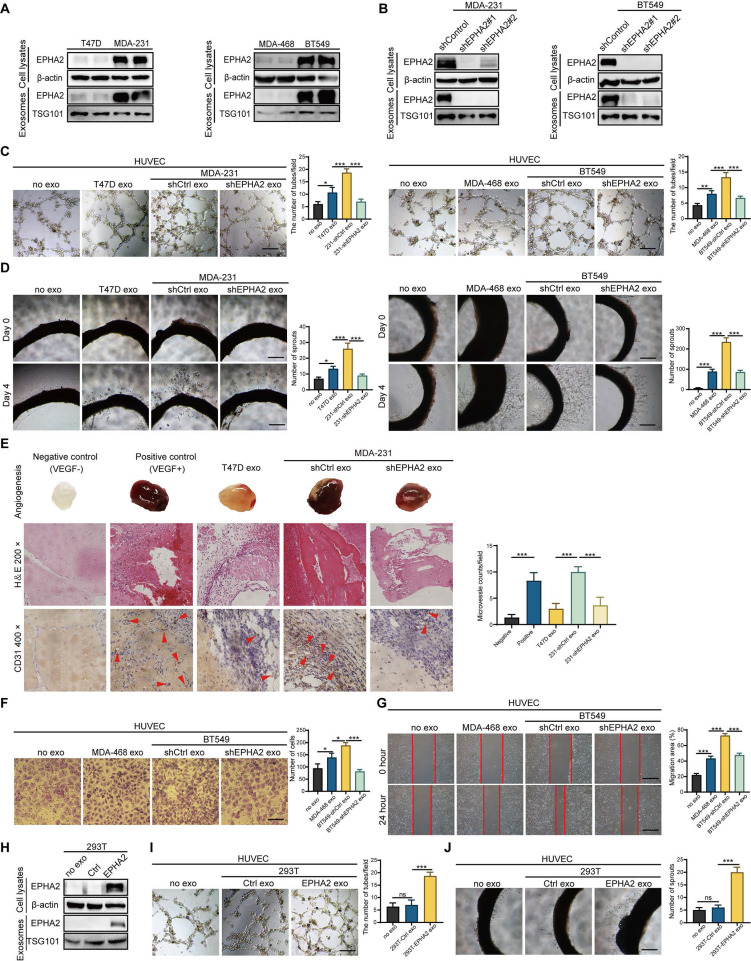
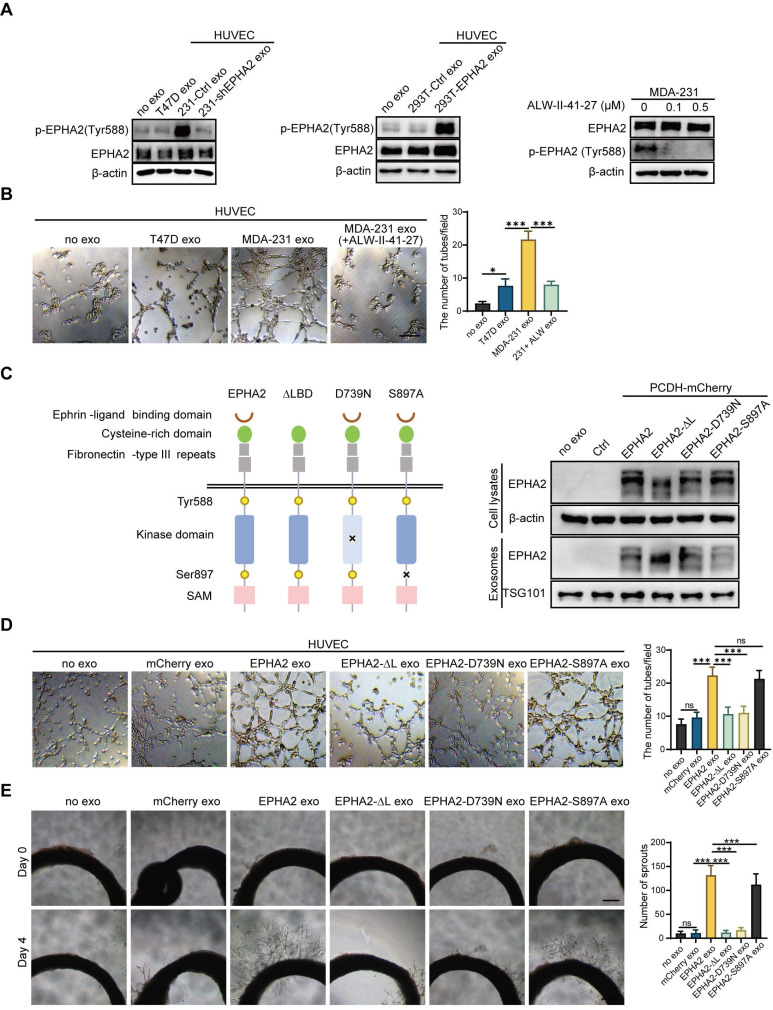
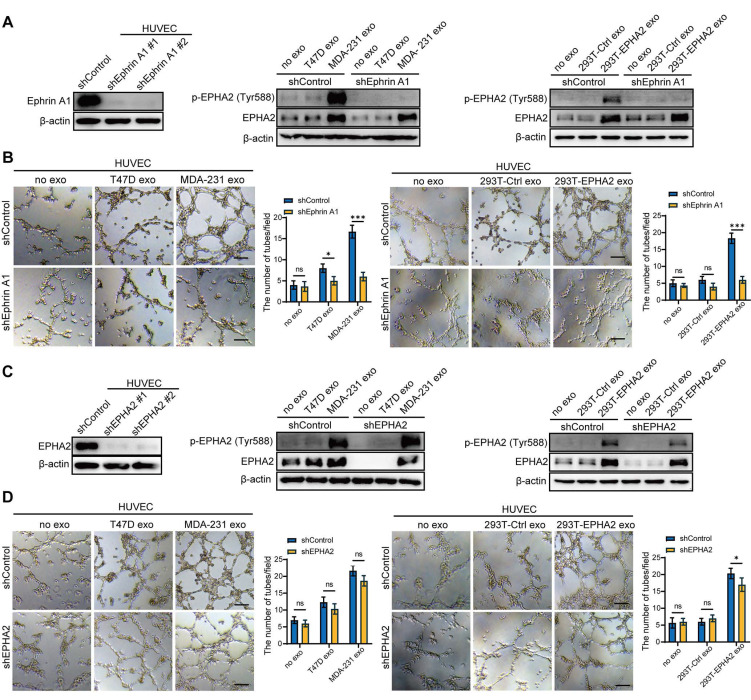
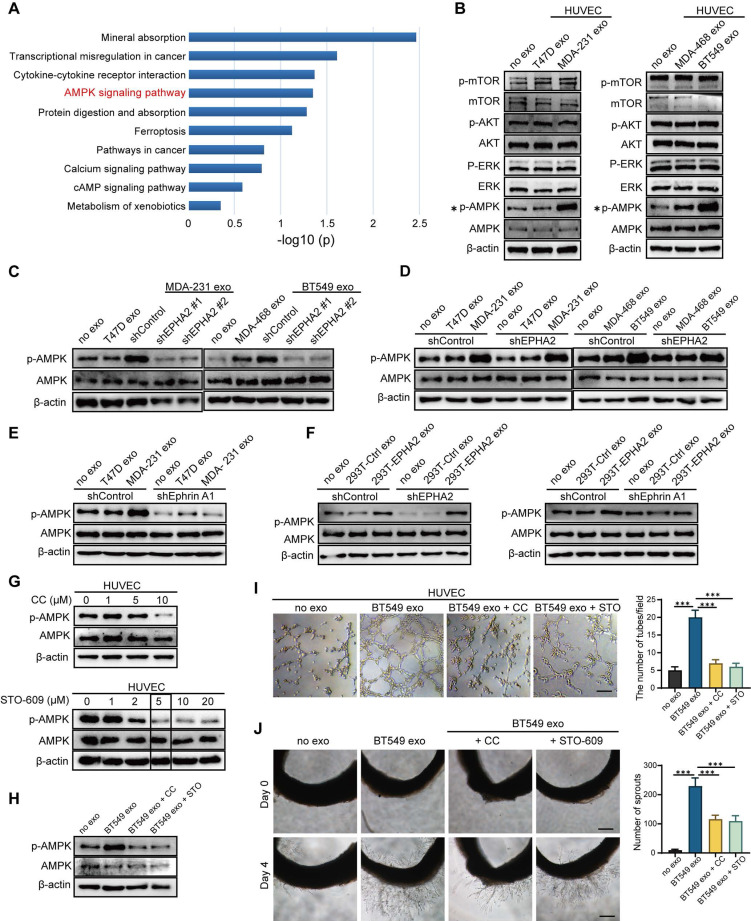
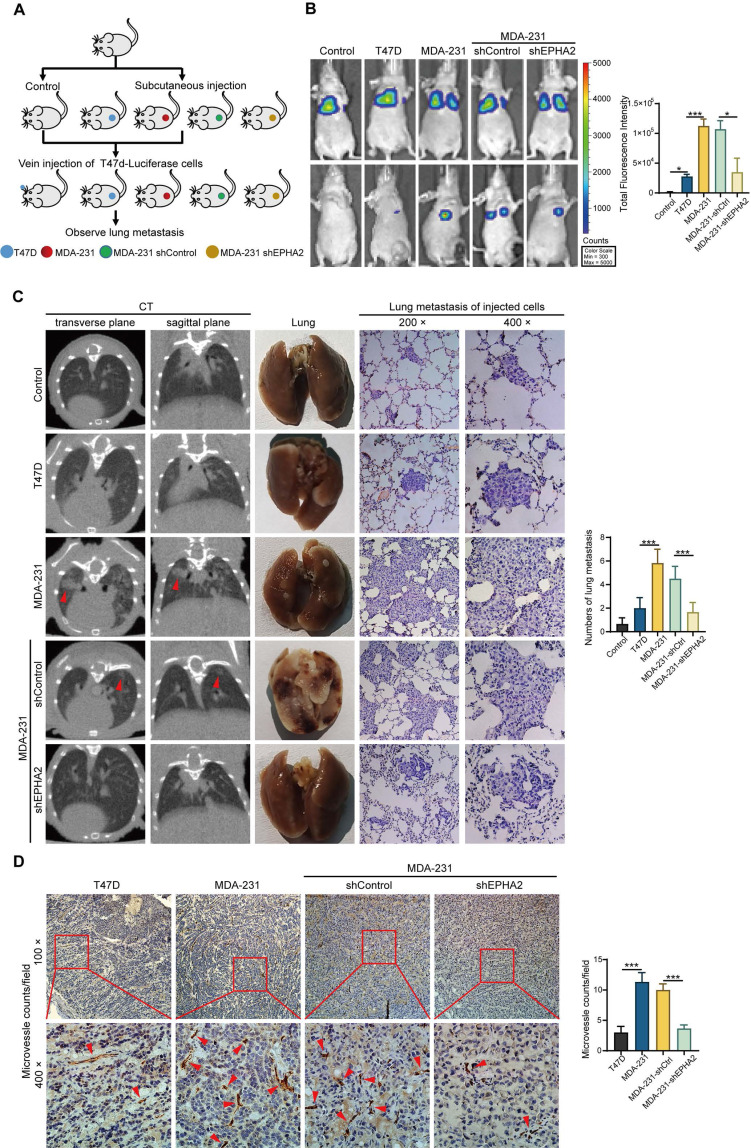
Angiogenesis is a fundamental process of tumorigenesis, growth, invasion and metastatic spread. Extracellular vesicles, especially exosomes, released by primary tumors promote angiogenesis and cancer progression. However, the mechanism underlying the pro-angiogenic potency of cancer cell-derived exosomes remains poorly understood. Exosomes were isolated from breast cancer cells with high metastatic potential (HM) and low metastatic potential (LM). The pro-angiogenic effects of these exosomes were evaluated by in vitro tube formation assays, wound healing assays, rat arterial ring budding assays and in vivo Matrigel plug assays. Subsequently, RNA sequencing, shRNA-mediated gene knockdown, overexpression of different EPHA2 mutants, and small-molecule inhibitors were used to analyze the angiogenesis-promoting effect of exosomal EPHA2 and its potential downstream mechanism. Finally, xenograft tumor models were established using tumor cells expressing different levels of EPHA2 to mimic the secretion of exosomes by tumor cells in vivo, and the metastasis of cancer cells were monitored using the IVIS Spectrum imaging system and Computed Tomography. Herein, we demonstrated that exosomes produced by HM breast cancer cells can promote angiogenesis and metastasis. EPHA2 was rich in HM-derived exosomes and conferred the pro-angiogenic effect. Exosomal EPHA2 can be transferred from HM breast cancer cells to endothelial cells. Moreover, it can stimulate the migration and tube-forming abilities of endothelial cells in vitro and promote angiogenesis and tumor metastasis in vivo. Mechanistically, exosomal EPHA2 activates the AMPK signaling via the ligand Ephrin A1-dependent canonical forward signaling pathway. Moreover, inhibition of the AMPK signaling impairs exosomal EPHA2-mediated pro-angiogenic effects. Our findings identify a novel mechanism of exosomal EPHA2-mediated intercellular communication from breast cancer cells to endothelial cells in the tumor microenvironment to provoke angiogenesis and metastasis. Targeting the exosomal EPHA2-AMPK signaling may serve as a potential strategy for breast cancer therapy.
血管生成是肿瘤发生、生长、侵袭和转移的基本过程。原发性肿瘤释放的细胞外囊泡,特别是外泌体,促进血管生成和癌症进展。然而,癌细胞衍生的外泌体促血管生成能力的机制仍知之甚少。 从高转移潜能(HM)和低转移潜能(LM)的乳腺癌细胞中分离出外泌体。通过体外管形成试验、划痕愈合试验、大鼠动脉环芽出试验和体内 Matrigel plugs 试验评估这些外泌体的促血管生成作用。随后,使用 RNA 测序、shRNA 介导的基因敲低、不同 EPHA2 突变体的过表达和小分子抑制剂来分析外泌体 EPHA2 的促血管生成作用及其潜在的下游机制。最后,使用表达不同水平 EPHA2 的肿瘤细胞建立异种移植肿瘤模型,模拟肿瘤细胞在体内分泌外泌体,并用 IVIS Spectrum 成像系统和计算机断层扫描监测癌细胞的转移。 本文证明,HM 乳腺癌细胞产生的外泌体可以促进血管生成和转移。EPHA2 在 HM 衍生的外泌体中丰富,并赋予其促血管生成作用。外泌体 EPHA2 可以从 HM 乳腺癌细胞转移到内皮细胞。此外,它可以刺激内皮细胞在体外的迁移和管状形成能力,并促进体内血管生成和肿瘤转移。从机制上讲,外泌体 EPHA2 通过配体 Ephrin A1 依赖性经典正向信号通路激活 AMPK 信号。此外,抑制 AMPK 信号会损害外泌体 EPHA2 介导的促血管生成作用。 我们的研究结果确定了一种新的机制,即肿瘤微环境中乳腺癌细胞通过外泌体 EPHA2 介导的细胞间通讯向内皮细胞传递,引发血管生成和转移。靶向外泌体 EPHA2-AMPK 信号可能成为乳腺癌治疗的一种潜在策略。