Sakakibara Iori, Yanagihara Yuta, Himori Koichi, Yamada Takashi, Sakai Hiroshi, Sawada Yuichiro, Takahashi Hirotaka, Saeki Noritaka, Hirakawa Hiroyuki, Yokoyama Atsushi, Fukada So-Ichiro, Sawasaki Tatsuya, Imai Yuuki
Division of Integrative Pathophysiology, Proteo-Science Center, Ehime University, Shitsukawa, Toon, Ehime 791-0295, Japan.
Department of Pathophysiology, Ehime University Graduate School of Medicine, Toon, Ehime 791-0295, Japan.
iScience. 2021 Mar 13;24(4):102303. doi: 10.1016/j.isci.2021.102303. eCollection 2021 Apr 23.
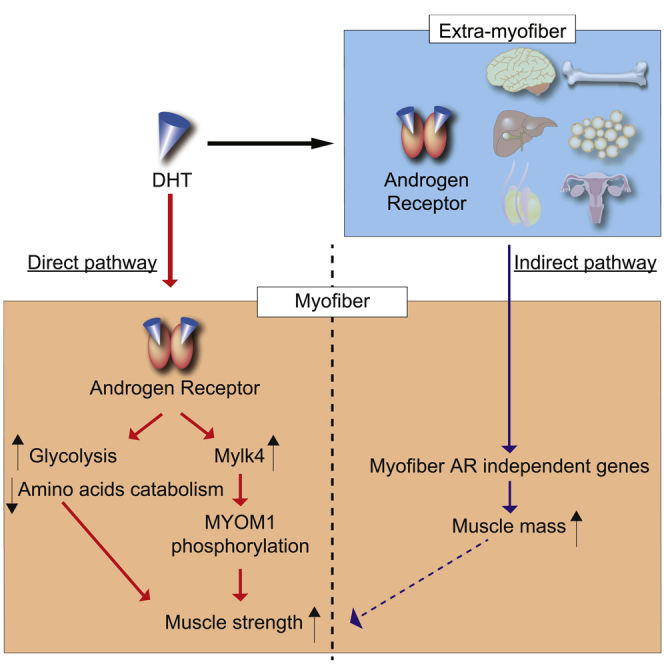
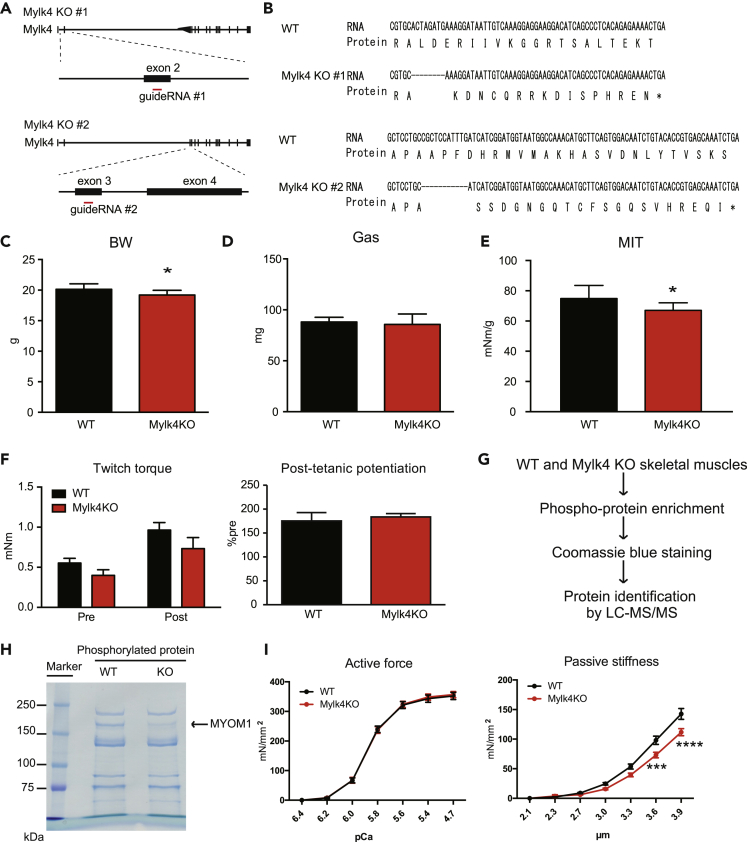
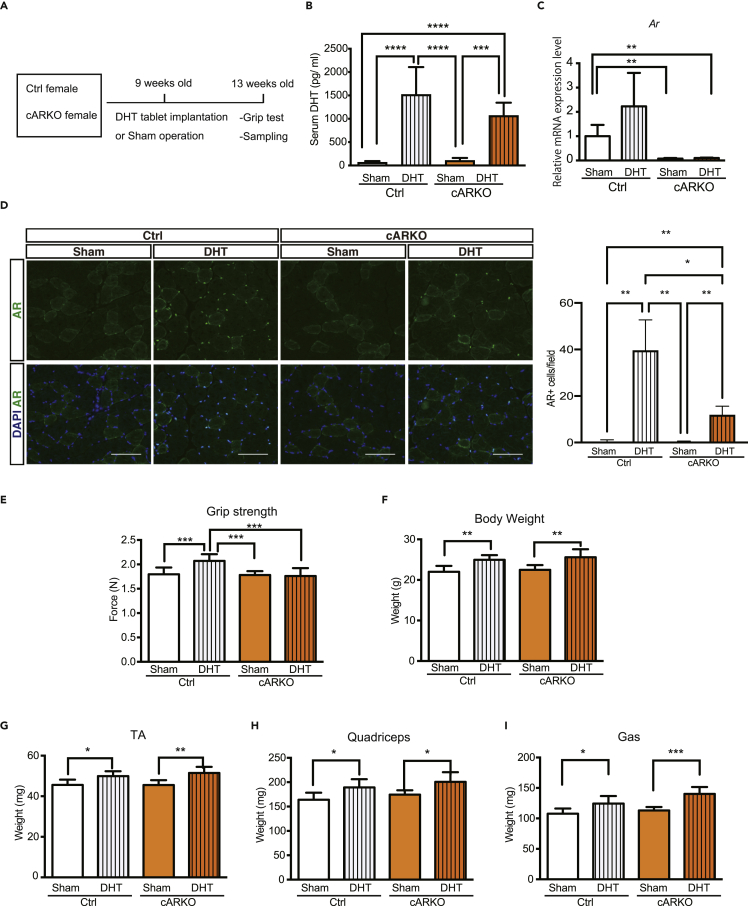
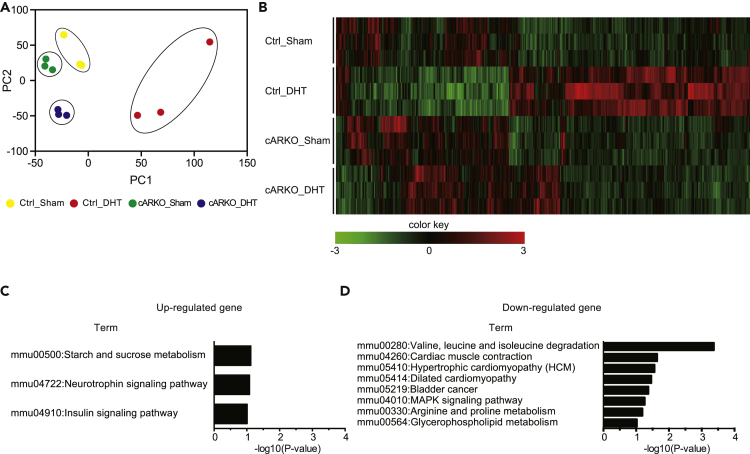
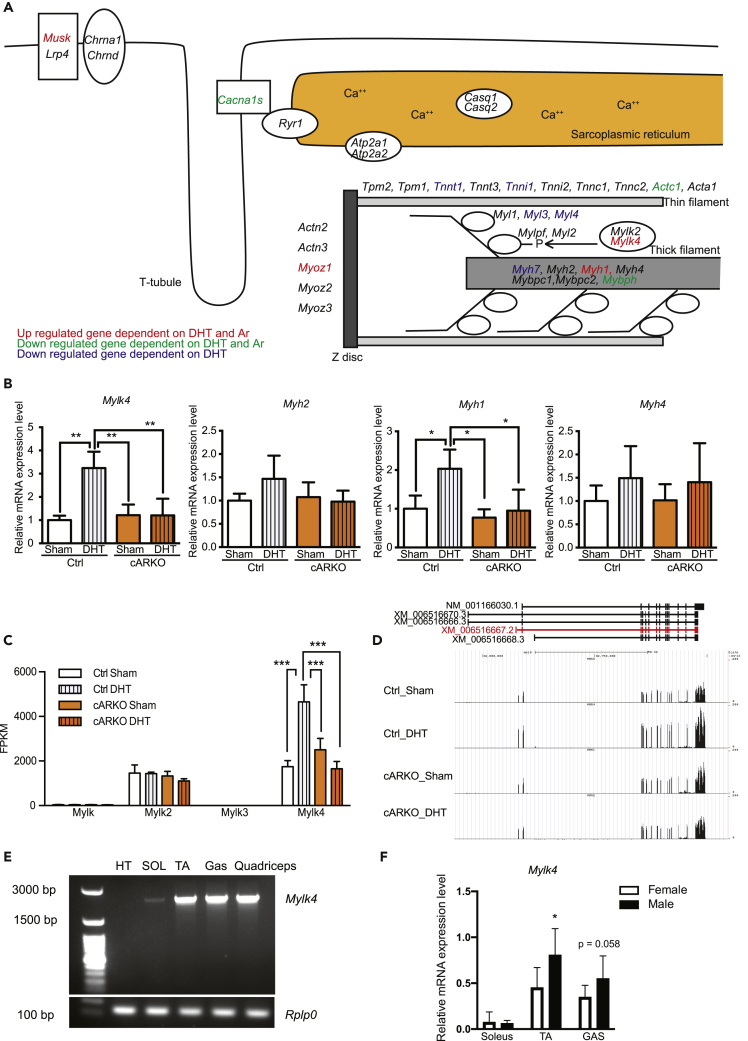
Androgens have a robust effect on skeletal muscles to increase muscle mass and strength. The molecular mechanism of androgen/androgen receptor (AR) action on muscle strength is still not well known, especially for the regulation of sarcomeric genes. In this study, we generated androgen-induced hypertrophic model mice, myofiber-specific androgen receptor knockout (cARKO) mice supplemented with dihydrotestosterone (DHT). DHT treatment increased grip strength in control mice but not in cARKO mice. Transcriptome analysis by RNA-seq, using skeletal muscles obtained from control and cARKO mice treated with or without DHT, identified a fast-type muscle-specific novel splicing variant of as a target of AR in skeletal muscles. knockout mice exhibited decreased maximum isometric torque of plantar flexion and passive stiffness of myofibers due to reduced phosphorylation of Myomesin 1 protein. This study suggests that androgen-induced skeletal muscle strength is mediated with Mylk4 and Myomesin 1 axis.
雄激素对骨骼肌有显著作用,可增加肌肉质量和力量。雄激素/雄激素受体(AR)作用于肌肉力量的分子机制仍不清楚,尤其是对肌节基因的调控。在本研究中,我们构建了雄激素诱导的肥大模型小鼠,即补充二氢睾酮(DHT)的肌纤维特异性雄激素受体敲除(cARKO)小鼠。DHT处理增加了对照小鼠的握力,但对cARKO小鼠没有影响。通过RNA测序对来自用或不用DHT处理的对照和cARKO小鼠的骨骼肌进行转录组分析,确定了一种快速型肌肉特异性的新型剪接变体作为骨骼肌中AR的靶标。敲除小鼠由于肌间蛋白1蛋白磷酸化减少,表现出跖屈最大等长扭矩和肌纤维被动僵硬度降低。本研究表明,雄激素诱导的骨骼肌力量是由Mylk4和肌间蛋白1轴介导的。