Department of Cell Science, Institute of Biomedical Sciences, School of Medicine, Fukushima Medical University, Fukushima, Japan.
Biomedical Research Institute, National Institute of Advanced Industrial Science and Technology (AIST), Ikeda, Japan.
Elife. 2021 Apr 19;10:e66313. doi: 10.7554/eLife.66313.
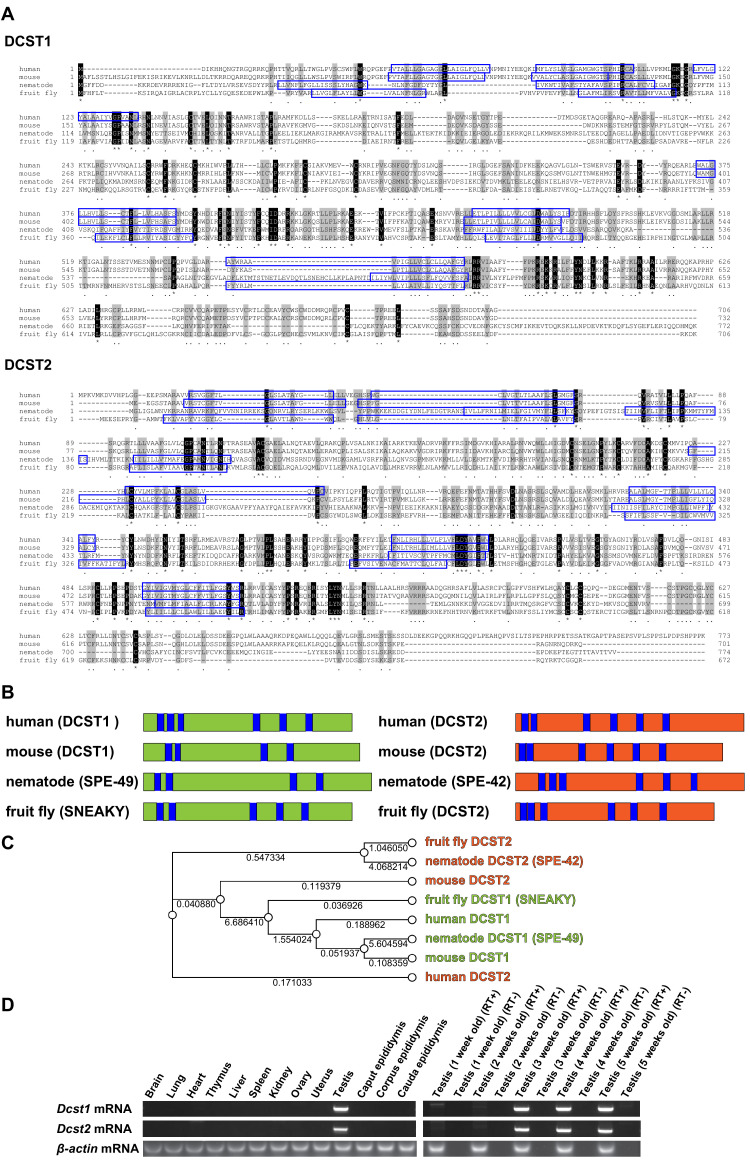
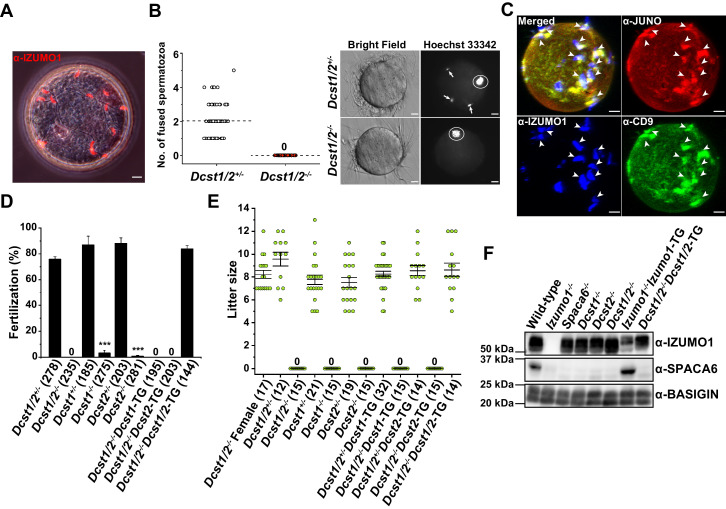
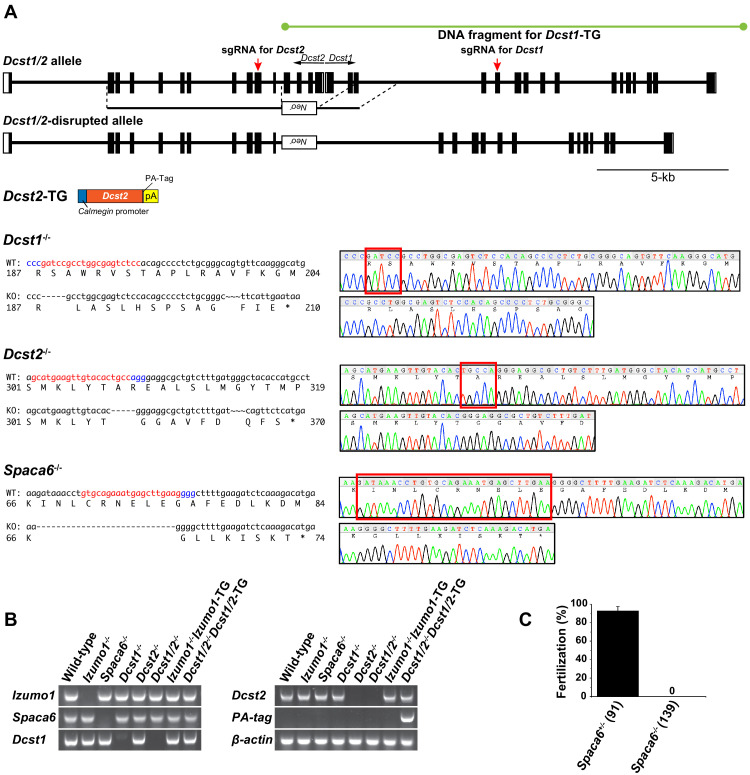
To trigger gamete fusion, spermatozoa need to activate the molecular machinery in which sperm IZUMO1 and oocyte JUNO (IZUMO1R) interaction plays a critical role in mammals. Although a set of factors involved in this process has recently been identified, no common factor that can function in both vertebrates and invertebrates has yet been reported. Here, we first demonstrate that the evolutionarily conserved factors dendrocyte expressed seven transmembrane protein domain-containing 1 (DCST1) and dendrocyte expressed seven transmembrane protein domain-containing 2 (DCST2) are essential for sperm-egg fusion in mice, as proven by gene disruption and complementation experiments. We also found that the protein stability of another gamete fusion-related sperm factor, SPACA6, is differently regulated by DCST1/2 and IZUMO1. Thus, we suggest that spermatozoa ensure proper fertilization in mammals by integrating various molecular pathways, including an evolutionarily conserved system that has developed as a result of nearly one billion years of evolution.
为了触发配子融合,精子需要激活分子机制,其中精子 IZUMO1 和卵母细胞 JUNO(IZUMO1R)的相互作用在哺乳动物中起着关键作用。尽管最近已经确定了一组参与该过程的因素,但尚未报道在脊椎动物和无脊椎动物中都能发挥作用的共同因素。在这里,我们首先通过基因敲除和互补实验证明,进化上保守的因子树突状细胞表达的七个跨膜蛋白结构域包含 1(DCST1)和树突状细胞表达的七个跨膜蛋白结构域包含 2(DCST2)对于小鼠的精子-卵子融合是必不可少的。我们还发现,另一种与配子融合相关的精子因子 SPACA6 的蛋白稳定性受 DCST1/2 和 IZUMO1 的不同调节。因此,我们认为,精子通过整合各种分子途径,包括作为近十亿年进化的结果而发展起来的进化上保守的系统,确保了哺乳动物的正常受精。