College of Agriculture and Biotechnology, Zhejiang University, Hangzhou 310058, China.
State Key Laboratory of Crop Genetics and Germplasm Enhancement, Cotton Hybrid R & D Engineering Center (the Ministry of Education), College of Agriculture, Nanjing Agricultural University, Nanjing 210095, China.
Plant Physiol. 2021 Aug 3;186(4):2152-2168. doi: 10.1093/plphys/kiab179.
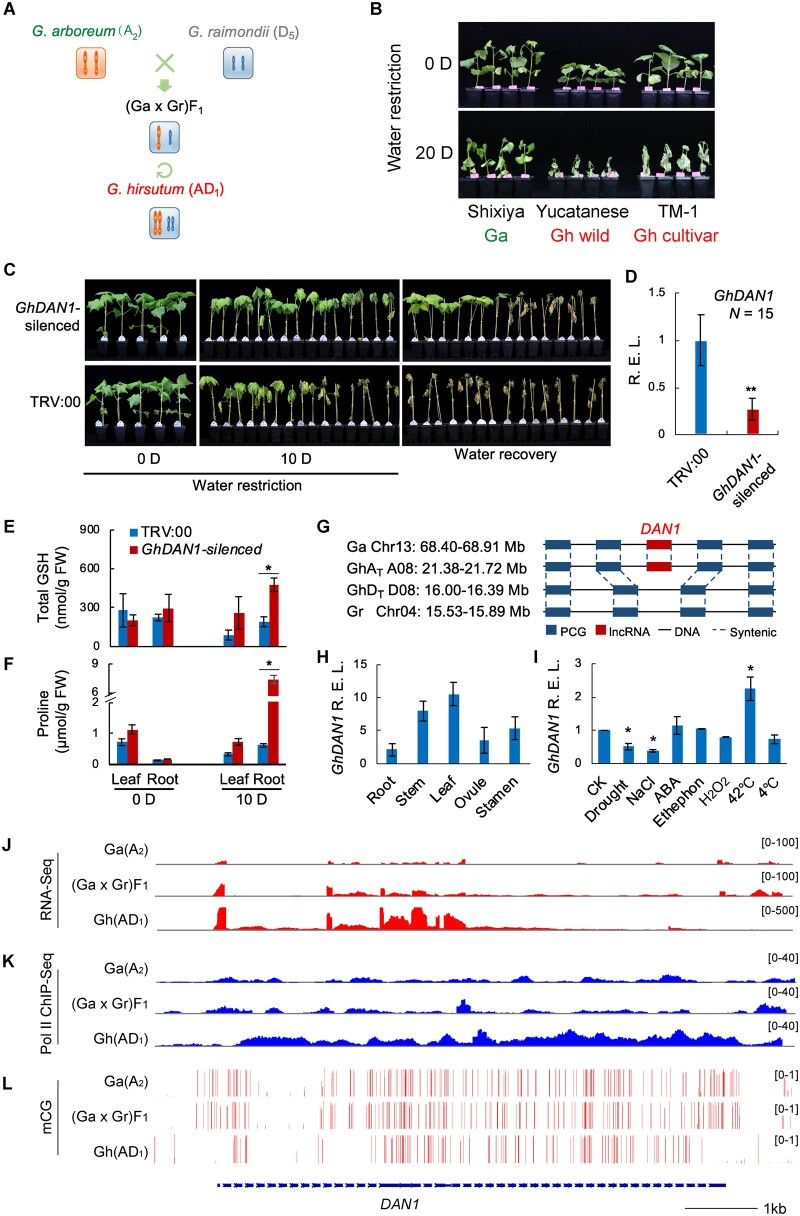
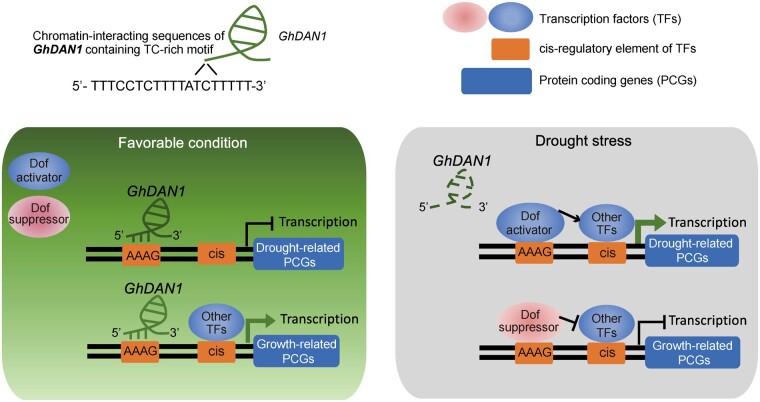
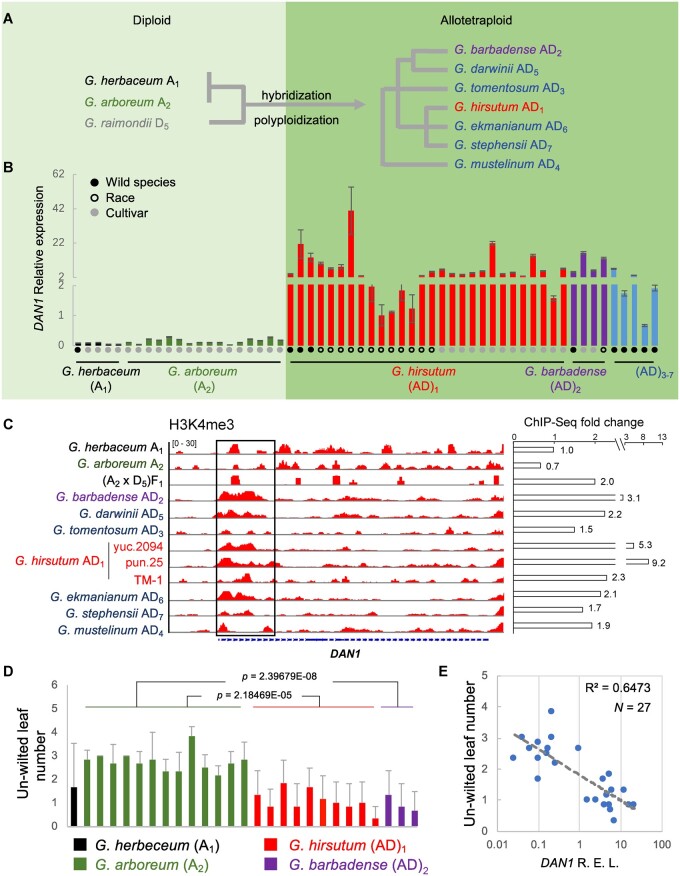
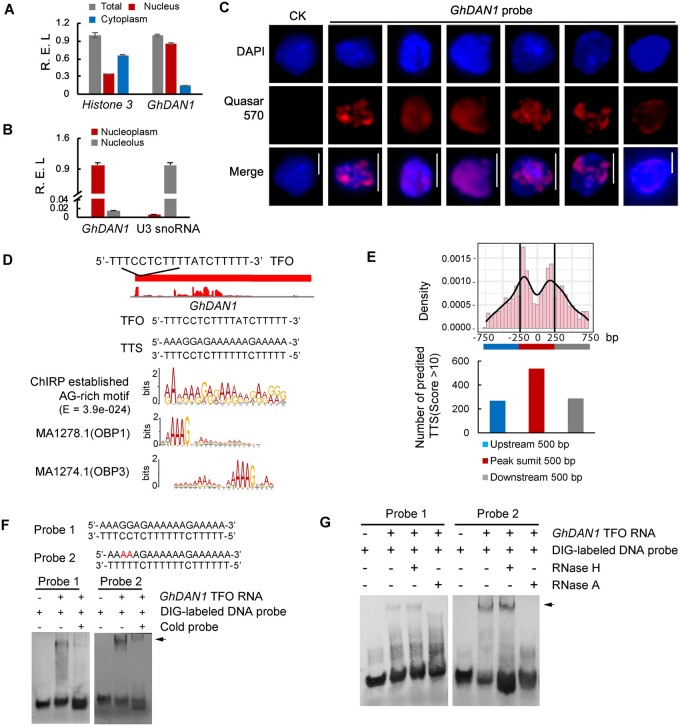
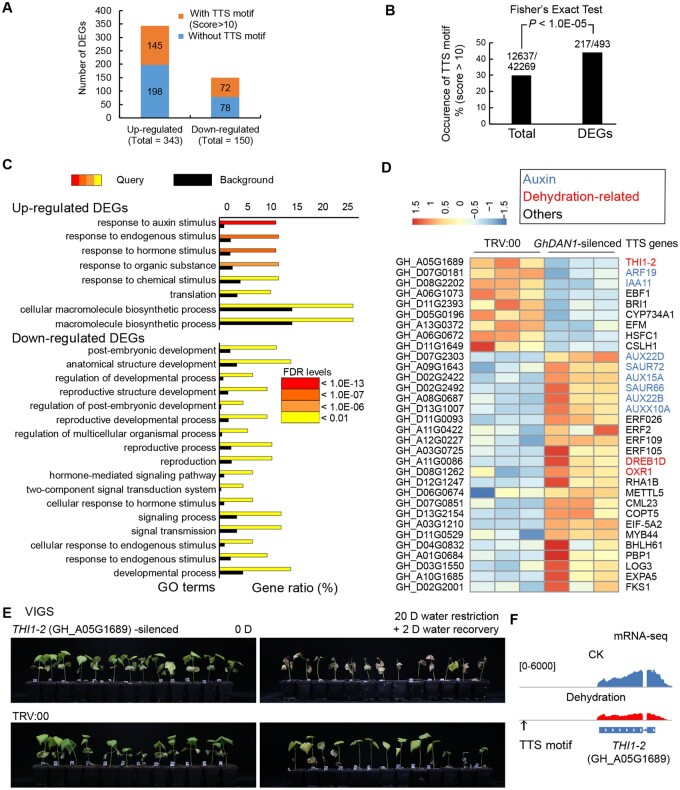
The genomic shock of whole-genome duplication (WGD) and hybridization introduces great variation into transcriptomes, for both coding and noncoding genes. An altered transcriptome provides a molecular basis for improving adaptation during the evolution of new species. The allotetraploid cotton, together with the putative diploid ancestor species compose a fine model for study the rapid gene neofunctionalization over the genome shock. Here we report on Drought-Associated Non-coding gene 1 (DAN1), a long intergenic noncoding RNA (lincRNA) that arose from the cotton progenitor A-diploid genome after hybridization and WGD events during cotton evolution. DAN1 in allotetraploid upland cotton (Gossypium hirsutum) is a drought-responsive lincRNA predominantly expressed in the nucleoplasm. Chromatin isolation by RNA purification profiling and electrophoretic mobility shift assay analysis demonstrated that GhDAN1 RNA can bind with DNA fragments containing AAAG motifs, similar to DNA binding with one zinc finger transcription factor binding sequences. The suppression of GhDAN1 mainly regulates genes with AAAG motifs in auxin-response pathways, which are associated with drought stress regulation. As a result, GhDAN1-silenced plants exhibit improved tolerance to drought stress. This phenotype resembles the drought-tolerant phenotype of the A-diploid cotton ancestor species, which has an undetectable expression of DAN1. The role of DAN1 in cotton evolution and drought tolerance regulation suggests that the genomic shock of interspecific hybridization and WGD stimulated neofunctionalization of non-coding genes during the natural evolutionary process.
全基因组复制(WGD)和杂交引起的基因组冲击为编码和非编码基因的转录组带来了巨大的变异。改变的转录组为新物种进化过程中的适应性提高提供了分子基础。异源四倍体棉花,连同假定的二倍体祖先物种,为研究基因组冲击下快速基因新功能化提供了一个很好的模型。在这里,我们报告了干旱相关非编码基因 1(DAN1),这是一种长的基因间非编码 RNA(lincRNA),它是在棉花进化过程中杂交和 WGD 事件后从棉花祖先生殖体 A-二倍体基因组中产生的。异源四倍体陆地棉(Gossypium hirsutum)中的 DAN1 是一种干旱响应的 lincRNA,主要在核质中表达。通过 RNA 纯化分析和电泳迁移率变动分析分离染色质表明,GhDAN1 RNA 可以与含有 AAAG 基序的 DNA 片段结合,类似于与一个锌指转录因子结合序列的 DNA 结合。GhDAN1 的抑制主要调节生长素反应途径中具有 AAAG 基序的基因,这些基因与干旱胁迫调节有关。因此,沉默 GhDAN1 的植物表现出对干旱胁迫的耐受性提高。这种表型类似于 A-二倍体棉花祖先物种的耐旱表型,其 DAN1 表达不可检测。DAN1 在棉花进化和耐旱性调节中的作用表明,种间杂交和 WGD 的基因组冲击在自然进化过程中刺激了非编码基因的新功能化。