Magwanga Richard Odongo, Lu Pu, Kirungu Joy Nyangasi, Dong Qi, Hu Yangguang, Zhou Zhongli, Cai Xiaoyan, Wang Xingxing, Hou Yuqing, Wang Kunbo, Liu Fang
State Key Laboratory of Cotton Biology/Institute of Cotton Research, Chinese Academy of Agricultural Sciences, Anyang 455000, China.
School of Biological and Physical Sciences (SBPS), Main Campus, Jaramogi Oginga Odinga University of Science and Technology (JOOUST), Main Campus, P.O. Box 210-40601 Bondo, Kenya.
G3 (Bethesda). 2018 Jul 31;8(8):2781-2803. doi: 10.1534/g3.118.200423.
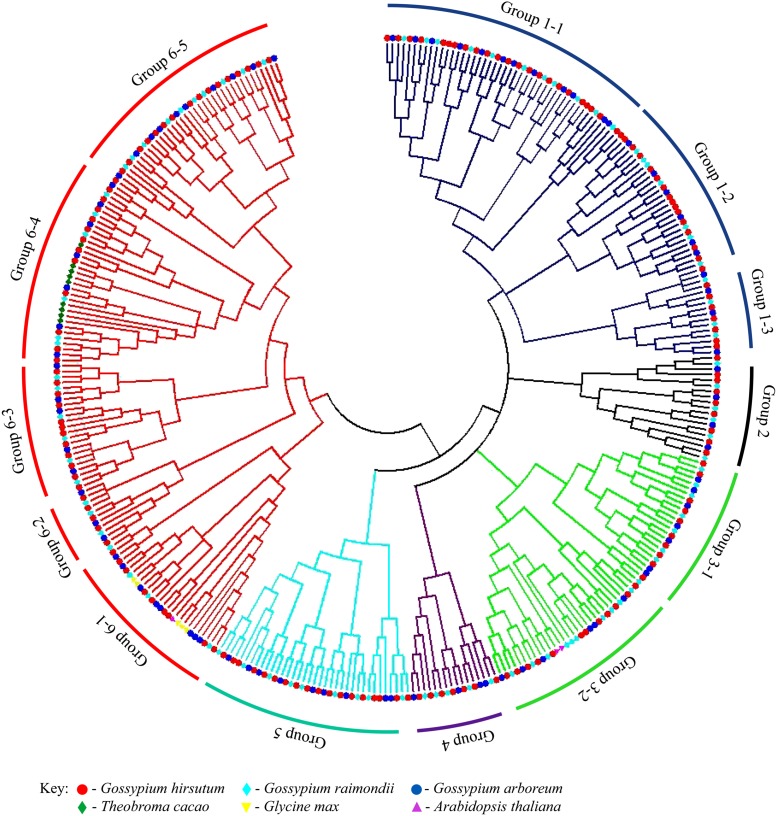
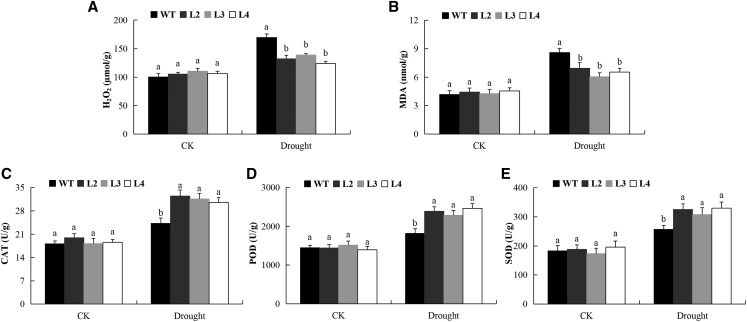
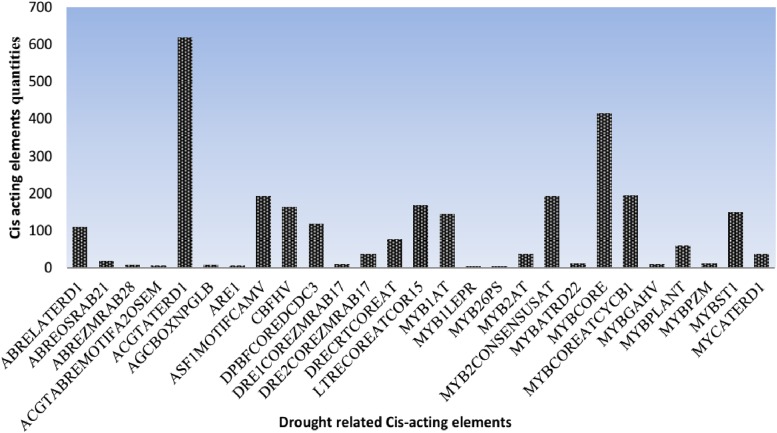
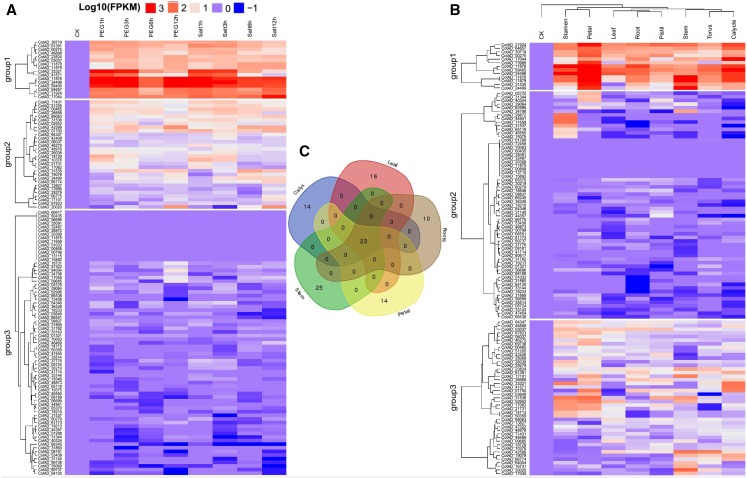
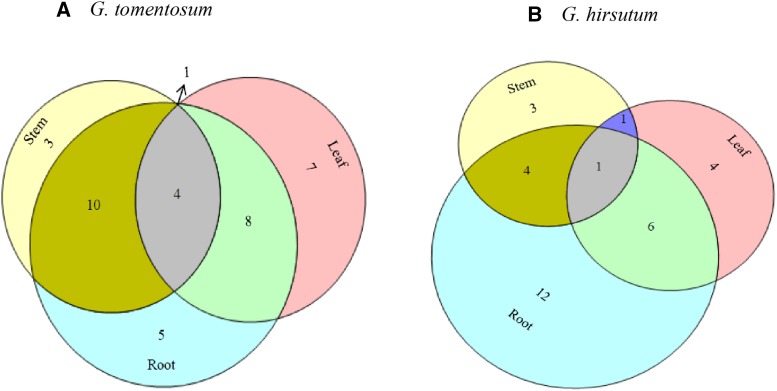
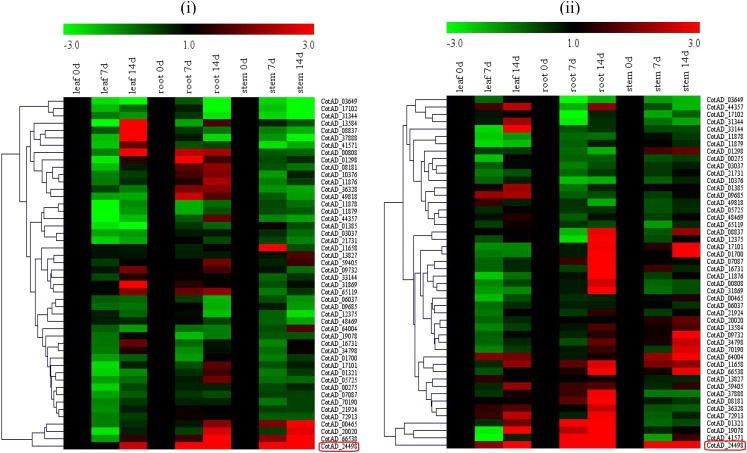
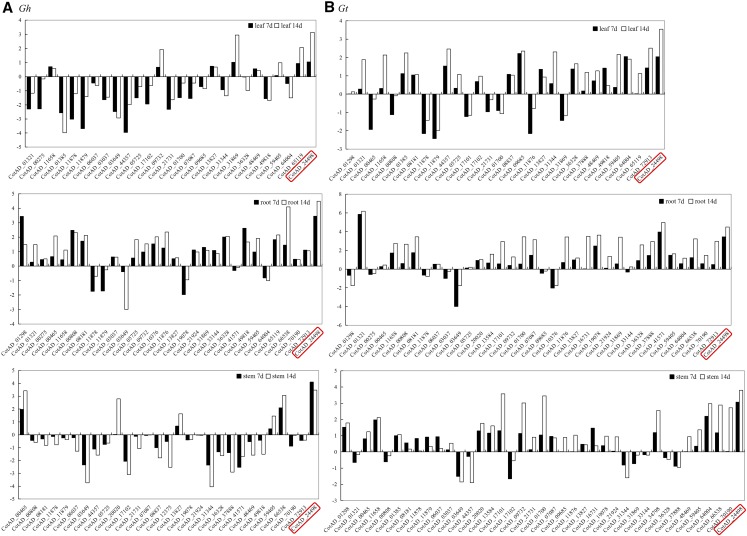
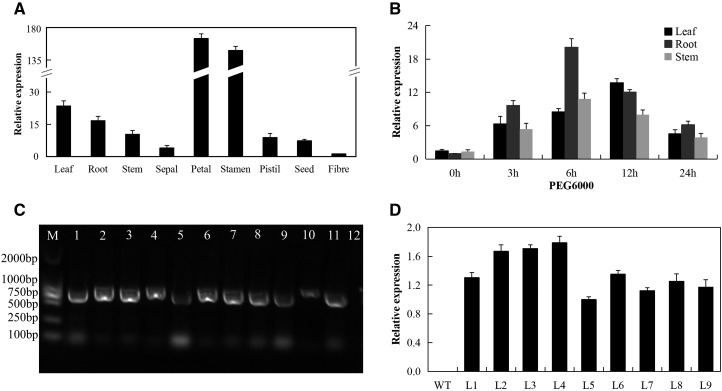
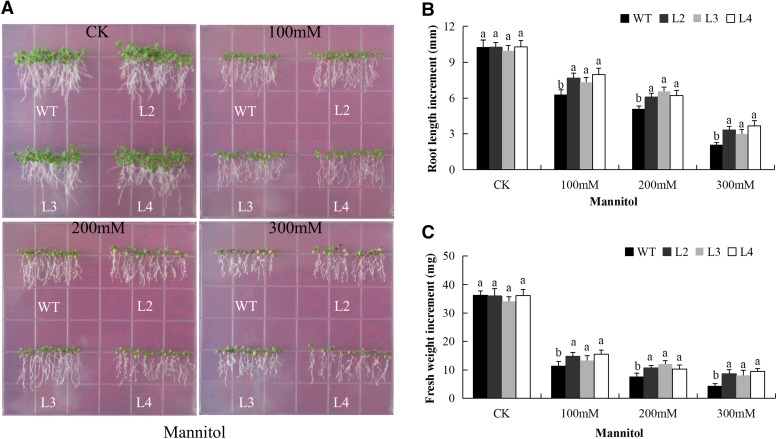
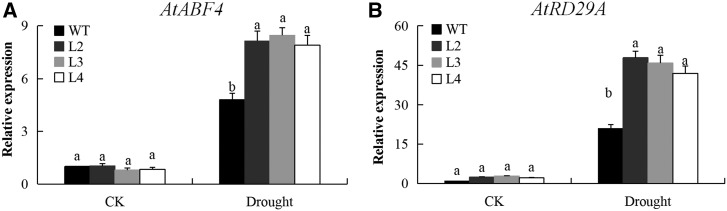
Late embryogenesis abundant (LEA) proteins play key roles in plant drought tolerance. In this study, 157, 85 and 89 candidate LEA2 proteins were identified in , and respectively. genes were classified into 6 groups, designated as group 1 to 6. Phylogenetic tree analysis revealed orthologous gene pairs within the cotton genome. The cotton specific LEA2 motifs identified were E, R and D in addition to Y, K and S motifs. The genes were distributed on all chromosomes. LEA2s were found to be highly enriched in non-polar, aliphatic amino acid residues, with leucine being the highest, 9.1% in proportion. The miRNA, ghr-miR827a/b/c/d and ghr-miR164 targeted many genes are known to be drought stress responsive. Various stress-responsive regulatory elements, ABA-responsive element (ABRE), Drought-responsive Element (DRE/CRT), MYBS and low-temperature-responsive element (LTRE) were detected. Most genes were highly expressed in leaves and roots, being the primary organs greatly affected by water deficit. The expression levels were much higher in as opposed to The tolerant genotype had higher capacity to induce more of genes. Over expression of the transformed gene showed that the genes are involved in promoting root growth and in turn confers drought stress tolerance. We therefore infer that , , and could be the candidate genes with profound functions under drought stress in upland cotton among the genes. The transformed plants showed higher tolerance levels to drought stress compared to the wild types. There was significant increase in antioxidants, catalase (CAT), peroxidase (POD) and superoxide dismutase (SOD) accumulation, increased root length and significant reduction in oxidants, Hydrogen peroxide (HO) and malondialdehyde (MDA) concentrations in the leaves of transformed lines under drought stress condition. This study provides comprehensive analysis of LEA2 proteins in cotton thus forms primary foundation for breeders to utilize these genes in developing drought tolerant genotypes.
胚胎后期丰富(LEA)蛋白在植物耐旱性中起关键作用。在本研究中,分别在[具体物种1]、[具体物种2]和[具体物种3]中鉴定出157个、85个和89个候选LEA2蛋白。[相关基因]被分为6组,命名为第1组至第6组。系统发育树分析揭示了棉花基因组中的直系同源基因对。除了Y、K和S基序外,鉴定出的棉花特异性LEA2基序还有E、R和D。这些基因分布在所有染色体上。发现LEA2在非极性脂肪族氨基酸残基中高度富集,其中亮氨酸比例最高,为9.1%。已知miRNA,即ghr-miR827a/b/c/d和ghr-miR164靶向许多对干旱胁迫有响应的基因。检测到各种胁迫响应调控元件,如脱落酸响应元件(ABRE)、干旱响应元件(DRE/CRT)、MYBS和低温响应元件(LTRE)。大多数基因在叶片和根系中高表达,而叶片和根系是受水分亏缺影响极大的主要器官。与[对比物种]相比,[目标物种]中的表达水平要高得多。耐旱基因型具有更高的能力来诱导更多的[相关基因]。转化基因[具体基因名称]的过表达表明,[相关基因]参与促进根系生长,进而赋予干旱胁迫耐受性。因此,我们推断,在[相关基因总数]个基因中,[具体基因1]、[具体基因2]、[具体基因3]和[具体基因4]可能是陆地棉在干旱胁迫下具有重要功能的候选基因。与野生型相比,转化后的[具体植物名称]植株对干旱胁迫表现出更高的耐受性。在干旱胁迫条件下,转化株系叶片中的抗氧化剂、过氧化氢酶(CAT)、过氧化物酶(POD)和超氧化物歧化酶(SOD)积累显著增加,根长增加,氧化剂、过氧化氢(HO)和丙二醛(MDA)浓度显著降低。本研究对棉花中的LEA2蛋白进行了全面分析,从而为育种者利用这些基因培育耐旱基因型奠定了初步基础。