Institute of Physiology and Cell Biology, University of Veterinary Medicine Hannover, Bischofsholer Damm 15/102, 30173, Hannover, Germany.
Neurotox Res. 2021 Aug;39(4):1189-1202. doi: 10.1007/s12640-021-00364-8. Epub 2021 Apr 19.
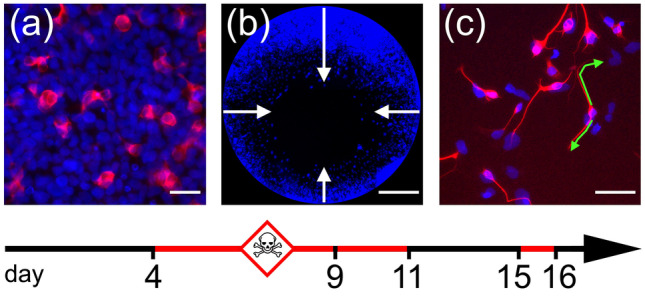
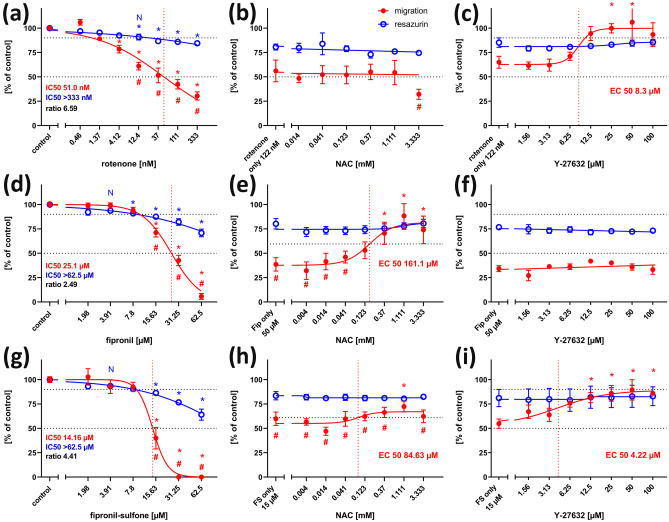
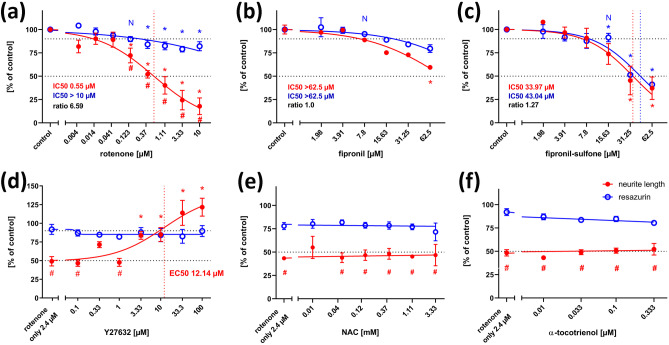
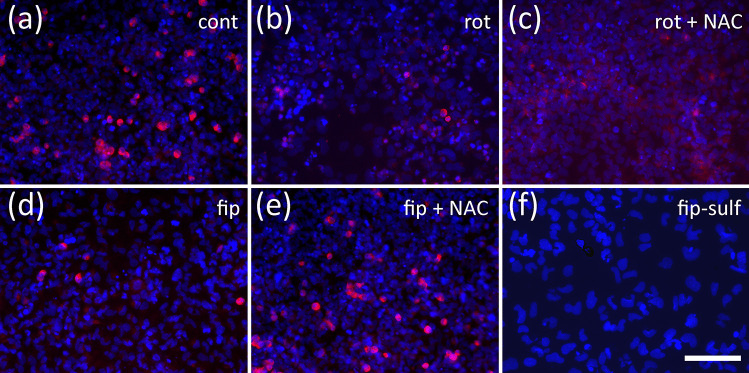
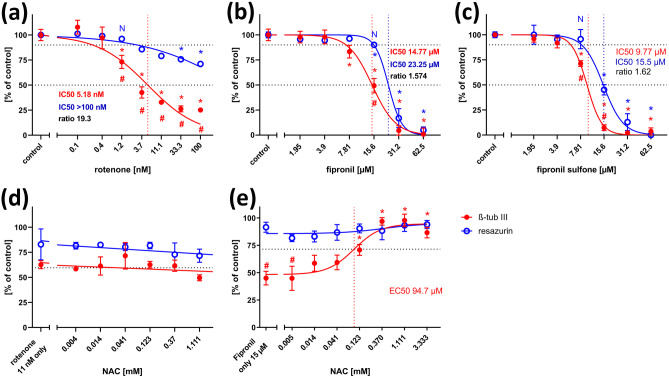
Pesticide exposure during in utero and early postnatal development can cause a wide range of neurological defects. However, relatively few insecticides have been recognized as developmental neurotoxicants, so far. Recently, discovery of the insecticide, fipronil, in chicken eggs has raised public concern. The status of fipronil as a potential developmental neurotoxicant is still under debate. Whereas several in vivo and in vitro studies suggest specific toxicity, other in vitro studies could not confirm this concern. Here, we tested fipronil and its main metabolic product, fipronil sulfone both at concentrations between 1.98 and 62.5 µM, alongside with the established developmental neurotoxicant, rotenone (0.004-10 µM) in vitro on the human neuronal precursor cell line NT2. We found that rotenone impaired all three tested DNT endpoints, neurite outgrowth, neuronal differentiation, and precursor cell migration in a dose-dependent manner and clearly separable from general cytotoxicity in the nanomolar range. Fipronil and fipronil sulfone specifically inhibited cell migration and neuronal differentiation, but not neurite outgrowth in the micromolar range. The rho-kinase inhibitor Y-27632 counteracted inhibition of migration for all three compounds (EC50 between 12 and 50 µM). The antioxidant, n-acetyl cysteine, could ameliorate the inhibitory effects of fipronil on all three tested endpoints (EC 50 between 84 and 164 µM), indicating the involvement of oxidative stress. Fipronil sulfone had a stronger effect than fipronil, confirming the importance to test metabolic products alongside original pesticides. We conclude that in vitro fipronil and fipronil sulfone display specific developmental neurotoxicity on developing human model neurons.
在子宫内和出生后早期发育期间接触农药会导致广泛的神经缺陷。然而,到目前为止,相对较少的杀虫剂被认为是发育神经毒物。最近,在鸡蛋中发现杀虫剂氟虫腈引起了公众的关注。氟虫腈作为一种潜在的发育神经毒物的地位仍存在争议。虽然几项体内和体外研究表明其具有特定的毒性,但其他体外研究无法证实这一担忧。在这里,我们测试了氟虫腈及其主要代谢产物氟虫腈砜,浓度在 1.98 至 62.5 μM 之间,以及已建立的发育神经毒物鱼藤酮(0.004-10 μM),在体外对人神经前体细胞系 NT2 进行了测试。我们发现,鱼藤酮以剂量依赖的方式损害了所有三个测试的 DNT 终点,即神经突生长、神经元分化和前体细胞迁移,并且在纳摩尔范围内与一般细胞毒性明显分离。氟虫腈和氟虫腈砜在微摩尔范围内特异性抑制细胞迁移和神经元分化,但不抑制神经突生长。rho-kinase 抑制剂 Y-27632 拮抗了所有三种化合物对迁移的抑制作用(EC50 在 12 至 50 μM 之间)。抗氧化剂 N-乙酰半胱氨酸可以改善氟虫腈对所有三个测试终点的抑制作用(EC50 在 84 至 164 μM 之间),表明氧化应激的参与。氟虫腈砜的作用比氟虫腈更强,证实了测试代谢产物与原始农药的重要性。我们得出结论,体外氟虫腈和氟虫腈砜对发育中的人类模型神经元显示出特定的发育神经毒性。