Division of Otolaryngology - Head & Neck Surgery, Dalhousie University, Halifax, Nova Scotia, Canada.
Department of Otolaryngology - Head & Neck Surgery, University of Toronto, Toronto, Ontario, Canada.
J Otolaryngol Head Neck Surg. 2021 Apr 19;50(1):26. doi: 10.1186/s40463-021-00510-4.
Healthcare systems generate substantial carbon footprints that may be targeted to decrease greenhouse gas emissions. Outreach clinics may represent tools to assist in this reduction by optimizing patient related travel. Therefore, we sought to estimate the carbon footprint savings associated with a head and neck surgery outreach clinic.
This study was a cross-sectional survey of patient travel patterns to a surgical outreach clinic compared to a regional cancer treatment centre from December 2019 to February 2020. Participants completed a self-administered survey of 12 items eliciting travel distance, vehicle details, and ability to combine medical appointments. Canadian datasets of manufacturer provided vehicular efficiency were used to estimate carbon emissions for each participant. Geographic information systems were used for analyses.
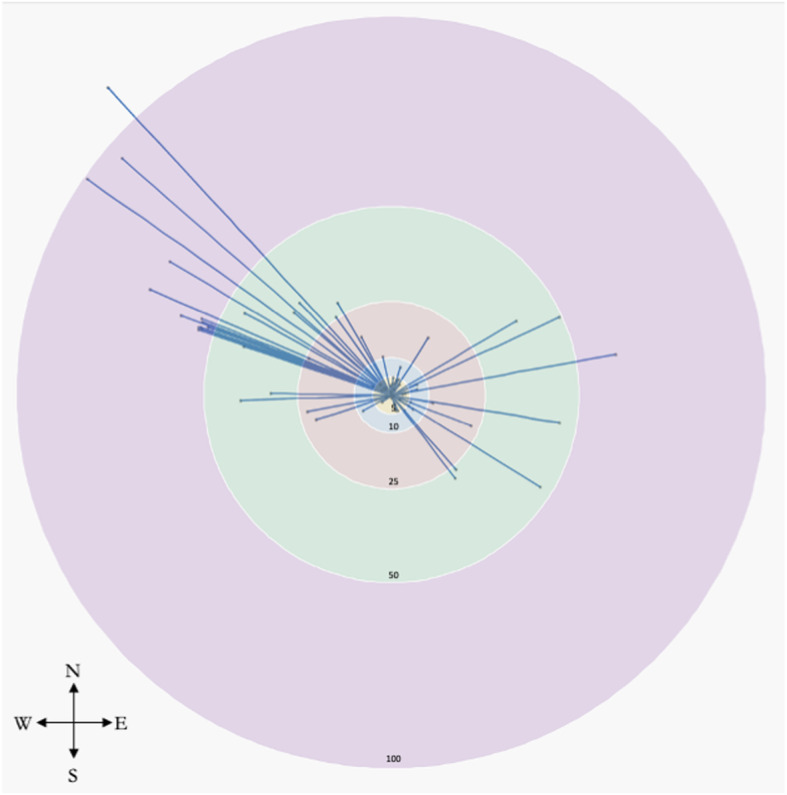
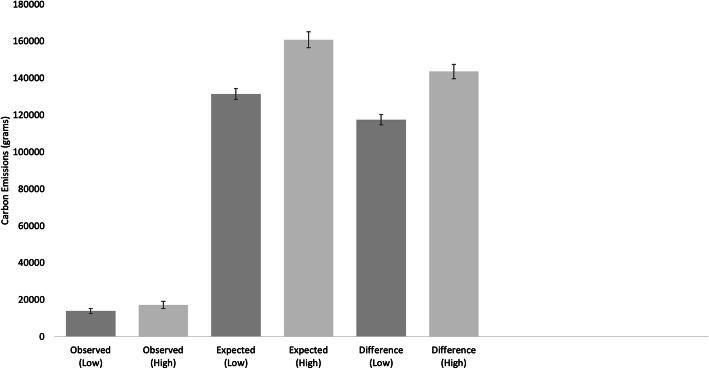
One hundred thirteen patients were included for analysis. The majority of patients (85.8%) used their own personal vehicle to travel to the outreach clinic. The median distance to the clinic and regional centre were 29.0 km (IQR 6.0-51.9) and 327.0 km (IQR 309.0-337.0) respectively. The mean carbon emission reduction per person was therefore 117,495.4 g (SD: 29,040.0) to 143,570.9 g (SD: 40,236.0). This represents up to 2.5% of an average individual's yearly carbon footprint. Fewer than 10% of patients indicated they were able to carpool or group their appointments.
Surgical outreach clinics decrease carbon footprints associated with patient travel compared to continued care at a regional centre. Further research is needed to determine possible interventions to further reduce carbon emissions associated with the surgical care of patients.
医疗保健系统会产生大量的碳足迹,这些足迹可能是减少温室气体排放的目标。外展诊所可以通过优化与患者相关的旅行来协助实现这一减排目标。因此,我们旨在评估头颈外科外展诊所相关的碳足迹节约。
本研究为 2019 年 12 月至 2020 年 2 月对手术外展诊所与区域癌症治疗中心的患者旅行模式进行的横断面调查。参与者完成了一项包含 12 个项目的自我管理调查,这些项目包括旅行距离、车辆细节和合并医疗预约的能力。使用制造商提供的车辆效率加拿大数据集来估算每位参与者的碳排放量。使用地理信息系统进行分析。
共纳入 113 例患者进行分析。大多数患者(85.8%)使用自己的私人车辆前往外展诊所。诊所和区域中心的中位数距离分别为 29.0 公里(IQR6.0-51.9)和 327.0 公里(IQR309.0-337.0)。因此,每人的平均碳减排量为 117,495.4 克(SD:29,040.0)至 143,570.9 克(SD:40,236.0)。这代表了一个人平均年碳足迹的 2.5%。不到 10%的患者表示他们能够拼车或安排他们的预约。
与在区域中心继续接受治疗相比,外科外展诊所可减少与患者旅行相关的碳足迹。需要进一步研究以确定可能的干预措施,以进一步减少与患者外科护理相关的碳排放。