Department of Clinical Medicine, The First School of Clinical Medicine, Anhui Medical University, Hefei, Anhui, China.
Anhui Provincial Center for Disease Control and Prevention, Hefei, China.
Arch Med Res. 2021 Oct;52(7):665-672. doi: 10.1016/j.arcmed.2021.03.012. Epub 2021 Apr 8.
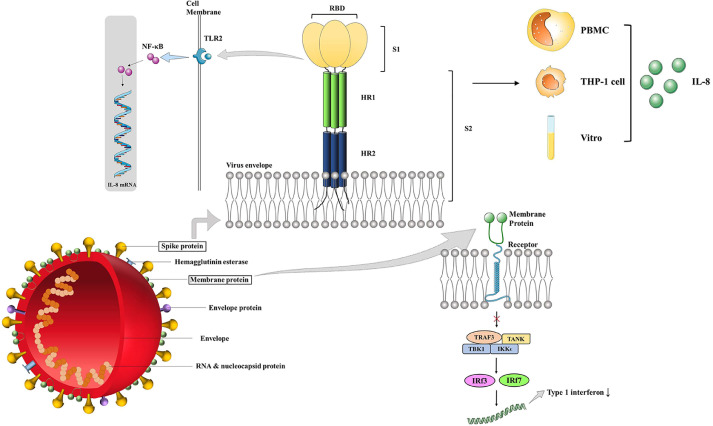
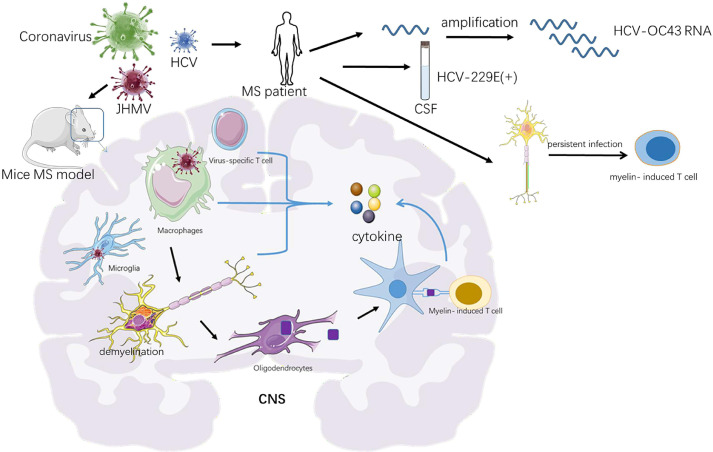
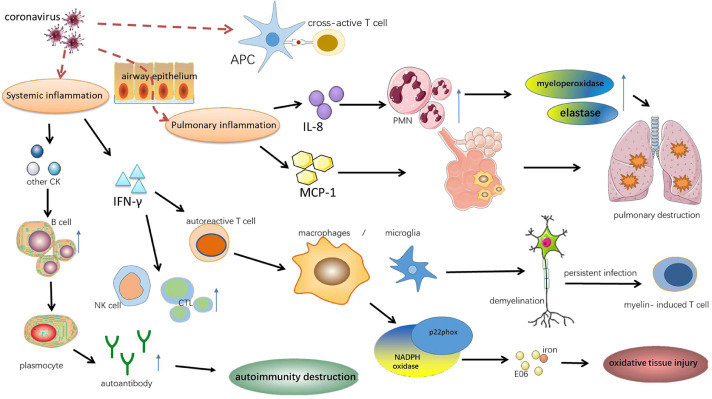
Virus infection can alter immune regulatory activity, and thus may be involved in the occurrence of autoimmune diseases. Recently, the pandemic of COVID-19 has posed a huge threat to public health and emerging evidence suggests that coronavirus may be implicated in the development and pathogenesis of autoimmune diseases. However, how coronavirus infection impacts the risk of autoimmune disease remains largely unknown. In this review, we focused on the association between coronavirus and autoimmunity, and elucidated the molecular mechanisms linking coronavirus exposure to autoimmunity. Additionally, we briefly introduced the role that coronavirus plays in several autoimmune diseases including multiple sclerosis (MS), rheumatoid arthritis (RA), systemic lupus erythematosus (SLE), and idiopathicthrombocytopenic purpura (ITP).
病毒感染可改变免疫调节活性,从而可能与自身免疫性疾病的发生有关。最近,COVID-19 大流行对公众健康构成了巨大威胁,新出现的证据表明冠状病毒可能与自身免疫性疾病的发生和发病机制有关。然而,冠状病毒感染如何影响自身免疫性疾病的风险在很大程度上尚不清楚。在这篇综述中,我们重点关注冠状病毒与自身免疫之间的关联,并阐明了将冠状病毒暴露与自身免疫联系起来的分子机制。此外,我们还简要介绍了冠状病毒在几种自身免疫性疾病中的作用,包括多发性硬化症(MS)、类风湿关节炎(RA)、系统性红斑狼疮(SLE)和特发性血小板减少性紫癜(ITP)。