Orthopaedic Laboratory, Affiliated Hospital of Nantong University, Nantong, Jiangsu Province, China.
Department of Orthopaedics, The Sixth Affiliated Hospital of Nantong University, Yancheng, Jiangsu Province, China.
Aging (Albany NY). 2021 Apr 19;13(8):11705-11726. doi: 10.18632/aging.202865.
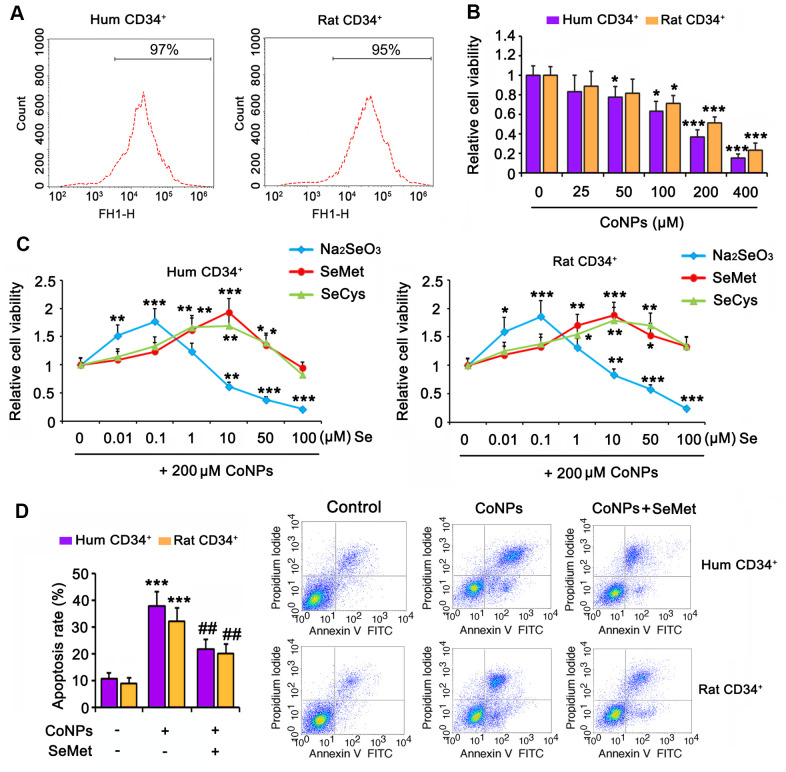
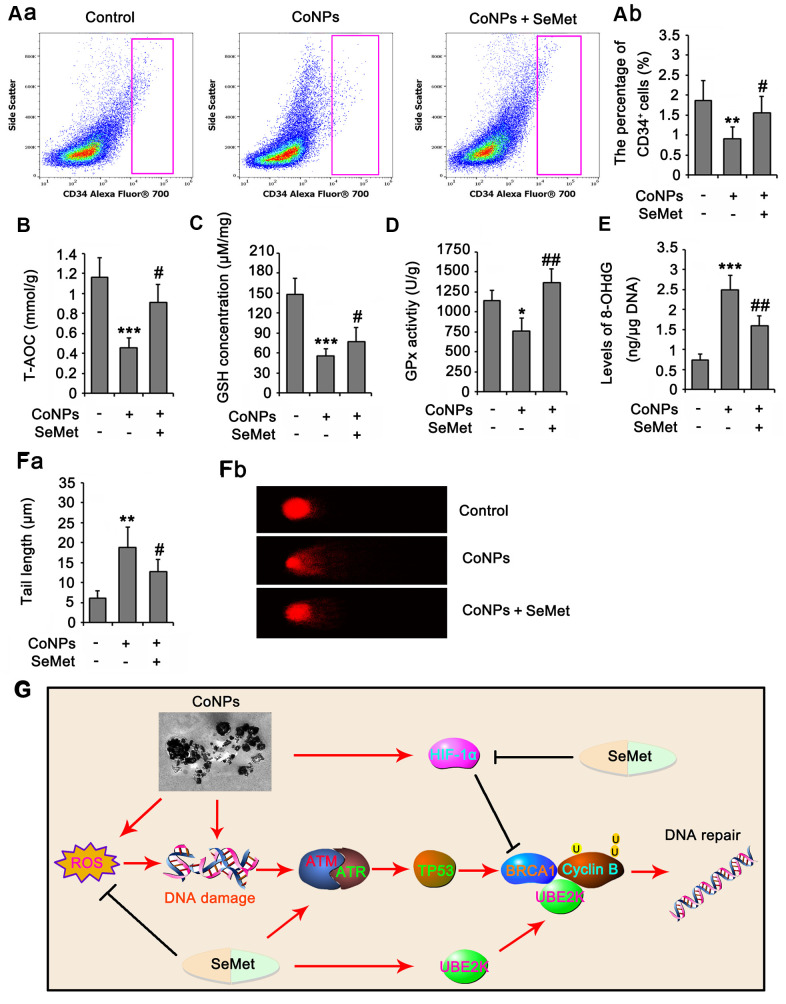
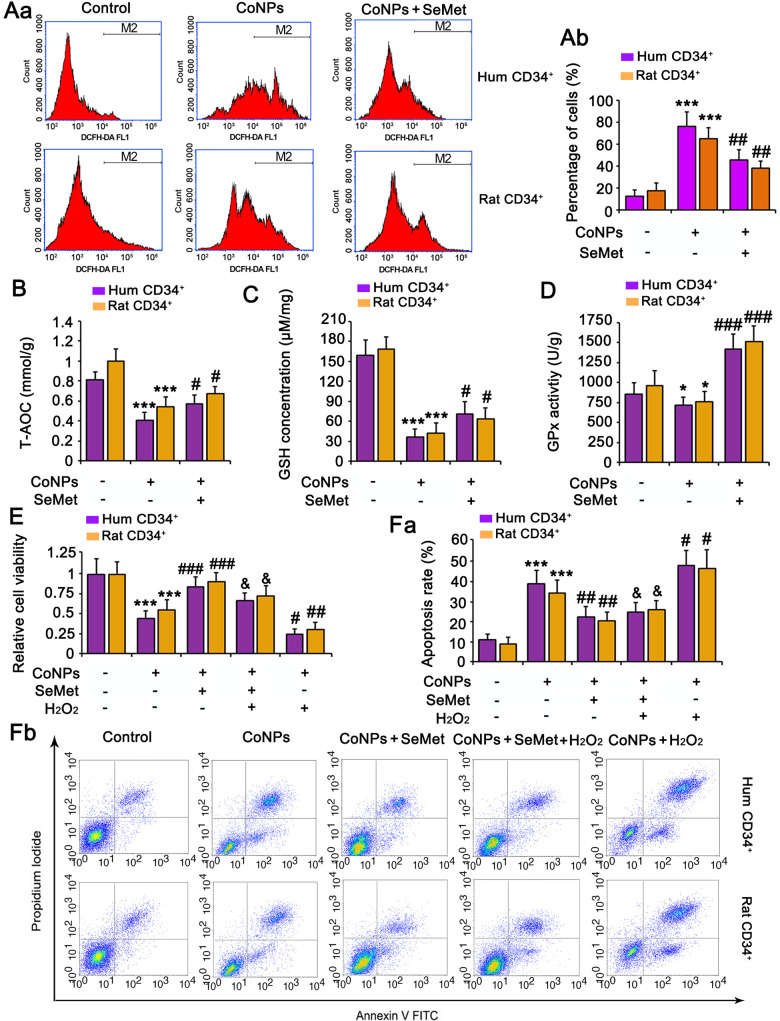
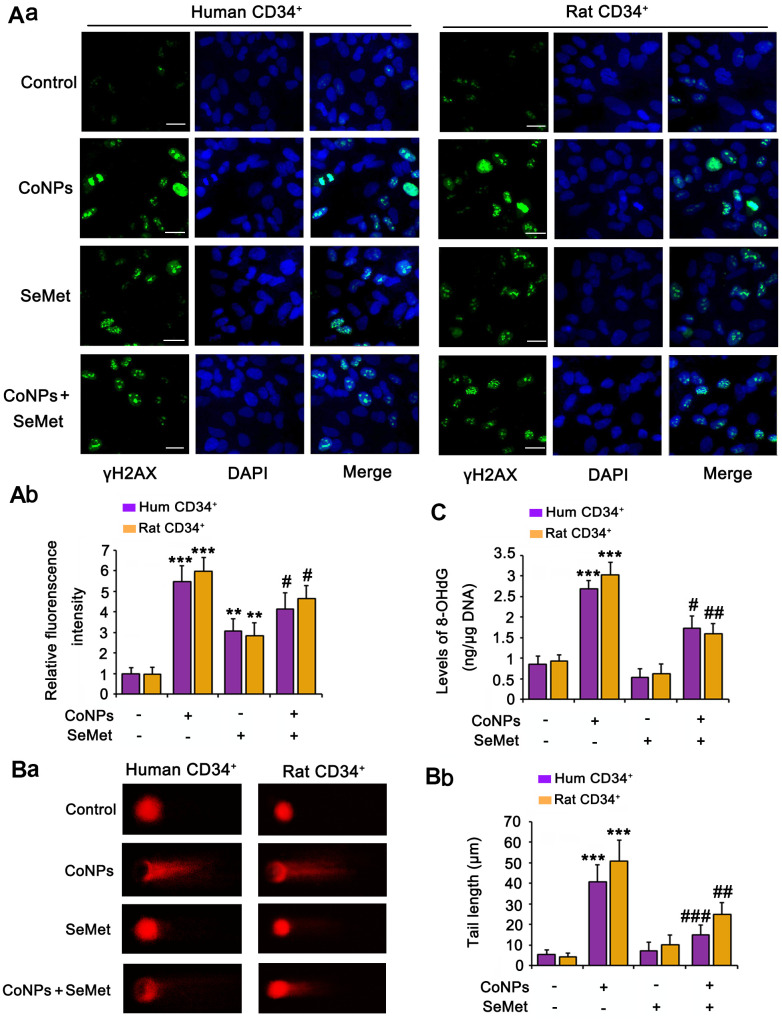
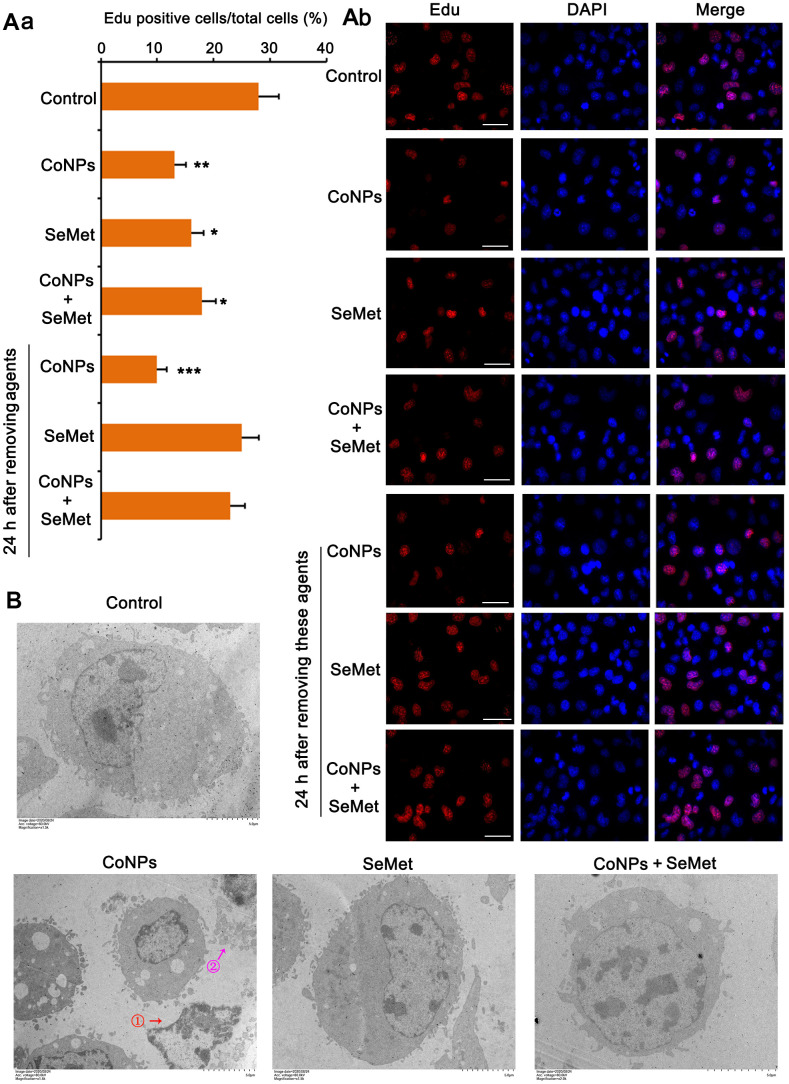
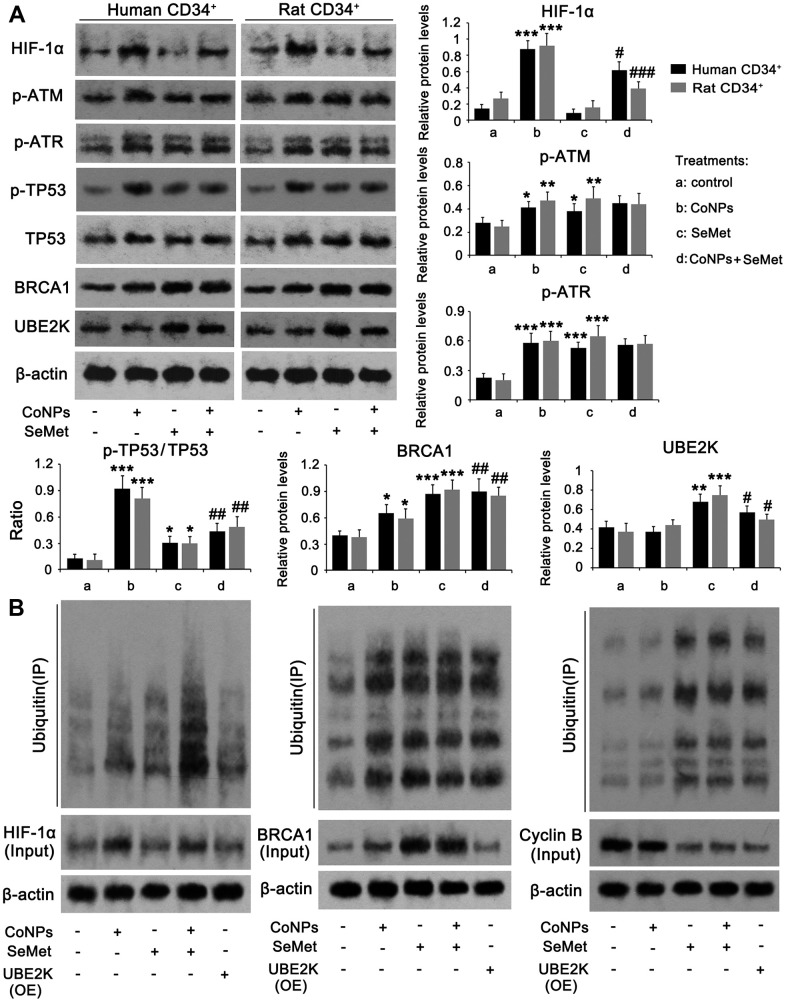
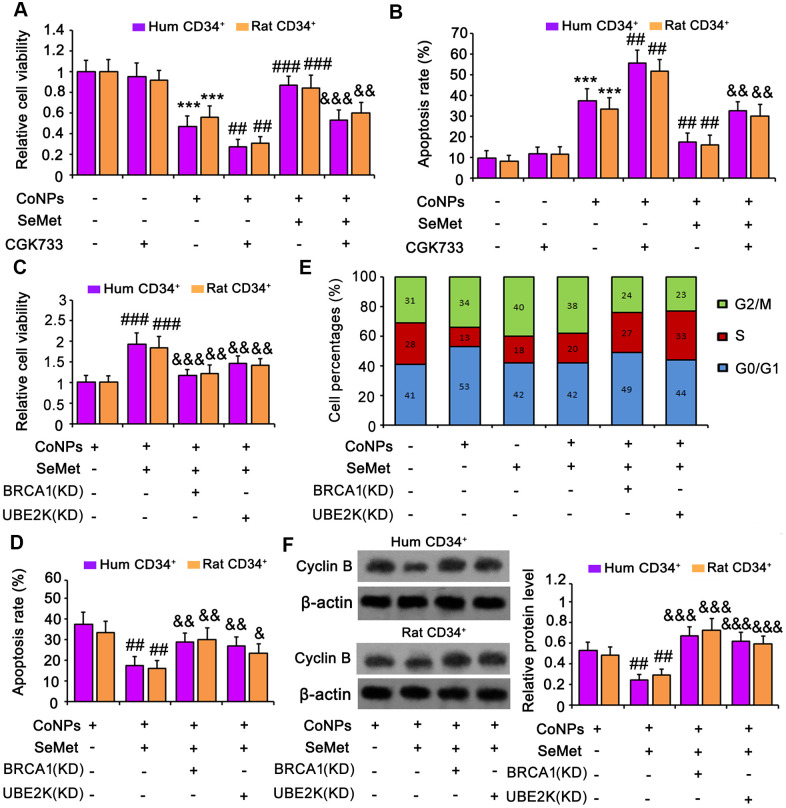
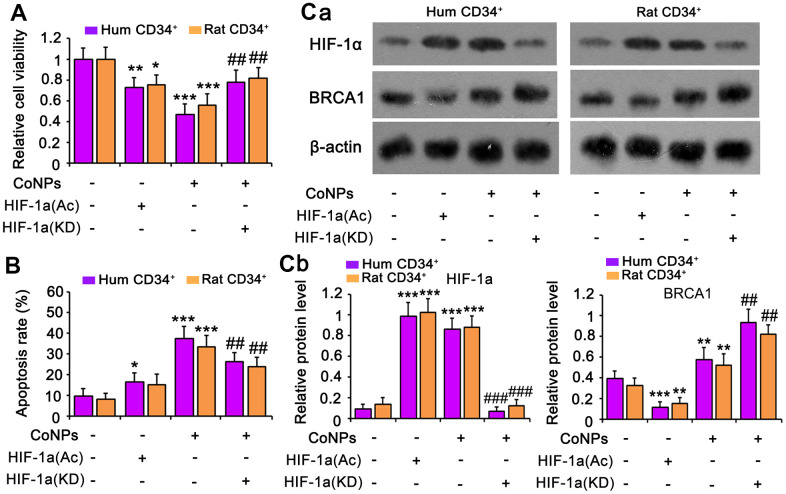
Hematopoietic stem cells (HSCs) and hematopoietic progenitor cells (HPCs) can differentiate into all blood lineages to maintain hematopoiesis, wound healing, and immune functions. Recently, cobalt-chromium alloy casting implants have been used extensively in total hip replacements; however, cobalt nanoparticles (CoNPs) released from the alloy were toxic to HSCs and HPCs. We aimed to investigate the mechanism underlying the toxic effect of CoNPs on HSCs/HPCs and to determine the protective effect of selenomethionine (SeMet) against CoNPs and . Human and rat CD34+ HSCs/HPCs were isolated from cord blood and bone marrow, respectively. CoNPs decreased the viability of CD34+ HSCs/HPCs and increased apoptosis. SeMet attenuated the toxicity of CoNPs by enhancing the antioxidant ability of cells. The protective effect of SeMet was not completely abolished after adding H2O2 to abrogate the improvement of the antioxidant capacity by SeMet. SeMet and CoNPs stimulated ATM/ATR DNA damage response signals and inhibited cell proliferation. Unlike CoNPs, SeMet did not damage the DNA, and cell proliferation recovered after removing SeMet. SeMet inhibited the CoNP-induced upregulation of hypoxia inducible factor (HIF)-1α, thereby disrupting the inhibitory effect of HIF-1α on breast cancer type 1 susceptibility protein (BRCA1). Moreover, SeMet promoted BRCA1-mediated ubiquitination of cyclin B by upregulating UBE2K. Thus, SeMet enhanced cell cycle arrest and DNA repair post-CoNP exposure. Overall, SeMet protected CD34+ HSCs/HPCs against CoNPs by stimulating antioxidant activity and DNA repair.
造血干细胞(HSCs)和造血祖细胞(HPCs)可分化为所有血液谱系,以维持造血、伤口愈合和免疫功能。最近,钴铬合金铸造植入物已广泛应用于全髋关节置换术;然而,合金释放的钴纳米颗粒(CoNPs)对 HSCs 和 HPCs 有毒性。我们旨在研究 CoNPs 对 HSCs/HPCs 的毒性作用机制,并确定硒蛋氨酸(SeMet)对 CoNPs 的保护作用。从脐血和骨髓中分别分离出人 CD34+HSCs/HPCs 和大鼠 CD34+HSCs/HPCs。CoNPs 降低了 CD34+HSCs/HPCs 的活力并增加了细胞凋亡。SeMet 通过增强细胞的抗氧化能力来减轻 CoNPs 的毒性。在用 H2O2 消除 SeMet 改善抗氧化能力的作用后,SeMet 的保护作用并未完全消除。SeMet 和 CoNPs 刺激 ATM/ATR DNA 损伤反应信号并抑制细胞增殖。与 CoNPs 不同,SeMet 不会破坏 DNA,并且在去除 SeMet 后细胞增殖恢复。SeMet 抑制 CoNP 诱导的缺氧诱导因子(HIF)-1α上调,从而破坏 HIF-1α 对乳腺癌 1 型易感性蛋白(BRCA1)的抑制作用。此外,SeMet 通过上调 UBE2K 促进 BRCA1 介导的细胞周期蛋白 B 的泛素化。因此,SeMet 增强了 CoNP 暴露后的细胞周期阻滞和 DNA 修复。总的来说,SeMet 通过刺激抗氧化活性和 DNA 修复来保护 CD34+HSCs/HPCs 免受 CoNPs 的侵害。