Key Laboratory of Biology and Genetic Improvement of Maize in Southwest Region, Ministry of Agriculture; Maize Research Institute, Sichuan Agricultural University, Chengdu, 611130, China.
College of Life Science & Biotechnology, Mianyang Teachers' College, Mianyang, 621000, China.
Sci Rep. 2021 Apr 19;11(1):8458. doi: 10.1038/s41598-021-88021-0.
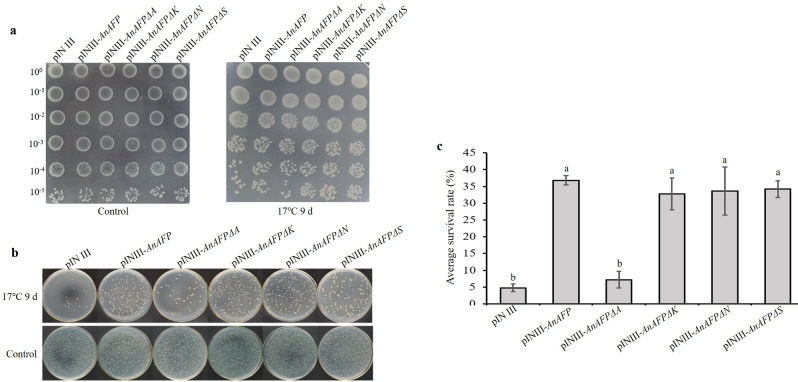
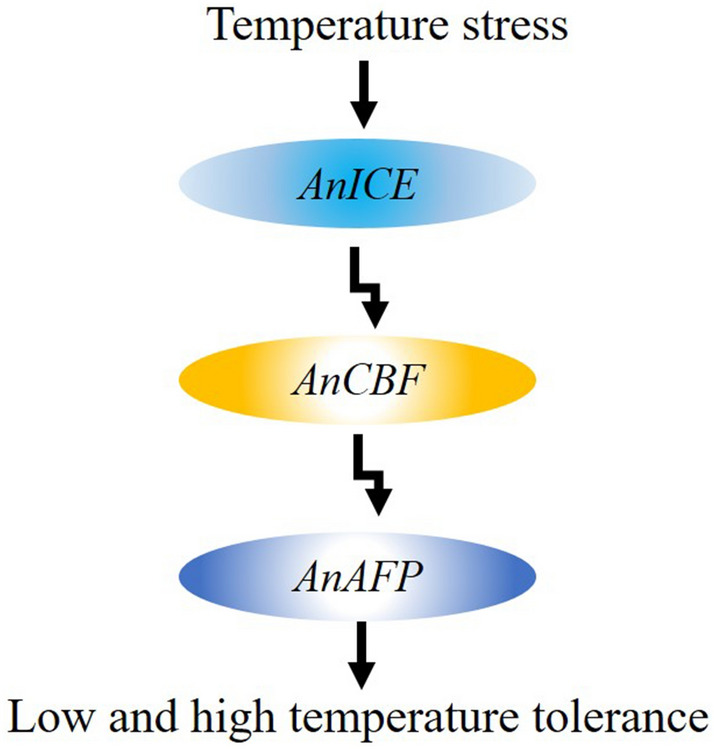
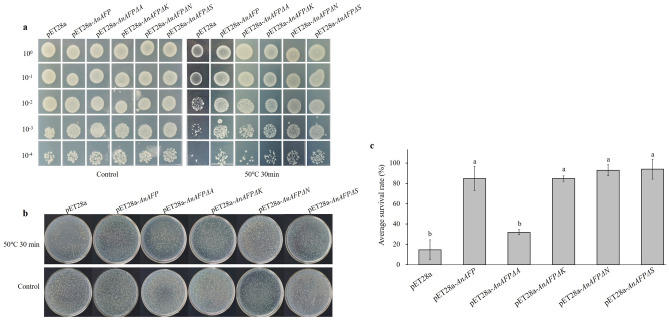
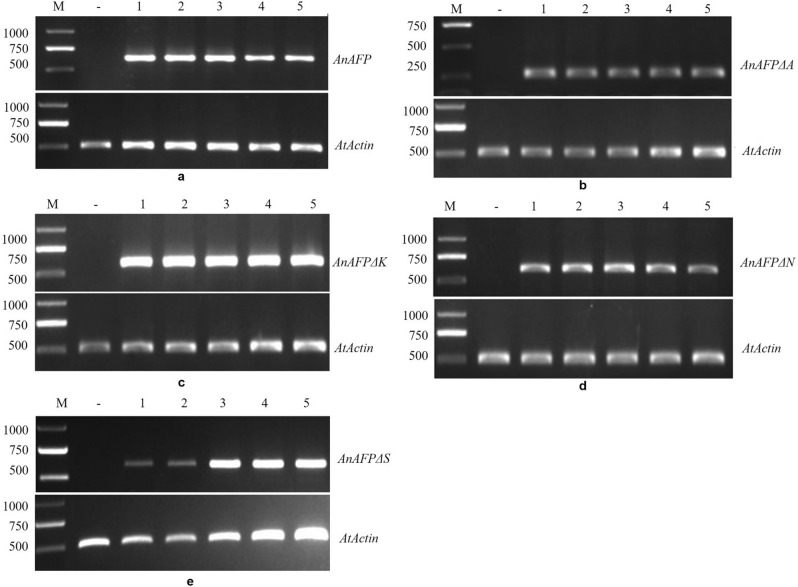
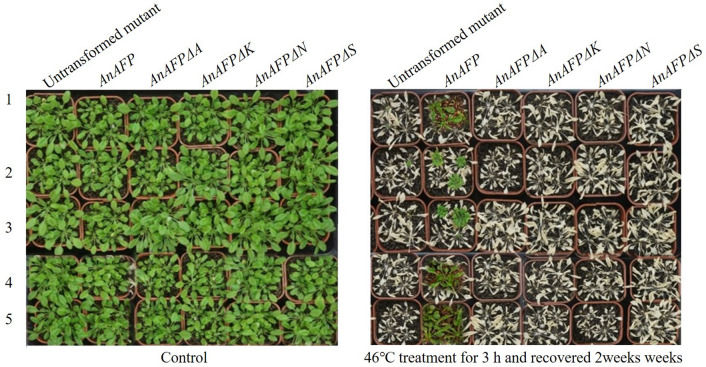
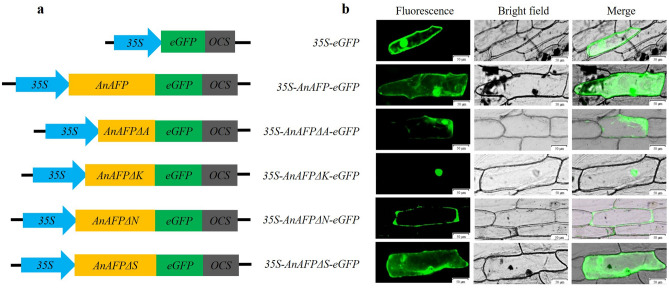
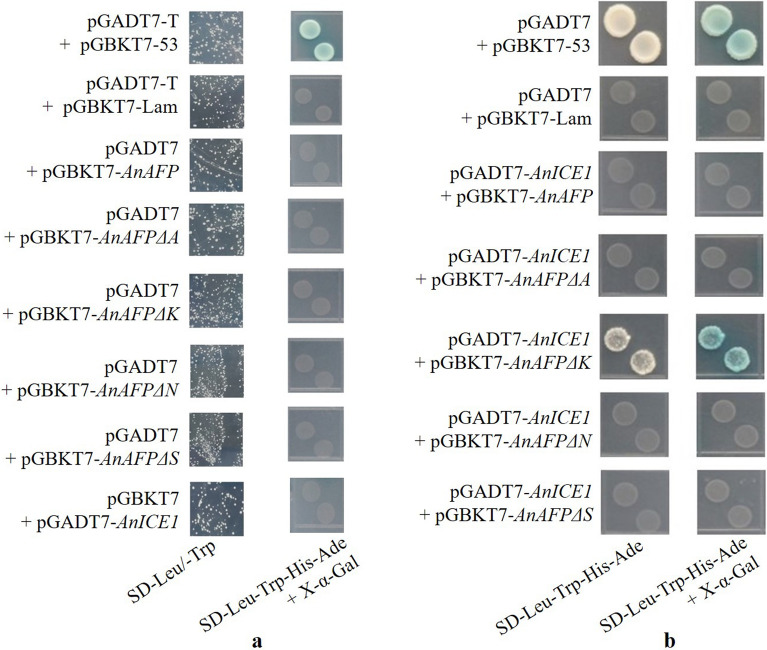
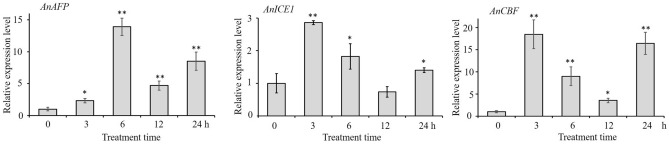
Temperature stress restricts plant growth and development. Antifreeze protein (AFP) can improve plants antifreeze ability. In our previous study, the AnAFP gene cloned from Ammopiptanthus nanus was confirmed to be an excellent candidate enhancing plant cold resistance. But, AnAFP protein shared similar structures with KnS type dehydrins including K, N and S domains except ice crystal binding domain A. Here, we generated AnAFPΔA, AnAFPΔK, AnAFPΔN and AnAFPΔS, and transformed them into ordinary and cold sensitive strains of E. coli, and Arabidopsis KS type dehydrin mutant to evaluate their function. Expression of AnAFPΔA decreases cold and heat tolerance in E. coli, meanwhile, AnAFP enhances heat tolerance in Arabidopsis, suggesting that domain A is a thermal stable functional domain. AnAFP, AnAFPΔA and AnAFPΔS localize in whole cell, but AnAFPΔK and AnAFPΔN only localizes in nucleus and cytoplasm, respectively, exhibiting that K and N domains control localization of AnAFP. Likewise, K domain blocks interaction between AnAFP and AnICE1. The result of RT-qPCR showed that expression of AnAFP, AnICE1 and AnCBF genes was significantly induced by high-temperature, indicating that the AnAFP is likely regulated by ICE1-CBF-COR signal pathway. Taken together, the study provides insights into understanding the mechanism of AnAFP in response to temperature stress and gene resource to improve heat or cold tolerance of plants in transgenic engineering.
温度胁迫限制了植物的生长和发育。抗冻蛋白 (AFP) 可以提高植物的抗冻能力。在我们之前的研究中,从短柄垂头菊中克隆的 AnAFP 基因被证实是增强植物抗寒性的优秀候选基因。但是,AnAFP 蛋白与 KnS 型脱水素具有相似的结构,除了冰晶结合域 A 外,还包括 K、N 和 S 结构域。在这里,我们构建了 AnAFPΔA、AnAFPΔK、AnAFPΔN 和 AnAFPΔS,并将它们转化到普通和冷敏感的大肠杆菌菌株和拟南芥 KS 型脱水素突变体中,以评估它们的功能。AnAFPΔA 的表达降低了大肠杆菌的冷、耐热性,同时,AnAFP 增强了拟南芥的耐热性,表明结构域 A 是一个热稳定的功能结构域。AnAFP、AnAFPΔA 和 AnAFPΔS 定位于整个细胞中,但 AnAFPΔK 和 AnAFPΔN 分别定位于核和细胞质中,表明 K 和 N 结构域控制 AnAFP 的定位。同样,K 结构域阻止了 AnAFP 与 AnICE1 之间的相互作用。RT-qPCR 的结果表明,高温显著诱导 AnAFP、AnICE1 和 AnCBF 基因的表达,表明 AnAFP 可能受 ICE1-CBF-COR 信号通路的调控。综上所述,该研究深入了解了 AnAFP 响应温度胁迫的机制,为利用基因资源提高植物的耐热或耐寒性提供了理论依据。