Biochemistry Department, College of Sciences, King Saud University, Riyadh, Saudi Arabia.
Department of Pharmacognosy, Pharmacy College, King Saud University, Riyadh, 11451, Saudi Arabia.
Sci Rep. 2021 Apr 19;11(1):8512. doi: 10.1038/s41598-021-88089-8.
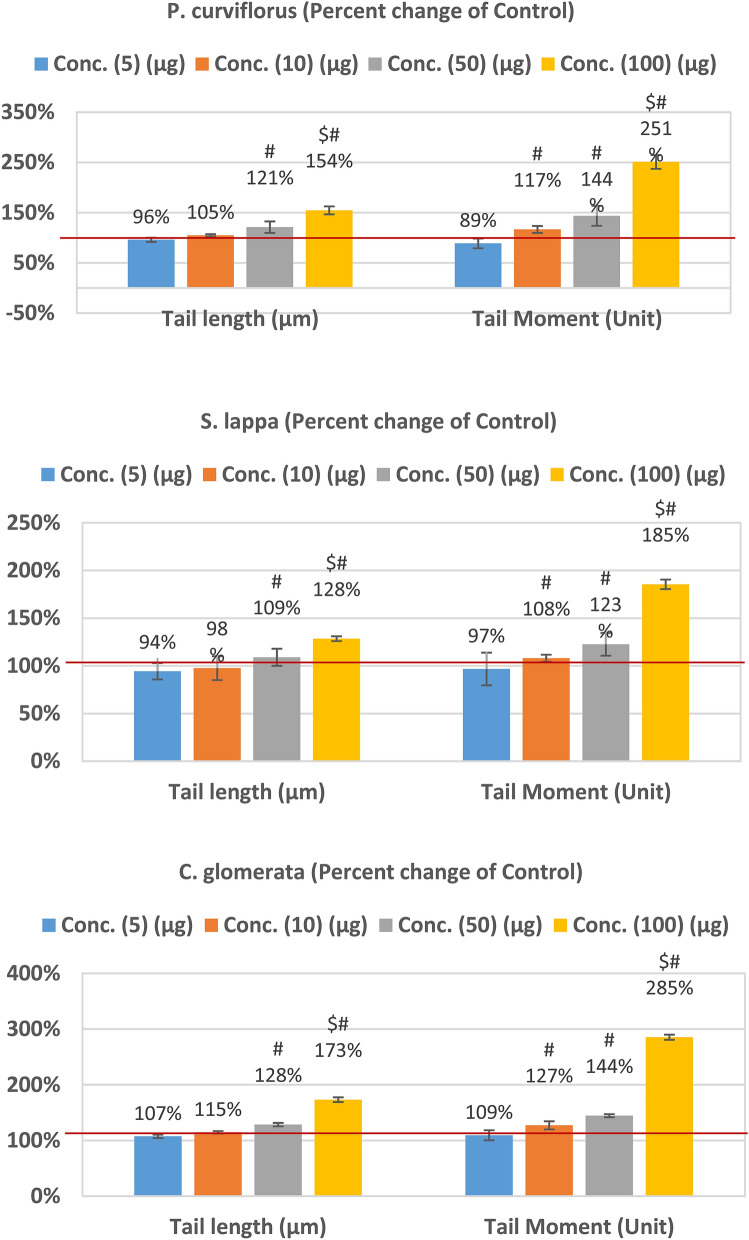
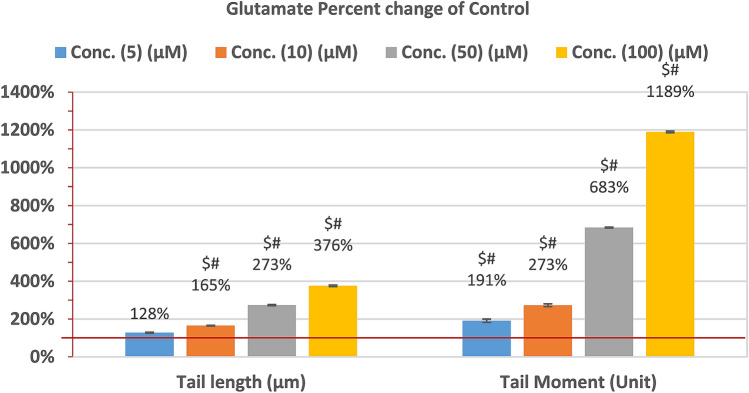
Excess glutamate in the central nervous system may be a major cause of neurodegenerative diseases with gradual loss and dysfunction of neurons. Primary or secondary metabolites from medicinal plants and algae show potential for treatment of glutamate-induced excitotoxicity. Three plant extracts were evaluated for impact on glutamate excitotoxicity-induced in primary cultures of retinal ganglion cells (RGC). These cells were treated separately in seven groups: control; Plicosepalus. curviflorus treated; Saussurea lappa treated; Cladophora glomerate treated. Cells were treated independently with 5, 10, 50, or 100 µg/ml of extracts of plant or alga material, respectively, for 2 h. Glutamate-treated cells (48 h with 5, 10, 50, or 100 µM glutamate); and P. curviflorus/glutamate; S. lappa/glutamate; C. glomerata/glutamate [pretreatment with extract for 2 h (50 and 100 µg/ml) before glutamate treatment with 100 µM for 48 h]. Comet and MTT assays were used to assess cell damage and cell viability. The number of viable cells fell significantly after glutamate exposure. Exposure to plant extracts caused no notable effect of viability. All tested plants extracts showed a protective effect against glutamate excitotoxicity-induced RGC death. Use of these extracts for neurological conditions related to excitotoxicity and oxidative stress might prove beneficial.
中枢神经系统中谷氨酸的过量可能是导致神经元逐渐丧失和功能障碍的神经退行性疾病的主要原因。药用植物和藻类的初级或次级代谢产物显示出治疗谷氨酸诱导的兴奋毒性的潜力。评估了三种植物提取物对原代培养的视网膜神经节细胞(RGC)中谷氨酸兴奋毒性的影响。这些细胞分别在七个组中进行处理:对照组;Plicosepalus. curviflorus 处理组;Saussurea lappa 处理组;Cladophora glomerate 处理组。细胞分别用植物或藻类材料的 5、10、50 或 100μg/ml 的提取物独立处理 2 小时。用谷氨酸处理的细胞(用 5、10、50 或 100μM 谷氨酸处理 48 小时);和 P. curviflorus/谷氨酸;S. lappa/谷氨酸;C. glomerata/谷氨酸[在 100μM 谷氨酸处理 48 小时之前用提取物预处理 2 小时(50 和 100μg/ml)]。彗星和 MTT 测定法用于评估细胞损伤和细胞活力。谷氨酸暴露后,存活细胞的数量明显下降。暴露于植物提取物对细胞活力没有明显影响。所有测试的植物提取物均显示出对谷氨酸兴奋毒性诱导的 RGC 死亡的保护作用。这些提取物在与兴奋毒性和氧化应激相关的神经疾病中的应用可能会证明是有益的。