Department of Family Medicine, Suez Canal University Faculty of Medicine, Ismailia, Egypt.
Department of Medicine, State University of New York Upstate Medical University, Syracuse, New York, USA.
Fam Med Community Health. 2021 Apr;9(2). doi: 10.1136/fmch-2020-000741.
To review the pathophysiology of COVID-19 disease, potential aspirin targets on this pathogenesis and the potential role of aspirin in patients with COVID-19.
Narrative review.
The online databases PubMed, OVID Medline and Cochrane Library were searched using relevant headlines from 1 January 2016 to 1 January 2021. International guidelines from relevant societies, journals and forums were also assessed for relevance.
Not applicable.
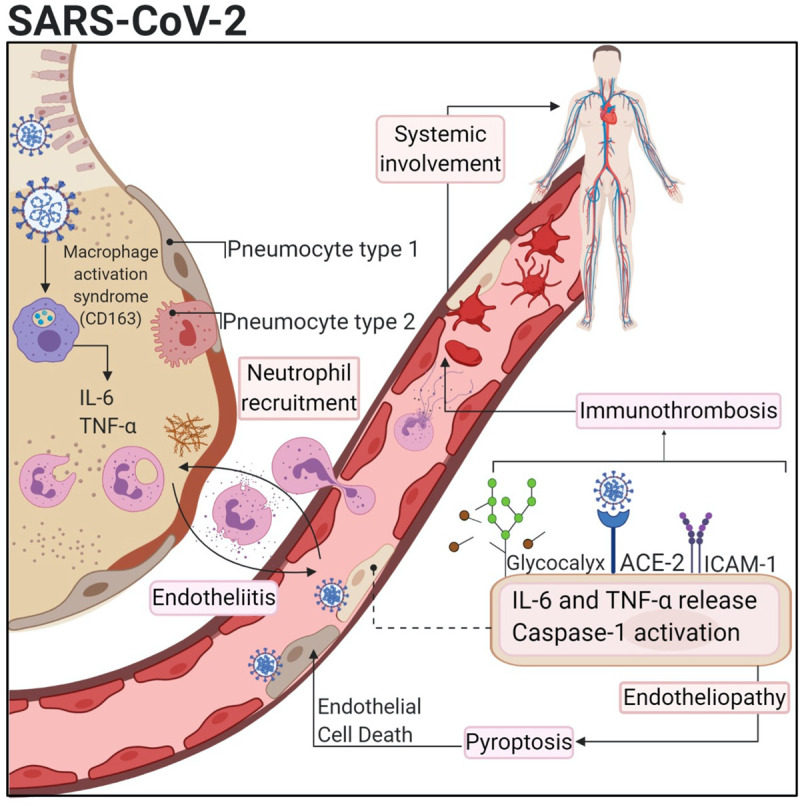
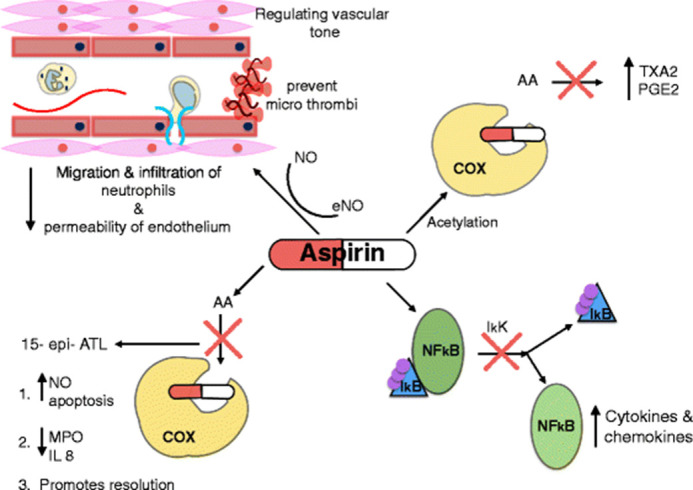
A review of the selected literature revealed that clinical deterioration in COVID-19 is attributed to the interplay between endothelial dysfunction, coagulopathy and dysregulated inflammation. Aspirin has anti-inflammatory effects, antiplatelet aggregation, anticoagulant properties as well as pleiotropic effects on endothelial function. During the COVID-19 pandemic, low-dose aspirin is used effectively in secondary prevention of atherosclerotic cardiovascular disease, prevention of venous thromboembolism after total hip or knee replacement, prevention of pre-eclampsia and postdischarge treatment for multisystem inflammatory syndrome in children. Prehospital low-dose aspirin therapy may reduce the risk of intensive care unit admission and mechanical ventilation in hospitalised patients with COVID-19, whereas aspirin association with mortality is still debatable.
The authors recommend a low-dose aspirin regimen for primary prevention of arterial thromboembolism in patients aged 40-70 years who are at high atherosclerotic cardiovascular disease risk, or an intermediate risk with a risk-enhancer and have a low risk of bleeding. Aspirin's protective roles in COVID-19 associated with acute lung injury, vascular thrombosis without previous cardiovascular disease and mortality need further randomised controlled trials to establish causal conclusions.
综述 COVID-19 疾病的病理生理学、阿司匹林在发病机制上的潜在作用靶点,以及阿司匹林在 COVID-19 患者中的潜在作用。
叙述性综述。
使用 2016 年 1 月 1 日至 2021 年 1 月 1 日的相关标题,在在线数据库 PubMed、OVID Medline 和 Cochrane Library 中进行检索。还评估了相关学会、期刊和论坛的国际指南的相关性。
不适用。
对所选文献的回顾表明,COVID-19 临床恶化归因于内皮功能障碍、凝血异常和失调的炎症之间的相互作用。阿司匹林具有抗炎作用、抗血小板聚集作用、抗凝作用以及对内皮功能的多效作用。在 COVID-19 大流行期间,小剂量阿司匹林在动脉粥样硬化性心血管疾病的二级预防、全髋关节或膝关节置换术后静脉血栓栓塞的预防、子痫前期的预防以及儿童多系统炎症综合征的出院后治疗中得到有效应用。院前小剂量阿司匹林治疗可能降低住院 COVID-19 患者入住重症监护病房和机械通气的风险,而阿司匹林与死亡率的关联仍存在争议。
作者建议对 40-70 岁、有高动脉粥样硬化性心血管疾病风险或中等风险伴风险增强剂且出血风险低的患者,进行小剂量阿司匹林一级预防动脉血栓栓塞。阿司匹林在 COVID-19 相关急性肺损伤、无先前心血管疾病的血管血栓形成和死亡率方面的保护作用需要进一步的随机对照试验来确定因果关系。