Department of Medicine, Division of Gastroenterology and Hematology/Oncology, Asahikawa Medical University.
Department of Hematology/Oncology, Asahikawa-Kosei General Hospital.
Medicine (Baltimore). 2021 Apr 23;100(16):e25518. doi: 10.1097/MD.0000000000025518.
Acquired hemophilia A (AHA) is a rare bleeding disorder caused by autoantibodies against factor VIII (FVIII). Hematological malignancies, especially lymphoid malignancies, are known to be underlying causes of AHA; however, thus far, there is no report of AHA associated with Epstein-Barr-virus-associated T/natural killer-cell lymphoproliferative disease (EBV-T/NK-LPD). Here, we present a case of AHA that developed during treatment for EBV-T/NK-LPD.
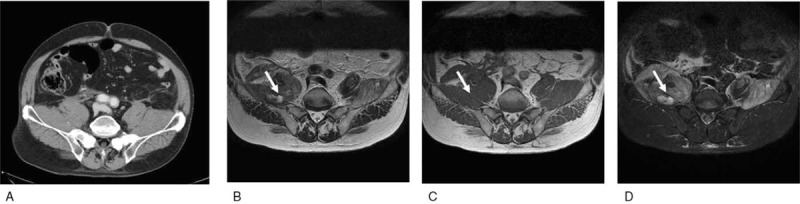
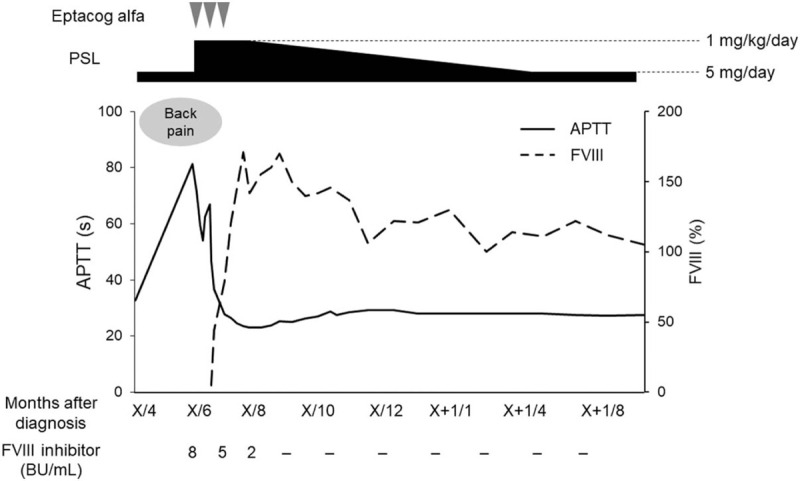
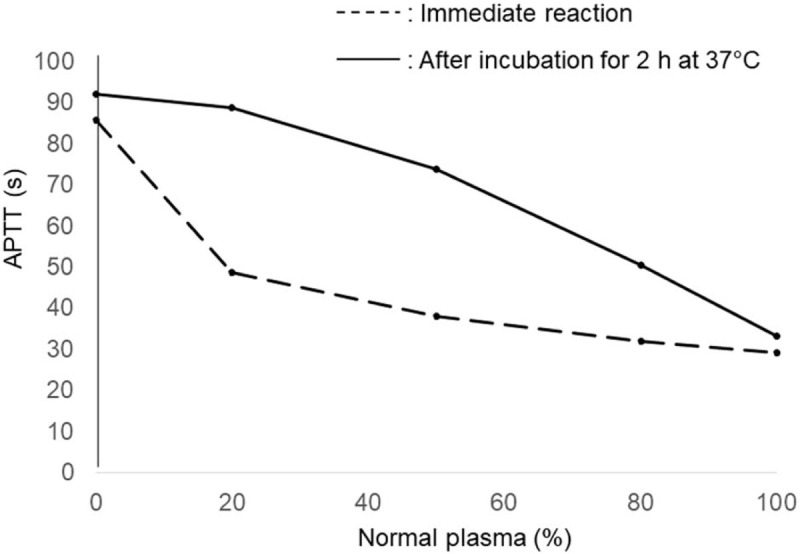
A 69-year-old man visited our hospital because of general fatigue. Blood examination showed pancytopenia, and computed tomography revealed whole-body lymphadenopathy, but there were no findings indicating hematological malignancy from bone marrow aspiration and cervical lymph node biopsy. The level of EBV DNA in peripheral blood was extremely high, and he was diagnosed with EBV-T/NK-LPD. EBV-T/NK-LPD improved with prednisolone (PSL) administration. Seventeen months after starting treatment, the patient complained of back and right leg pain. At that time, he had been treated with low-dose PSL, and EBV-T/NK-LPD was well controlled. Imaging revealed hematoma of the right iliopsoas muscle. Prolonged activated partial thromboplastin time (APTT) was the only abnormal finding in a screening coagulation test. FVIII coagulant activity was below detection limit, and FVIII inhibitor level was increased. From these results, he was diagnosed with AHA.A higher dose of PSL was administered, and, after 1 month of treatment, FVIII activity gradually increased, and FVIII inhibitor level became undetectable. APTT also normalized, and complete remission was achieved and maintained for 13 months with low-dose PSL. During treatment, EBV-T/NK-LPD was well controlled.
It is speculated that proliferating lymphocytes interfere with normal immune functions and that abnormal autoantibodies are produced from those lymphocytes in patients with LPD. Therefore, we speculate that EBV-infected and proliferating monoclonal NK cells might have modulated the immune system and produced autoantibodies against FVIII, thus causing AHA in this patient with EBV-T/NK-LPD.
获得性血友病 A (AHA) 是一种由针对因子 VIII (FVIII) 的自身抗体引起的罕见出血性疾病。血液系统恶性肿瘤,特别是淋巴恶性肿瘤,已知是 AHA 的潜在病因;然而,迄今为止,尚无与 EBV 相关的 T/NK 细胞淋巴增生性疾病(EBV-T/NK-LPD)相关的 AHA 报告。在这里,我们报告了一例在 EBV-T/NK-LPD 治疗过程中发生的 AHA 病例。
一名 69 岁男性因全身乏力就诊。血液检查显示全血细胞减少,计算机断层扫描显示全身淋巴结肿大,但骨髓穿刺和颈部淋巴结活检均无血液恶性肿瘤的发现。外周血 EBV DNA 水平极高,诊断为 EBV-T/NK-LPD。给予 EBV-T/NK-LPD 泼尼松龙(PSL)治疗。治疗开始后 17 个月,患者出现腰背和右下肢疼痛。当时他接受低剂量 PSL 治疗,EBV-T/NK-LPD 得到良好控制。影像学显示右侧髂腰肌血肿。常规凝血检查仅发现延长的活化部分凝血活酶时间(APTT)异常。FVIII 凝血活性低于检测下限,FVIII 抑制剂水平升高。根据这些结果,诊断为 AHA。给予更高剂量的 PSL,治疗 1 个月后,FVIII 活性逐渐升高,FVIII 抑制剂水平降至不可测。APTT 也恢复正常,低剂量 PSL 治疗 13 个月后完全缓解并维持。治疗期间,EBV-T/NK-LPD 得到良好控制。
推测 LPD 患者的增殖淋巴细胞干扰正常免疫功能,这些淋巴细胞产生异常的自身抗体。因此,我们推测 EBV 感染和增殖的单克隆 NK 细胞可能调节了免疫系统并产生了针对 FVIII 的自身抗体,从而导致该 EBV-T/NK-LPD 患者发生 AHA。