Department of Psychiatry, Binzhou People's Hospital, Binzhou, Shandong 256600, P.R. China.
Department of Psychiatry, Binzhou Youfu Hospital, Binzhou, Shandong 256600, P.R. China.
Mol Med Rep. 2021 Jun;23(6). doi: 10.3892/mmr.2021.12102. Epub 2021 Apr 21.
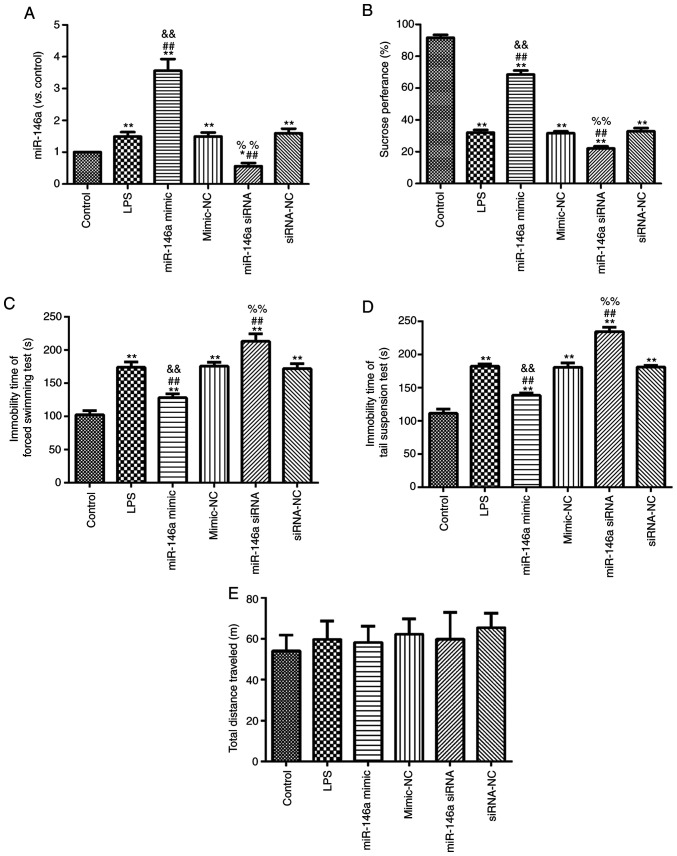
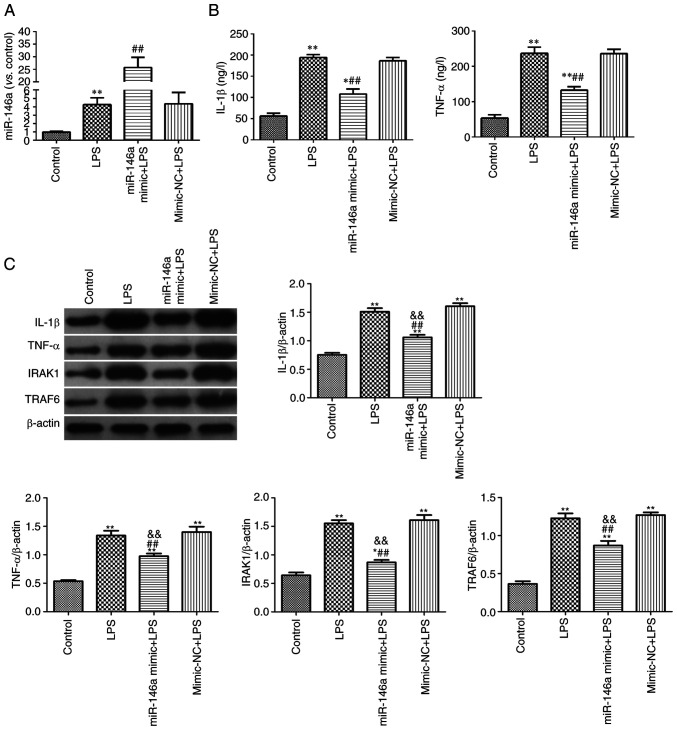
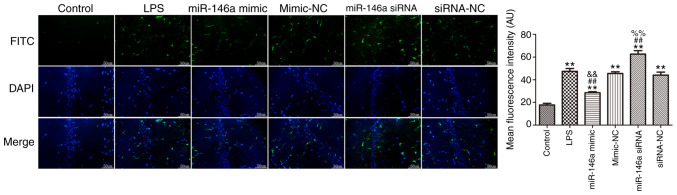
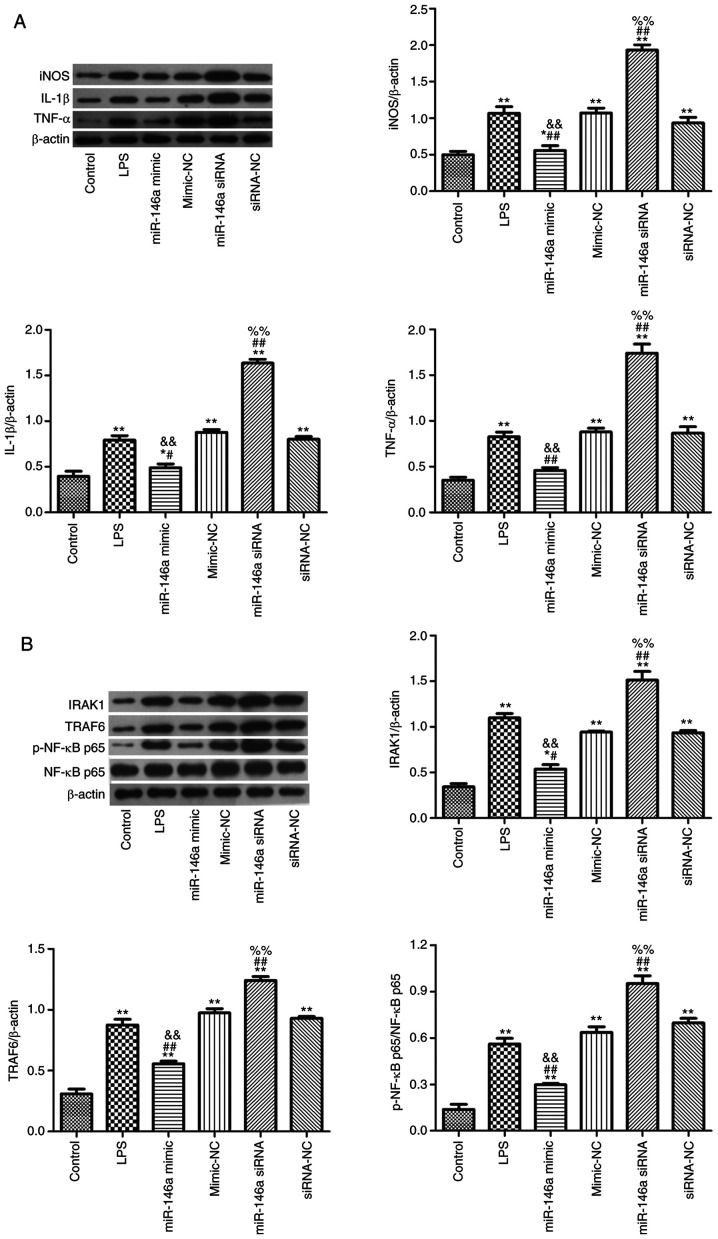
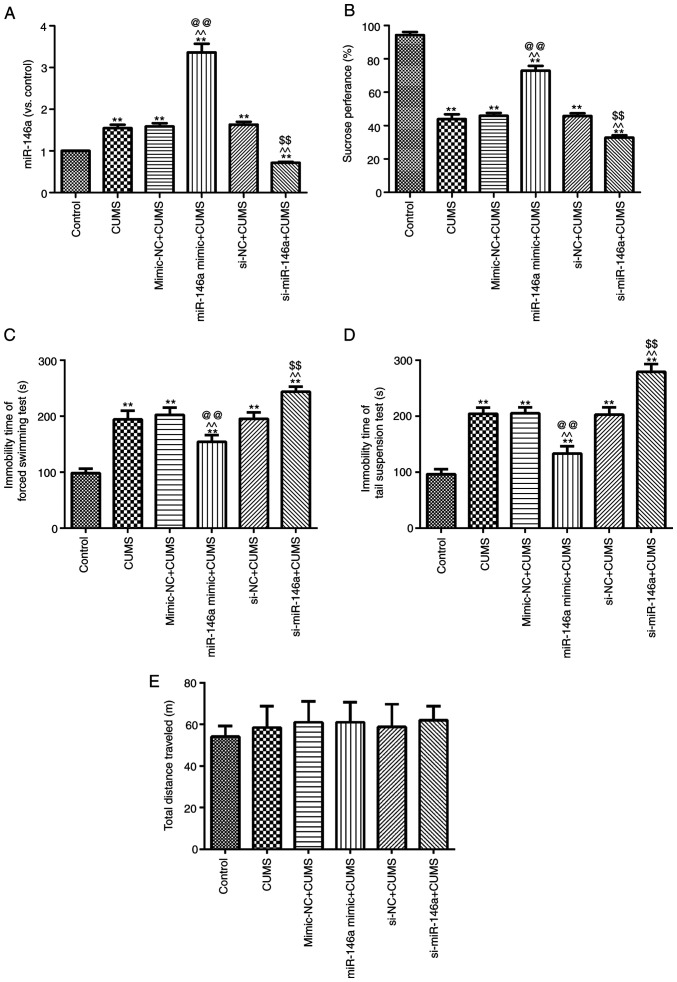
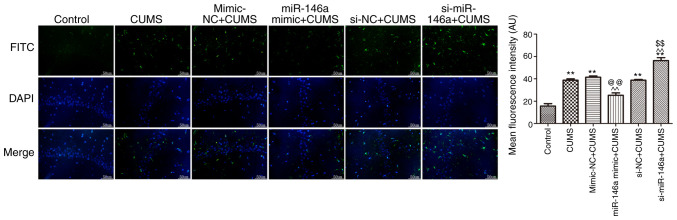
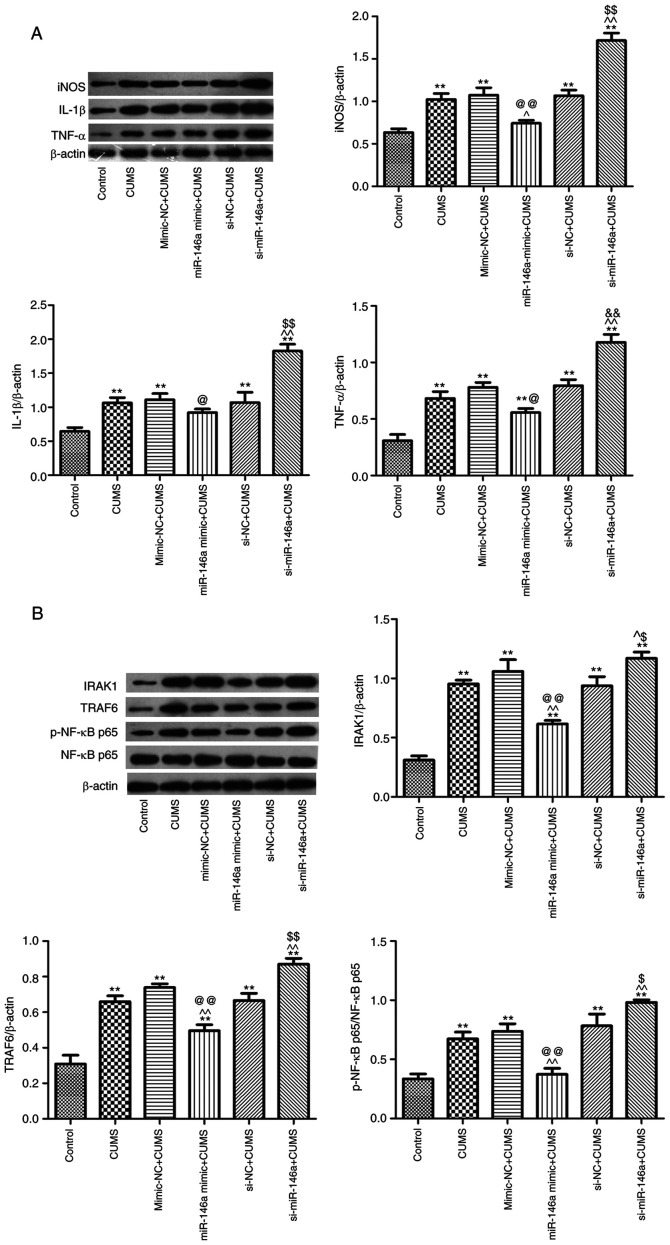
Depression is one of the major psychiatric diseases affecting the quality of life for individuals worldwide. Numerous reports have investigated depression, although its etiology remains to be elucidated. microRNA (miR)‑146a is suggested to regulate innate immune and inflammatory responses. However, it is unclear whether miR‑146a is involved in depression. Depression model mice were established using lipopolysaccharide‑induced depression and chronic unpredictable mild stress, separately. miR‑146a mimic and short interfering RNA were used to treat depressed mice. Depression‑like behaviors and levels of pro‑inflammatory cytokines were measured, while ionized calcium binding adapter molecule 1 (Iba‑1) expression in hippocampus was quantified by immunohistochemistry. Neuroinflammatory factor levels in hippocampus were measured by western blotting. BV‑2 cells were used to confirm that miR‑146a suppressed microglia activation. Compared with control mice, the two depressed mouse models showed clearly decreased sucrose preference and significantly increased immobility time in the forced swimming test and tail suspension test (P<0.05). miR‑146a overexpression significantly increased sucrose preference and reduced immobility time in depressed mice (P<0.05). However, total distance traveled in the locomotor activity test did not differ among groups. Compared with controls, expression levels of Iba‑1, inducible nitric oxide, IL‑1β, TNF‑α, interleukin 1 receptor associated kinase 1 (IRAK1), TNF receptor‑associated factor 6 (TRAF6) and phosphorylated NF‑κB p65 were significantly increased in depressed mice (P<0.05). miR‑146a overexpression effectively inhibited expression of these neuroinflammatory proteins, while miR‑146a silencing significantly upregulated their expression (P<0.05). Consistent with these in vivo results, miR‑146a mimic treatment inhibited TNF‑α, IL‑1β, IRAK1 and TRAF6 expression in BV‑2 cells. miR‑146a improved depressive behaviors in depressed model mice by inhibiting microglial activation and neuroinflammatory factor expression.
抑郁症是影响全球个体生活质量的主要精神疾病之一。尽管其病因仍未阐明,但已有大量报道对其进行了研究。微小 RNA(miR)-146a 被认为可调节固有免疫和炎症反应。然而,miR-146a 是否参与抑郁症尚不清楚。分别使用脂多糖诱导的抑郁和慢性不可预测的轻度应激建立抑郁模型小鼠。使用 miR-146a 模拟物和短发夹 RNA 治疗抑郁小鼠。通过强迫游泳试验和悬尾试验测量抑郁样行为和促炎细胞因子水平,通过免疫组织化学定量海马中海马离子钙结合接头分子 1(Iba-1)的表达。通过 Western blot 测量海马神经炎症因子水平。使用 BV-2 细胞证实 miR-146a 抑制小胶质细胞激活。与对照组小鼠相比,两种抑郁模型小鼠的蔗糖偏好明显降低,强迫游泳试验和悬尾试验的不动时间明显增加(P<0.05)。miR-146a 过表达显著增加抑郁小鼠的蔗糖偏好并减少不动时间(P<0.05)。然而,各组的运动活动试验中总行进距离没有差异。与对照组相比,抑郁小鼠的 Iba-1、诱导型一氧化氮合酶、IL-1β、TNF-α、白细胞介素 1 受体相关激酶 1(IRAK1)、肿瘤坏死因子受体相关因子 6(TRAF6)和磷酸化 NF-κB p65 的表达水平明显升高(P<0.05)。miR-146a 过表达可有效抑制这些神经炎症蛋白的表达,而 miR-146a 沉默则显著上调其表达(P<0.05)。与这些体内结果一致,miR-146a 模拟物处理抑制了 TNF-α、IL-1β、IRAK1 和 TRAF6 在 BV-2 细胞中的表达。miR-146a 通过抑制小胶质细胞激活和神经炎症因子表达改善抑郁模型小鼠的抑郁行为。