School of Health Sciences, College of Health Sciences, Makerere University, Kampala, Uganda
School of Health Sciences, College of Health Sciences, Makerere University, Kampala, Uganda.
BMJ Open. 2021 Apr 21;11(4):e048825. doi: 10.1136/bmjopen-2021-048825.
To explore the experiences and lessons learnt by the study team and participants of the Workplace-based HIV self-testing among Men trial during the COVID-19 pandemic in Uganda.
An explorative qualitative study comprising two virtual focus group discussions (FGDs) with 12 trial team members and 32 in-depth participant interviews (N=44). Data were collected via telephone calls for in-depth interviews or Zoom for FGDs and manually analysed by inductive content analysis.
Fourteen private security companies in two Uganda districts.
Members of the clinical trial study team, and men working in private security companies who undertook workplace-based HIV testing.
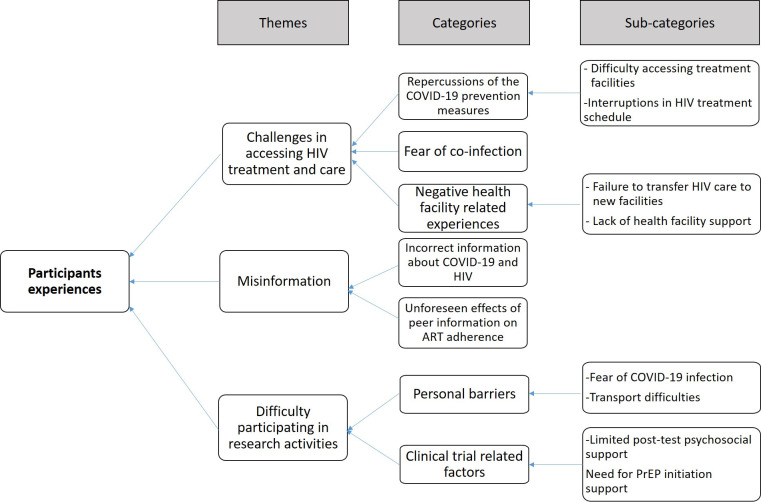
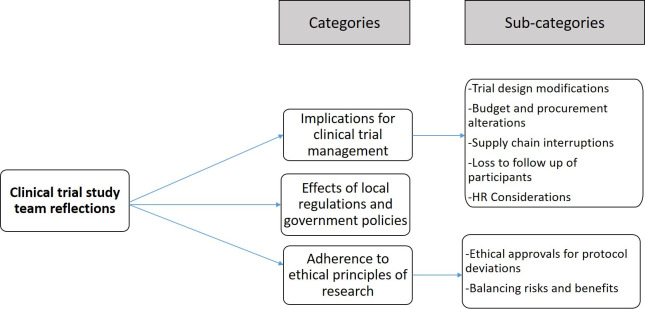
The key themes for participants experiences were: 'challenges in accessing HIV treatment and care, and prevention services', 'misinformation' and 'difficulty participating in research activities'. The effects on HIV treatment and prevention resulted from; repercussions of the COVID-19 restrictions, participants fear of coinfection and negative experiences at health facilities. The difficulty in participating in research activities arose from: fear of infection with COVID-19 for the participants who tested HIV negative, transport difficulties, limited post-test psychosocial support and lack of support to initiate pre-exposure prophylaxis. The key study team reflections focused on the management of the clinical trial, effects of the local regulations and government policies and the need to adhere to ethical principles of research.
Findings highlight the need to organise different forms of HIV support for persons living with HIV during a pandemic. Additionally, the national research regulators and ethics committees or review boards are strongly urged to develop policies and guidelines for the continuity of research and clinical trials in the event of future shocks. Furthermore, this study calls on the appropriate government agencies to ensure public and researchers' preparedness through continuing education and support.
Clinicaltrials.gov NCT04164433; Pre-results.
探索在乌干达 COVID-19 大流行期间,基于工作场所的 HIV 自我检测试验研究团队和参与者的经验和教训。
这是一项探索性的定性研究,包括对 12 名试验团队成员和 32 名深入参与者访谈(共 44 名)进行了两次虚拟焦点小组讨论(FGD)。通过电话进行深入访谈或通过 Zoom 进行 FGD 收集数据,并通过归纳内容分析进行手动分析。
乌干达两个地区的 14 家私营保安公司。
临床试验研究团队成员以及在私营保安公司工作并接受过基于工作场所 HIV 检测的男性。
参与者体验的主要主题是:“获得 HIV 治疗和护理以及预防服务的挑战”,“错误信息”和“参与研究活动的困难”。这些影响包括:COVID-19 限制的后果、参与者对合并感染的恐惧以及对卫生机构的负面体验。难以参与研究活动的原因包括:对于 HIV 检测呈阴性的参与者而言,对感染 COVID-19 的恐惧、交通困难、有限的检测后心理社会支持以及缺乏启动暴露前预防的支持。研究团队的主要反思集中在临床试验的管理、地方法规和政府政策的影响以及遵守研究伦理原则的必要性。
研究结果强调了在大流行期间为 HIV 感染者组织不同形式的 HIV 支持的必要性。此外,强烈呼吁国家研究监管机构和伦理委员会或审查委员会制定政策和准则,以确保在未来发生冲击时继续进行研究和临床试验。此外,本研究呼吁适当的政府机构通过继续教育和支持,确保公众和研究人员的准备。
Clinicaltrials.gov NCT04164433;预结果。