Kalayarasan Raja, Gautham M S, Gnanasekaran Senthil, Pottakkat Biju
Department of Surgical Gastroenterology, Jawaharlal Institute of Post graduate Medical Education and Research, Puducherry, India.
J Minim Access Surg. 2021 Jul-Sep;17(3):399-404. doi: 10.4103/jmas.JMAS_239_20.
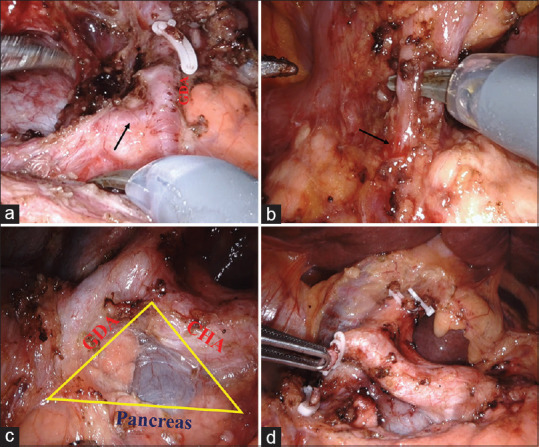
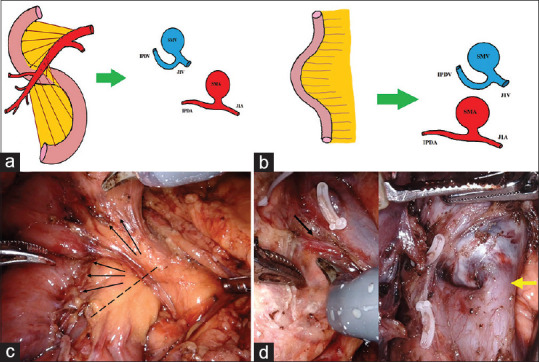
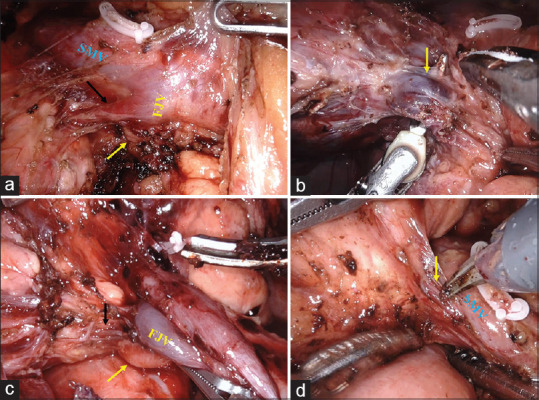
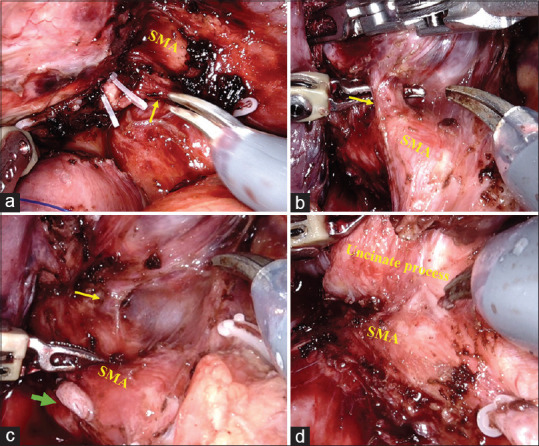
Robotic pancreaticoduodenectomy (PD) remains one of the most advanced robotic procedures. Improved ergonomics and stable 3D vision with robotic platform helped overcome the technical challenges of pancreatic reconstruction in minimally invasive PD. However, inadequate understanding of the complex vascular anatomy of the pancreatic head and uncinate process often results in intra-operative bleeding and prolongs the learning curve. The technique of precise identification and systematic control of the vessels supplying the head and the uncinate process is described in this report. A good understanding of the common vascular anatomy and variations along with stepwise precise vascular control described in this report could minimise intra-operative bleeding and shorten the learning curve associated with robotic PD.
机器人胰十二指肠切除术(PD)仍然是最先进的机器人手术之一。机器人平台改善了人体工程学并提供稳定的三维视觉,有助于克服微创PD中胰腺重建的技术挑战。然而,对胰头和钩突复杂血管解剖结构的认识不足常常导致术中出血,并延长学习曲线。本报告描述了精确识别和系统控制供应胰头和钩突血管的技术。对本报告中描述的常见血管解剖结构和变异以及逐步精确的血管控制有充分了解,可以最大限度地减少术中出血,并缩短与机器人PD相关的学习曲线。