Luvuno Mluleki, Khathi Andile, Mabandla Musa V
Schools of Laboratory Medicine and Medical Sciences, College of Health Sciences, University of KwaZulu-Natal, Private Bag X54001, Durban, South Africa.
Nutr Metab (Lond). 2021 Apr 22;18(1):45. doi: 10.1186/s12986-021-00573-0.
An animal model of prediabetes that has been developed in our laboratory using a high fat high carbohydrate diet and lack of physical activity displays risk factors for cardiovascular complications. The effect of exercise against these risk factors in this animal model remains unknown. Therefore, we evaluated the effect of intermittent and regular exercise treatment on the risk factors for cardiovascular complications in this animal model of prediabetes.
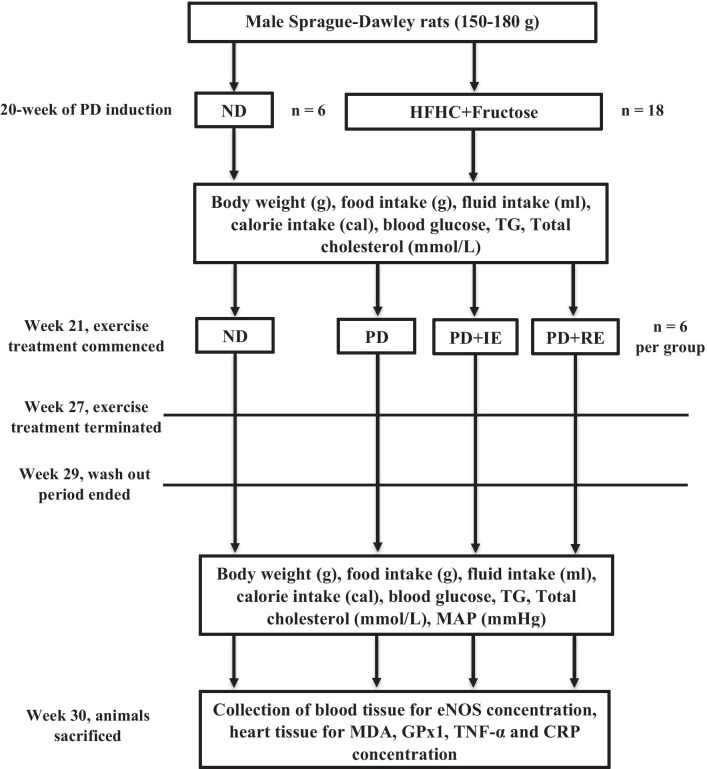
Following prediabetes induction, animals were randomly assigned to the following groups (n = 6): non-diabetic, prediabetic, intermittently exercising prediabetic and regularly exercising prediabetic. Exercise exposure was 7 weeks long. Body weight changes, caloric intake, blood glucose, total cholesterol, and triglyceride concentration was measured after 20 and 29 weeks while blood pressure was only measured after 29 weeks. Plasma endothelial nitric oxide synthase, malonaldehyde, glutathione peroxidase, tumour necrosis factor-alpha and C-reactive protein concentration from the heart were measured 2 weeks post-exercise termination (week 30).
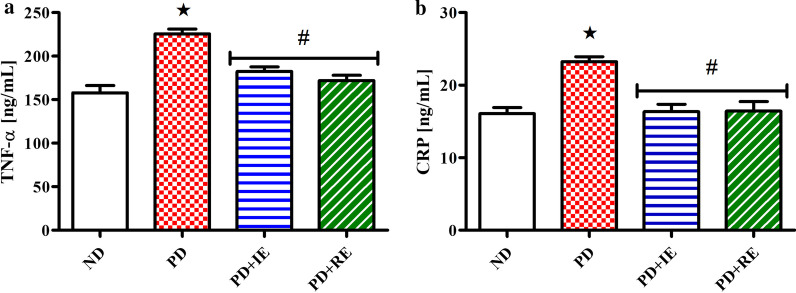
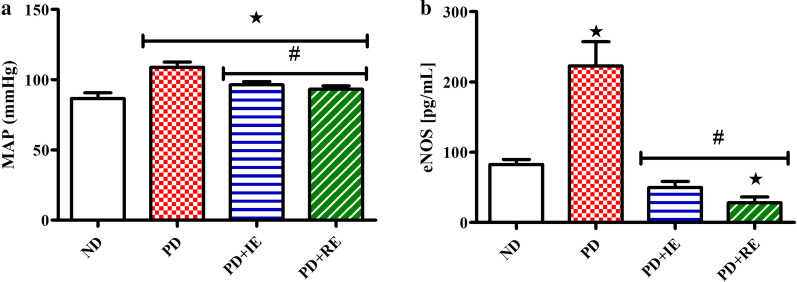
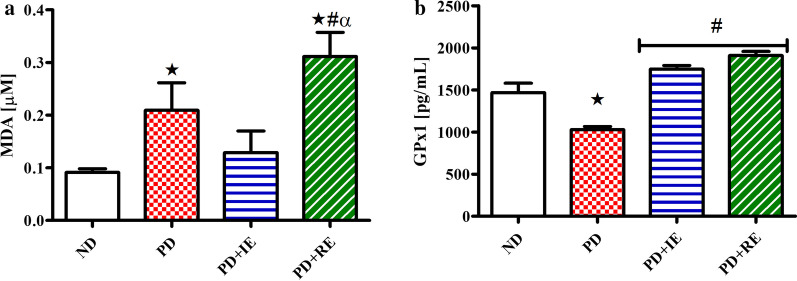
We found increased body weight, caloric intake and mean arterial pressure in the prediabetic group by comparison to the non-prediabetic group. The same trend was observed in blood glucose and triglyceride concentrations. However, all of these parameters were reduced in the intermittently exercising prediabetic and regularly exercising prediabetic groups. This reduction was further accompanied by a decrease in the endothelial nitric oxide synthase, tumour necrosis factor-alpha and C-reactive protein concentration with improved oxidative stress biomarkers.
The progression of pre-diabetes to diabetes is slowed or possibly stopped by exercise (regular or intermittent). Additionally, biomarker profiles indicative of cardiovascular disease in pre-diabetics are improved by exercise.
我们实验室利用高脂高碳水化合物饮食和缺乏体育活动建立了一种糖尿病前期动物模型,该模型呈现出心血管并发症的危险因素。运动对该动物模型中这些危险因素的影响尚不清楚。因此,我们评估了间歇性和规律性运动治疗对这种糖尿病前期动物模型中心血管并发症危险因素的影响。
在诱导糖尿病前期后,将动物随机分为以下几组(n = 6):非糖尿病组、糖尿病前期组、间歇性运动的糖尿病前期组和规律性运动的糖尿病前期组。运动暴露为期7周。在第20周和第29周测量体重变化、热量摄入、血糖、总胆固醇和甘油三酯浓度,而血压仅在第29周测量。在运动终止后2周(第30周)测量心脏血浆内皮型一氧化氮合酶、丙二醛、谷胱甘肽过氧化物酶、肿瘤坏死因子-α和C反应蛋白浓度。
我们发现,与非糖尿病前期组相比,糖尿病前期组的体重、热量摄入和平均动脉压增加。血糖和甘油三酯浓度也呈现相同趋势。然而,在间歇性运动的糖尿病前期组和规律性运动的糖尿病前期组中,所有这些参数均降低。这种降低还伴随着内皮型一氧化氮合酶、肿瘤坏死因子-α和C反应蛋白浓度的降低以及氧化应激生物标志物的改善。
运动(规律或间歇性)可减缓或可能阻止糖尿病前期向糖尿病的进展。此外,运动可改善糖尿病前期患者中指示心血管疾病的生物标志物谱。