Evolution and Ecology Research Centre, School of Biological, Earth and Environmental Sciences, University of New South Wales, Sydney, Australia.
University of Brest and CNRS Laboratoire Geosciences Ocean, IUEM, 29280, Plouzané, France.
Sci Rep. 2021 Apr 22;11(1):8762. doi: 10.1038/s41598-021-88062-5.
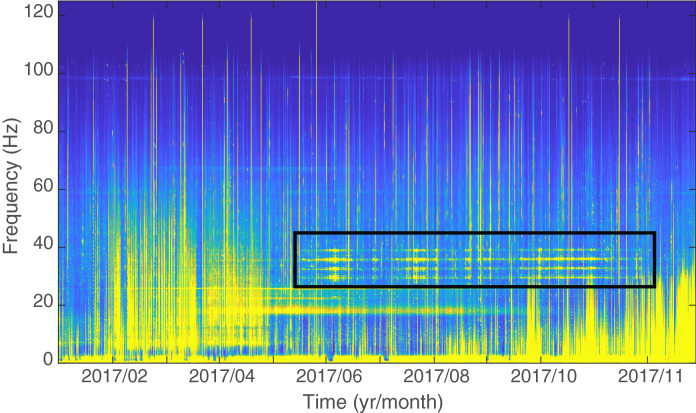
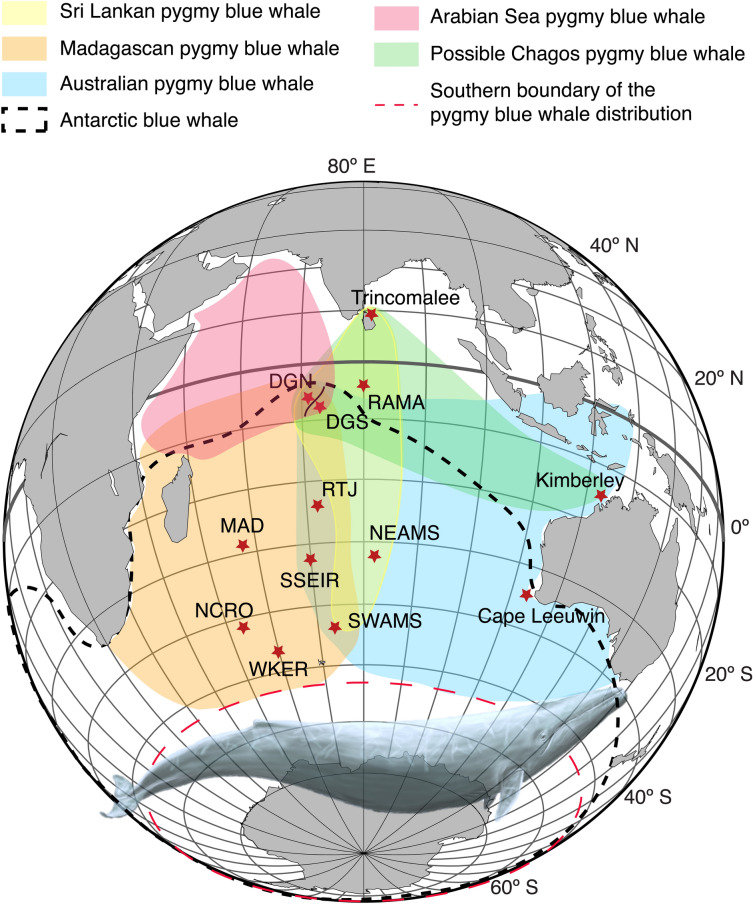
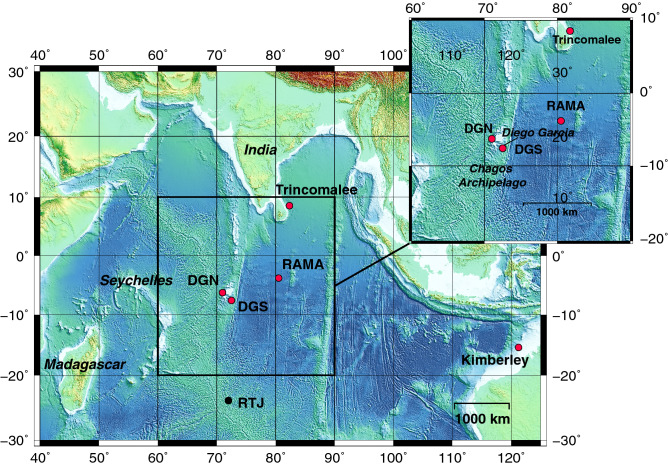
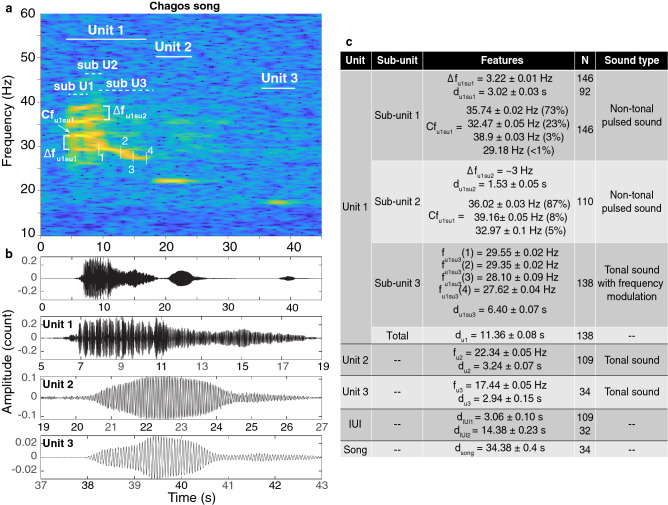
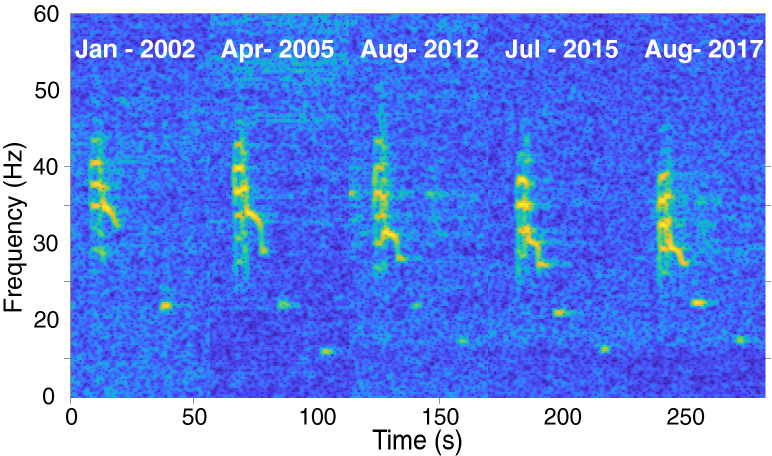
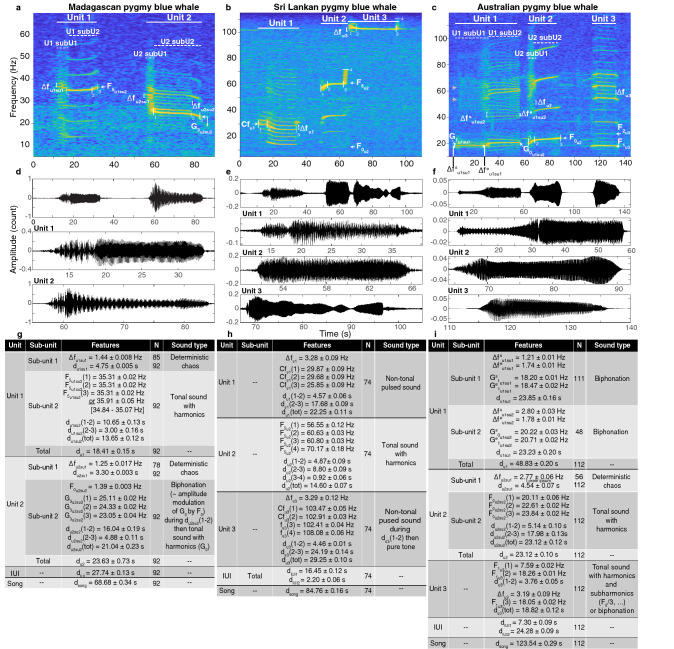
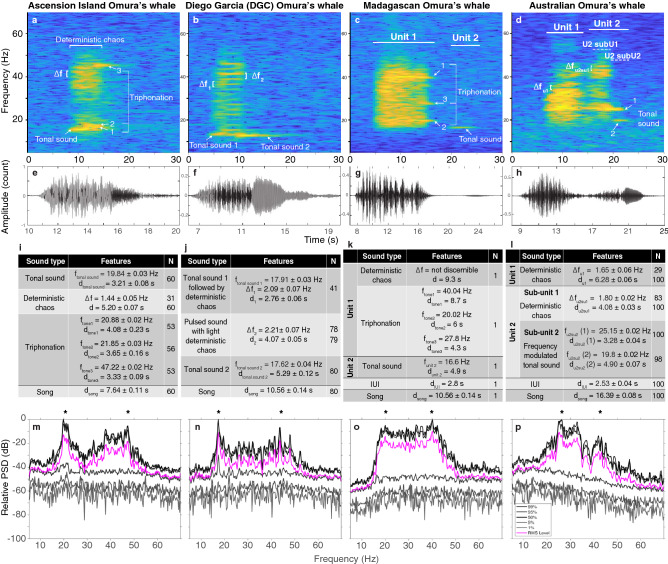
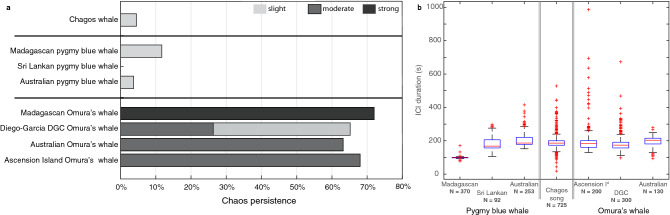
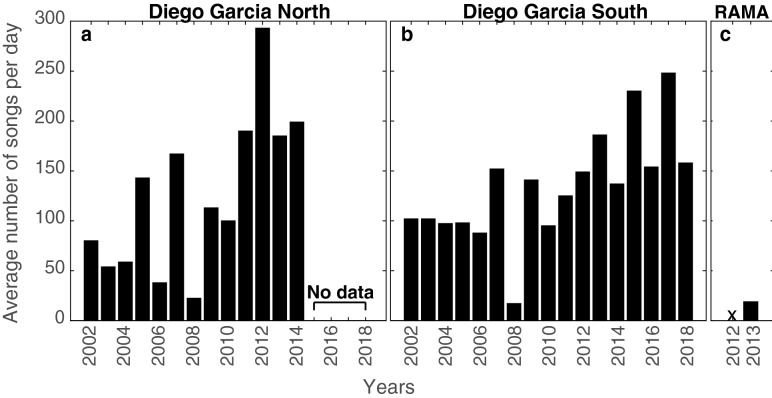
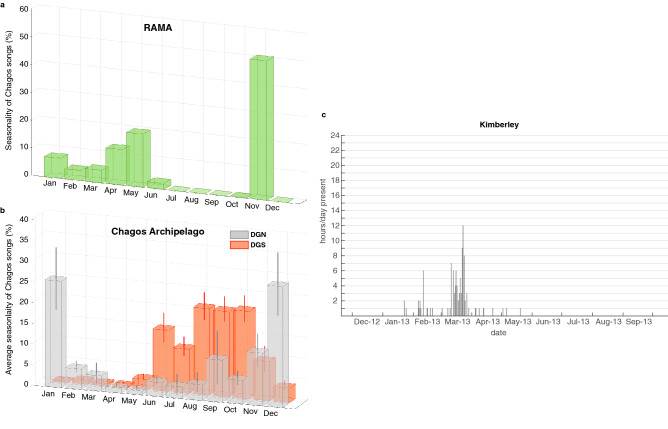
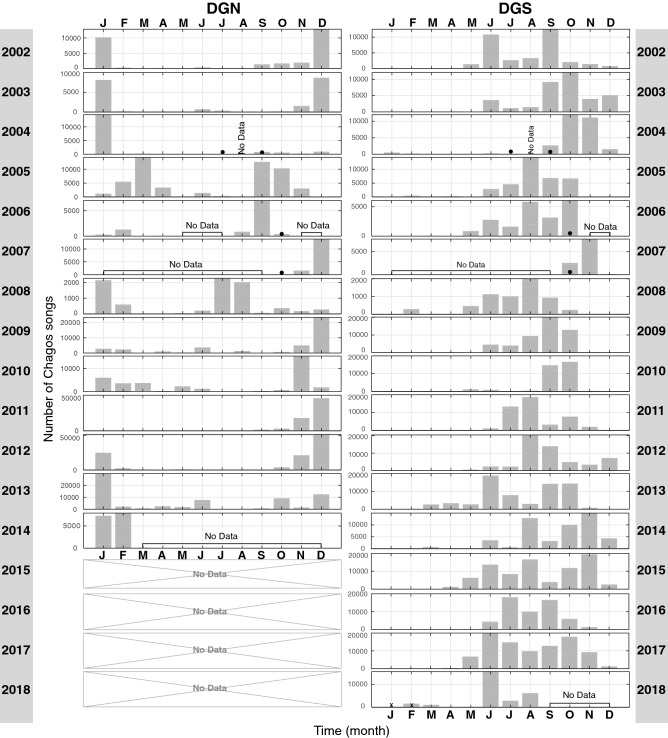
Blue whales were brought to the edge of extinction by commercial whaling in the twentieth century and their recovery rate in the Southern Hemisphere has been slow; they remain endangered. Blue whales, although the largest animals on Earth, are difficult to study in the Southern Hemisphere, thus their population structure, distribution and migration remain poorly known. Fortunately, blue whales produce powerful and stereotyped songs, which prove an effective clue for monitoring their different 'acoustic populations.' The DGD-Chagos song has been previously reported in the central Indian Ocean. A comparison of this song with the pygmy blue and Omura's whale songs shows that the Chagos song are likely produced by a distinct previously unknown pygmy blue whale population. These songs are a large part of the underwater soundscape in the tropical Indian Ocean and have been so for nearly two decades. Seasonal differences in song detections among our six recording sites suggest that the Chagos whales migrate from the eastern to western central Indian Ocean, around the Chagos Archipelago, then further east, up to the north of Western Australia, and possibly further north, as far as Sri Lanka. The Indian Ocean holds a greater diversity of blue whale populations than thought previously.
蓝鲸在 20 世纪的商业捕鲸活动中濒临灭绝,它们在南半球的恢复速度缓慢;它们仍然处于濒危状态。蓝鲸虽然是地球上最大的动物,但在南半球很难研究,因此它们的种群结构、分布和迁徙情况仍然知之甚少。幸运的是,蓝鲸会发出强大而刻板的歌声,这为监测它们不同的“声学种群”提供了一个有效的线索。DGD-Chagos 之歌此前已在印度洋中部被报道。将这首歌与小须鲸和小抹香鲸的歌声进行比较表明,查戈斯之歌可能是由一个以前未知的独特小须鲸种群产生的。这些歌曲是热带印度洋水下音景的重要组成部分,已经存在了将近二十年。在我们的六个录音地点中,歌曲检测的季节性差异表明,查戈斯鲸鱼从印度洋东部迁徙到西部中部,绕过查戈斯群岛,然后再向东迁徙,到达西澳大利亚北部,可能再向北迁徙,远至斯里兰卡。印度洋拥有比以前想象的更多样化的蓝鲸种群。