Biofilm Research Laboratory, The Faculty of Dental Medicine, The Hebrew University of Jerusalem, Jerusalem, Israel.
The Institute for Drug Research, The Faculty of Medicine, The Hebrew University of Jerusalem, Jerusalem, Israel.
Sci Rep. 2021 Apr 22;11(1):8690. doi: 10.1038/s41598-021-88099-6.
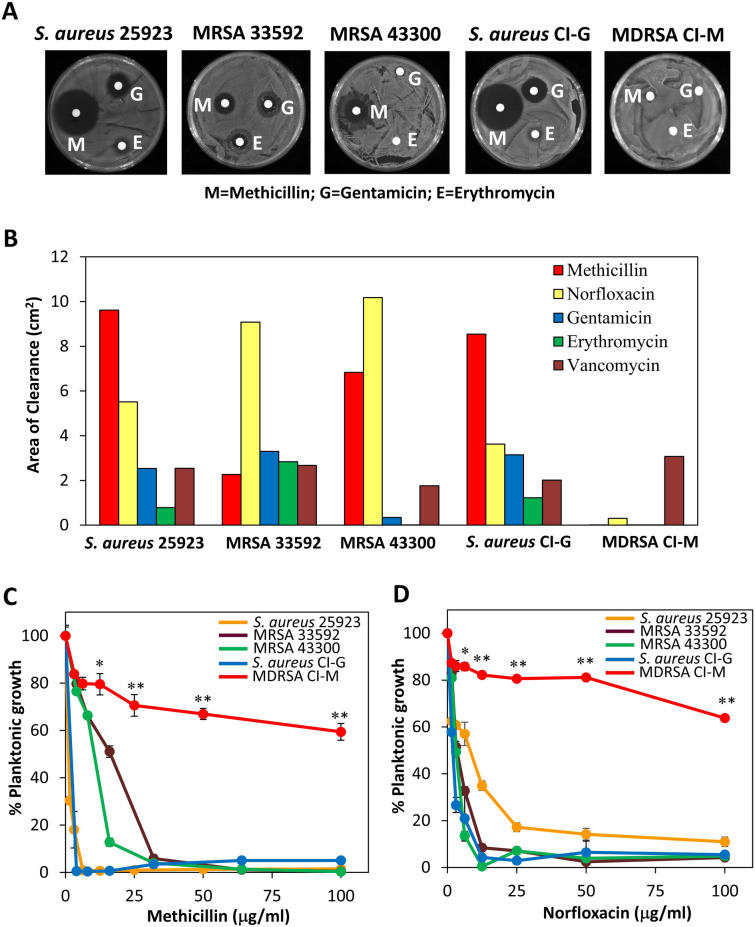
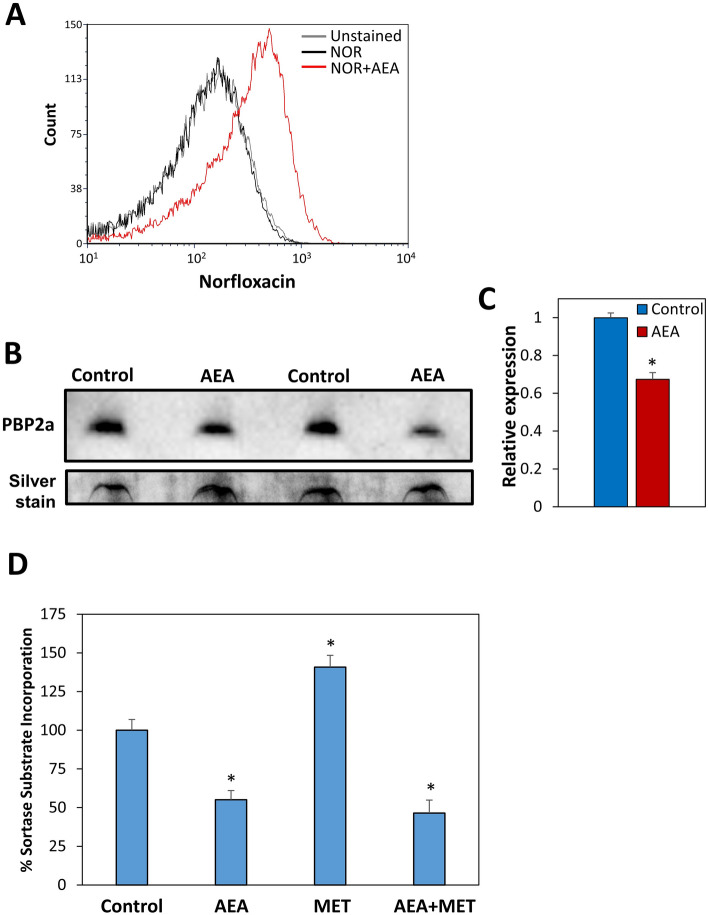
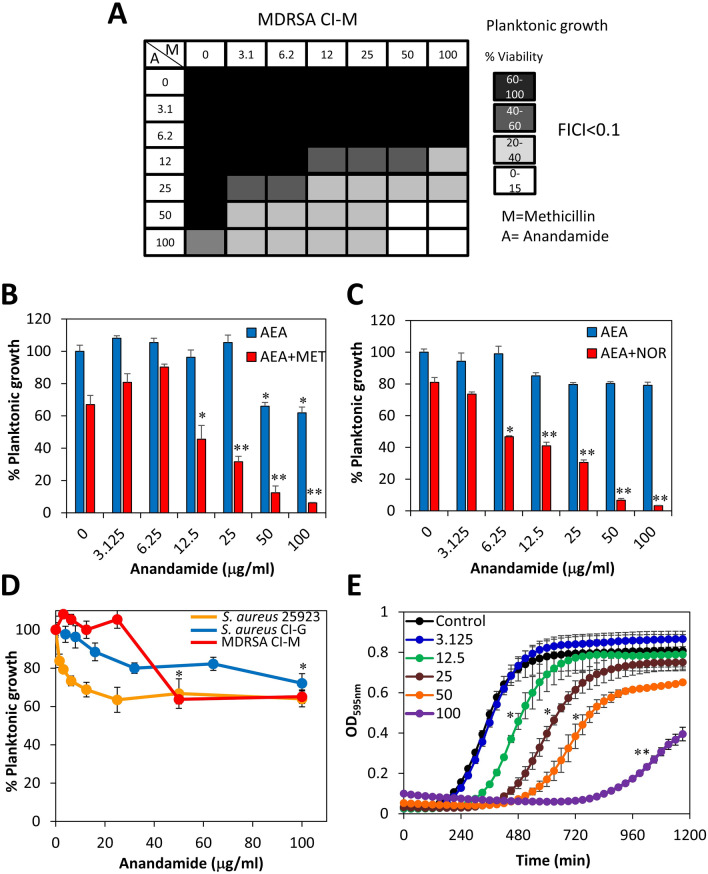
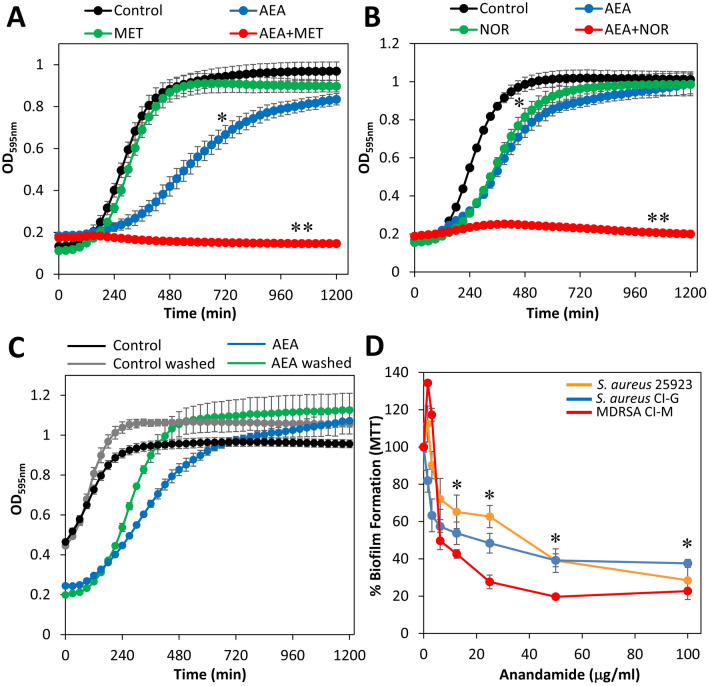
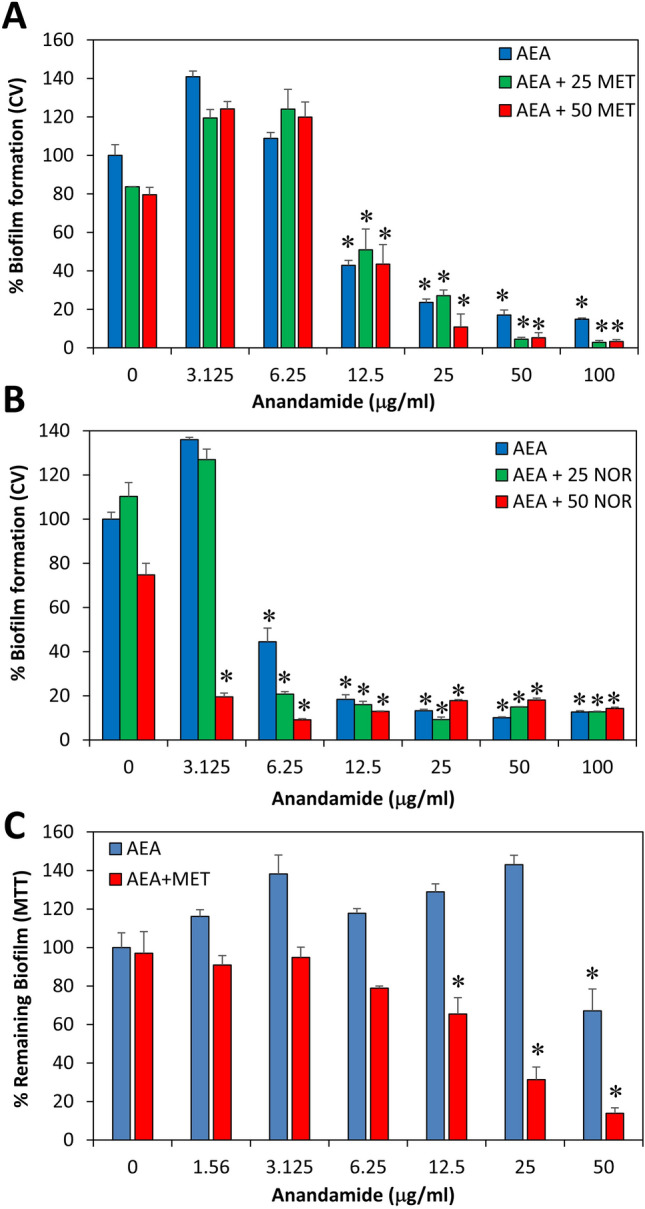
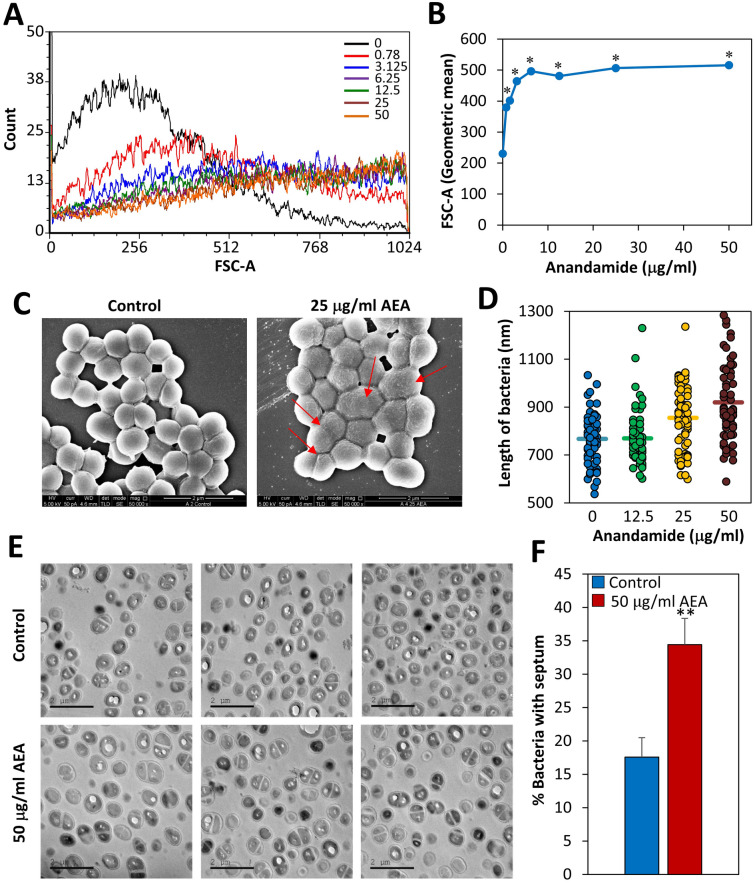
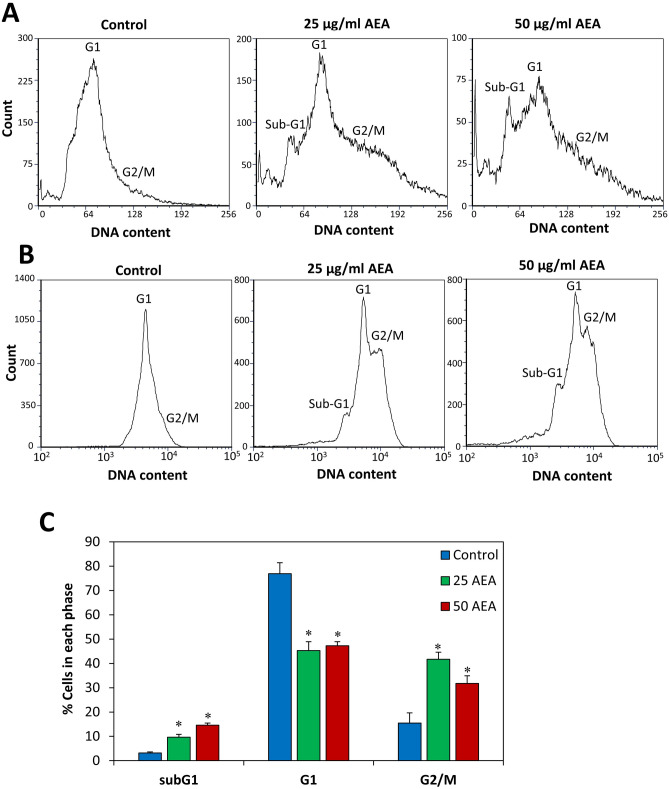
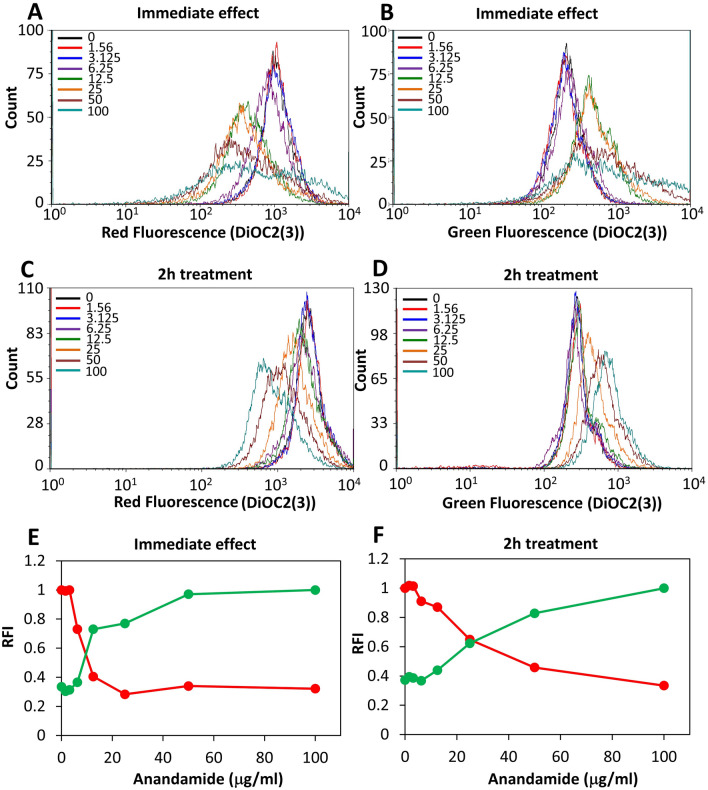
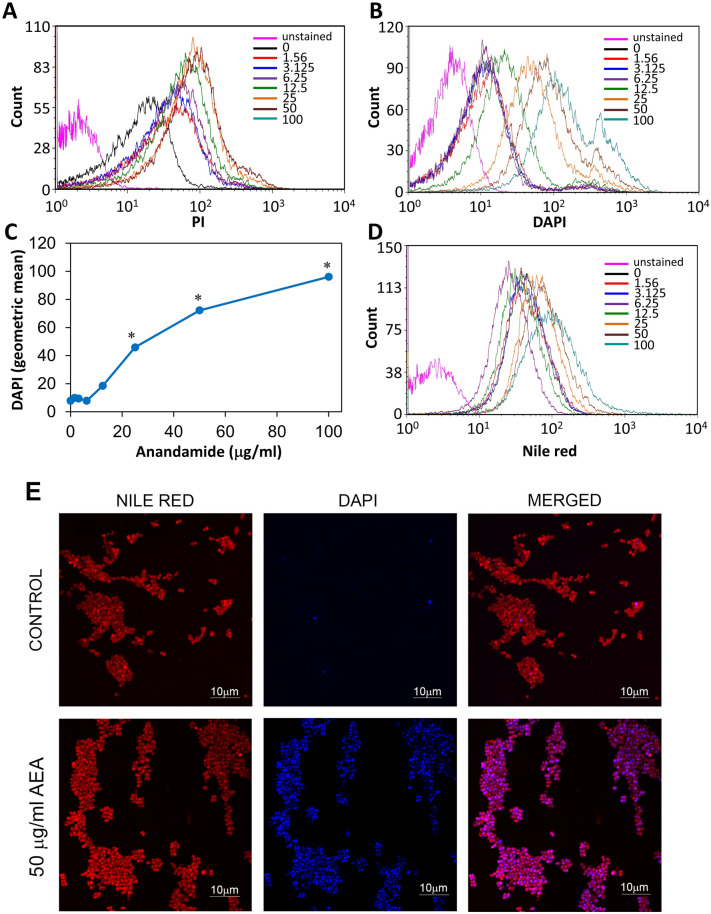
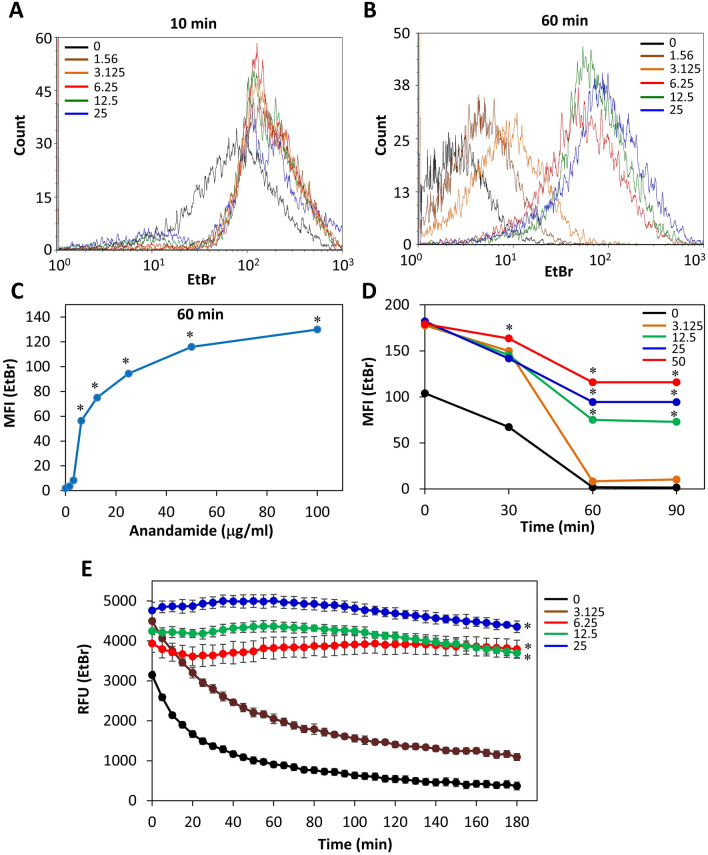
Antibiotic resistance is a serious public health problem throughout the world. Overcoming methicillin and multidrug-resistant Staphylococcus aureus (MRSA/MDRSA) infections has become a challenge and there is an urgent need for new therapeutic approaches. We have previously demonstrated that the endocannabinoid Anandamide (AEA) can sensitize MRSA to antibiotics. Here we have studied the mechanism of action using a MDRSA clinical isolate that are sensitized by AEA to methicillin and norfloxacin. We found that AEA treatment halts the growth of both antibiotic-sensitive and antibiotic-resistant S. aureus. The AEA-treated bacteria become elongated and the membranes become ruffled with many protrusions. AEA treatment also leads to an increase in the percentage of bacteria having a complete septum, suggesting that the cell division is halted at this stage. The latter is supported by cell cycle analysis that shows an accumulation of bacteria in the G2/M phase after AEA treatment. We further observed that AEA causes a dose-dependent membrane depolarization that is partly relieved upon time. Nile red staining of the bacterial membranes indicates that AEA alters the membrane structures. Importantly, 4'-6-diamidino-2-phenylindole (DAPI) accumulation assay and ethidium bromide efflux (EtBr) assay unveiled that AEA leads to a dose-dependent drug accumulation by inhibiting drug efflux. In conclusion, our study demonstrates that AEA interferes with cell division, alters the membrane properties of MDRSA, and leads to increased intracellular drug retention, which can contribute to the sensitization of MDRSA to antibiotics.
抗生素耐药性是全世界面临的严重公共卫生问题。克服耐甲氧西林和多药耐药金黄色葡萄球菌(MRSA/MDRSA)感染已成为一项挑战,迫切需要新的治疗方法。我们之前已经证明内源性大麻素大麻素(AEA)可以使耐甲氧西林金黄色葡萄球菌对抗生素敏感。在这里,我们使用经过 AEA 敏化的耐甲氧西林和诺氟沙星的 MDRSA 临床分离株研究了其作用机制。我们发现 AEA 处理可阻止敏感和耐药的金黄色葡萄球菌的生长。AEA 处理后的细菌变得细长,膜起皱并有许多突起。AEA 处理还导致具有完整隔膜的细菌百分比增加,表明细胞分裂在该阶段停止。细胞周期分析支持了这一点,该分析表明 AEA 处理后细菌在 G2/M 期积累。我们进一步观察到 AEA 引起剂量依赖性的膜去极化,随着时间的推移部分缓解。细菌膜的尼罗红染色表明 AEA 改变了膜结构。重要的是,4'-6-二脒基-2-苯基吲哚(DAPI)积累测定和溴化乙锭(EtBr)流出测定表明,AEA 通过抑制药物外排导致剂量依赖性药物积累。总之,我们的研究表明,AEA 干扰细胞分裂,改变 MDRSA 的膜特性,并导致细胞内药物保留增加,从而有助于 MDRSA 对抗生素的敏感性。