Pirsalehi Ali, Salari Sina, Baghestani Ahmadreza, Sanadgol Ghazal, Shirini Dorsa, Baerz Maryam Moghbel, Abdi Saeed, Akbari Mohammad Esmaeil, Bashash Davood
Department of Internal Medicine, School of Medicine, Taleghani Hospital, Shahid Beheshti University of Medical Sciences, Tehran, Iran.
Department of Medical Oncology, Hematology and Bone Marrow Transplantation, Taleghani Hospital, Shahid Beheshti University of Medical Sciences, Tehran, Iran.
Iran J Microbiol. 2021 Feb;13(1):8-16. doi: 10.18502/ijm.v13i1.5486.
Several studies have focused on the alterations of hematological parameters for a better understanding of the COVID-19 pathogenesis and also their potential for predicting disease prognosis and severity. Although some evidence has indicated the prognostic values of thrombocytopenia, neutrophilia, and lymphopenia, there are conflicting results concerning the leukocyte and monocyte count.
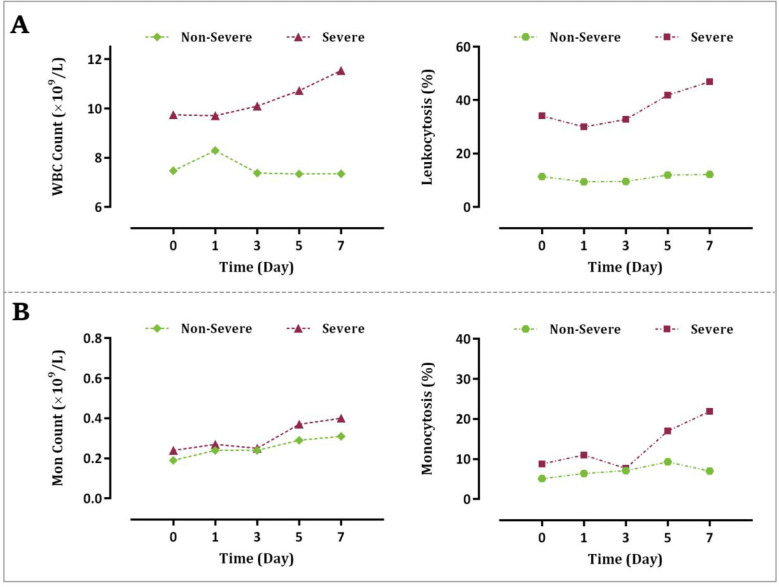
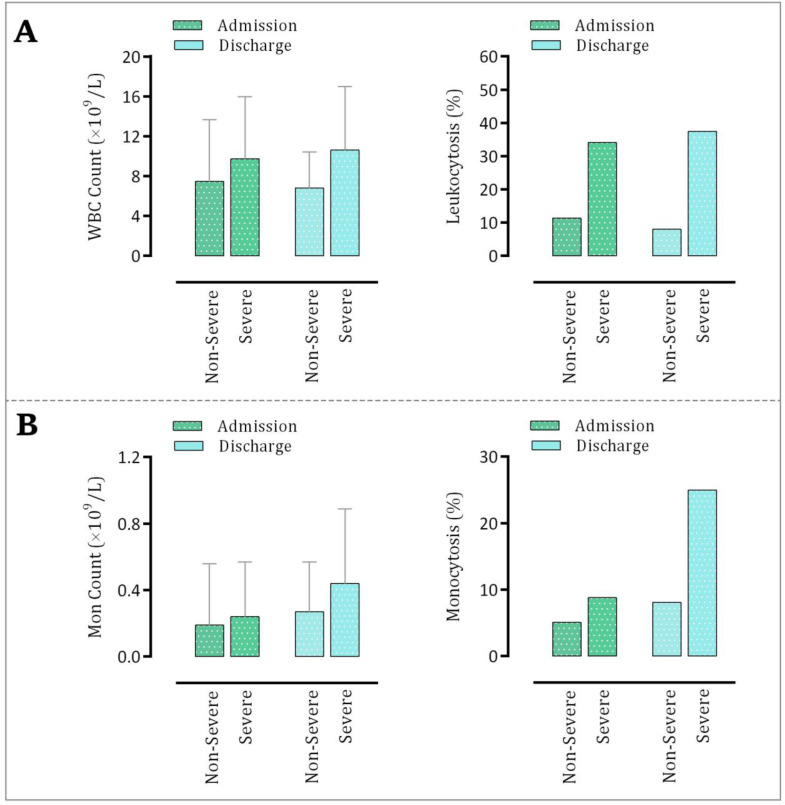
In this retrospective Double Centre study, we reviewed the results of WBC and monocyte counts of 1320 COVID-19 patients (243 of whom (18.4%) had severe disease) both on admission and within a 7-day follow-up.
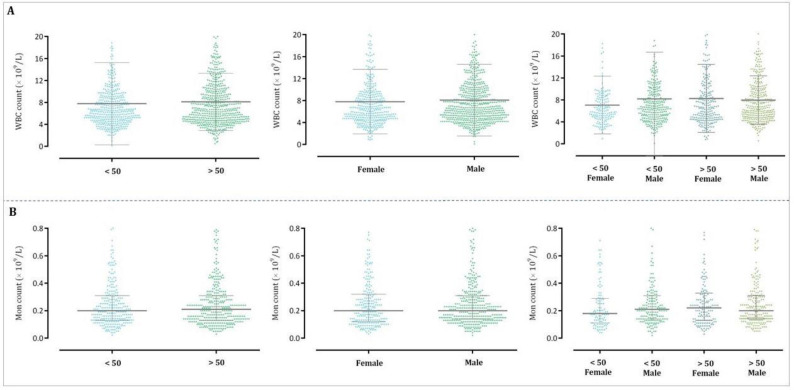
We found that both the number of monocytes and the percentage of monocytosis were higher in the severe group; however, it was not statistically significant. On the other hand, we found that not only the mean number of WBCs was significantly higher in the severe cases also leukocytosis was a common finding in this group; indicating that an increased number of WBC may probably predict a poor prognosis. Also, the monocyte count was not affected by age; however, univariate analysis showed that the percentage of leukocytosis was significantly greater in the older group (>50) with an odds ratio of 1.71 (P: 0.003).
Alteration of monocytes either on admission or within hospitalization would not provide valuable data about the prediction of COVID-19 prognosis. Although the rapidly evolving nature of COVID-19 is the major limitation of the present study, further investigations in the field of laboratory biomarkers will pave the way to manage patients with severe disease better.
多项研究聚焦于血液学参数的改变,以更好地理解新型冠状病毒肺炎(COVID-19)的发病机制及其预测疾病预后和严重程度的潜力。尽管一些证据表明血小板减少、中性粒细胞增多和淋巴细胞减少具有预后价值,但关于白细胞和单核细胞计数的结果存在矛盾。
在这项回顾性双中心研究中,我们回顾了1320例COVID-19患者(其中243例(18.4%)患有严重疾病)入院时及7天随访内的白细胞和单核细胞计数结果。
我们发现严重组的单核细胞数量和单核细胞增多百分比均较高;然而,差异无统计学意义。另一方面,我们发现不仅严重病例的白细胞平均数量显著更高,而且白细胞增多在该组中也很常见;这表明白细胞数量增加可能预示预后不良。此外,单核细胞计数不受年龄影响;然而,单因素分析显示,年龄较大组(>50岁)的白细胞增多百分比显著更高,优势比为1.71(P:0.003)。
入院时或住院期间单核细胞的改变并不能为预测COVID-19预后提供有价值的数据。尽管COVID-19快速演变的特性是本研究的主要局限,但在实验室生物标志物领域的进一步研究将为更好地管理重症患者铺平道路。