Li Qinghong, Larouche-Lebel Éva, Loughran Kerry A, Huh Terry P, Suchodolski Jan S, Oyama Mark A
Nestlé Purina Research, St. Louis, Missouri, USA
Department of Clinical Sciences and Advanced Medicine, School of Veterinary Medicine, University of Pennsylvania, Philadelphia, Pennsylvania, USA.
mSystems. 2021 Apr 20;6(2):e00111-21. doi: 10.1128/mSystems.00111-21.
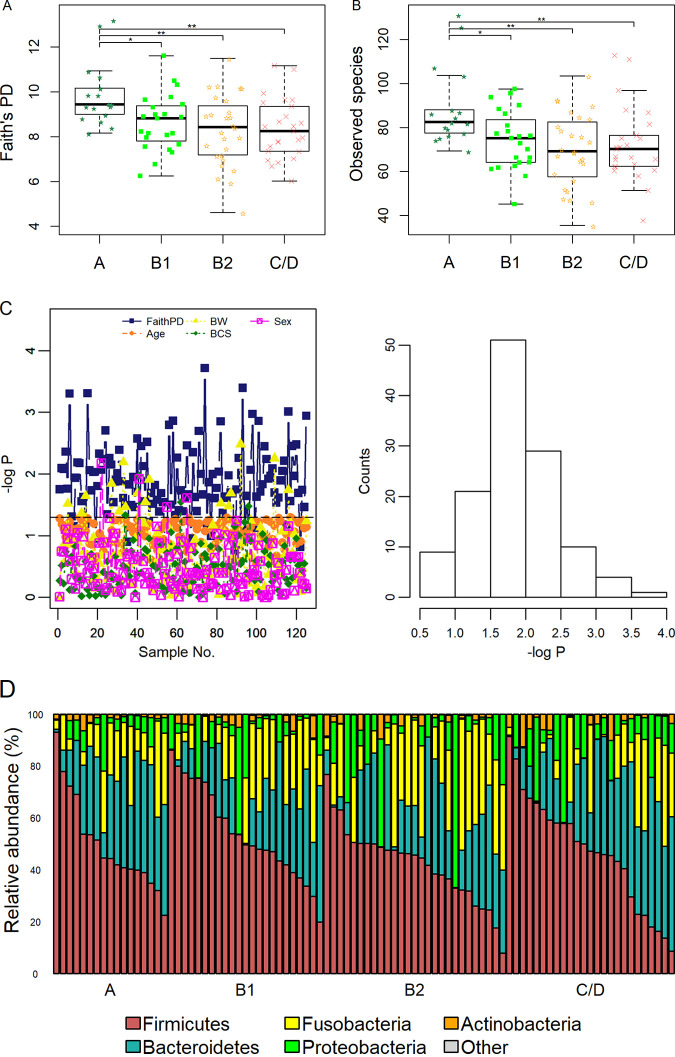
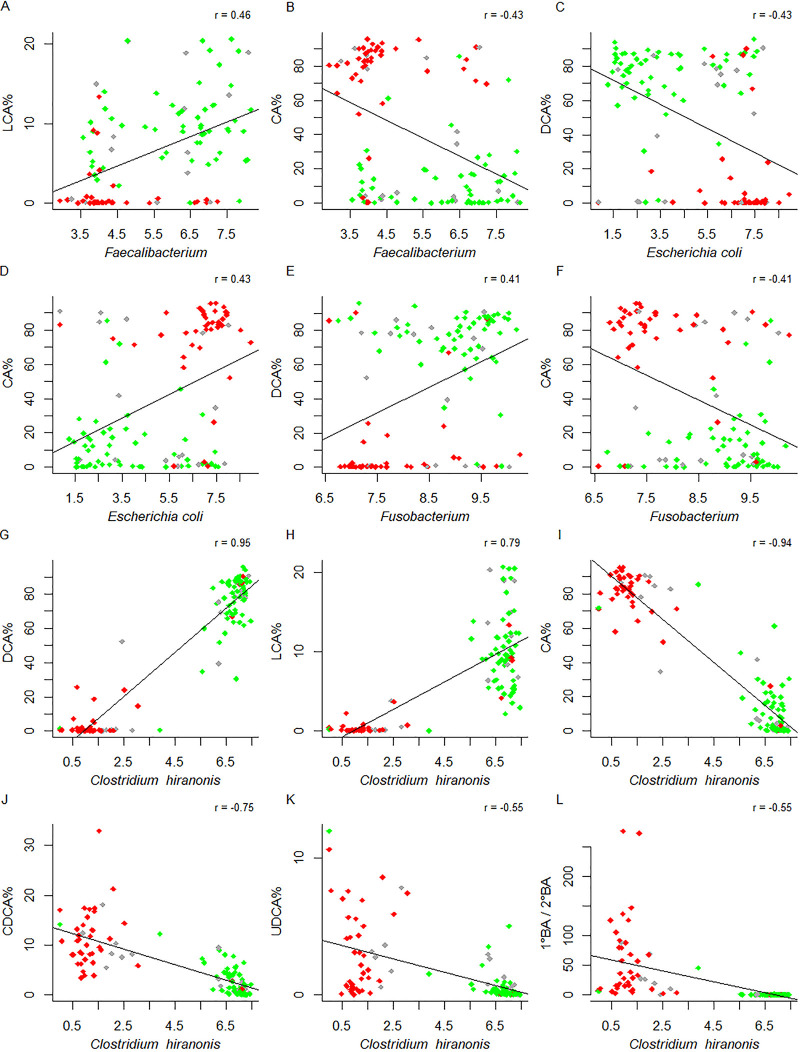
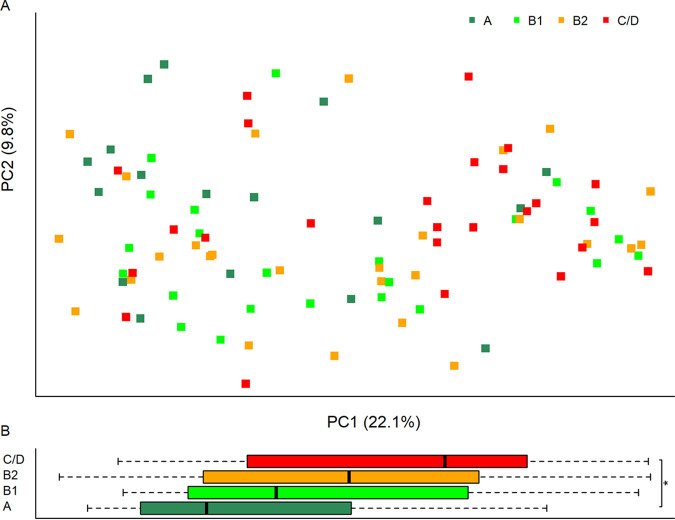
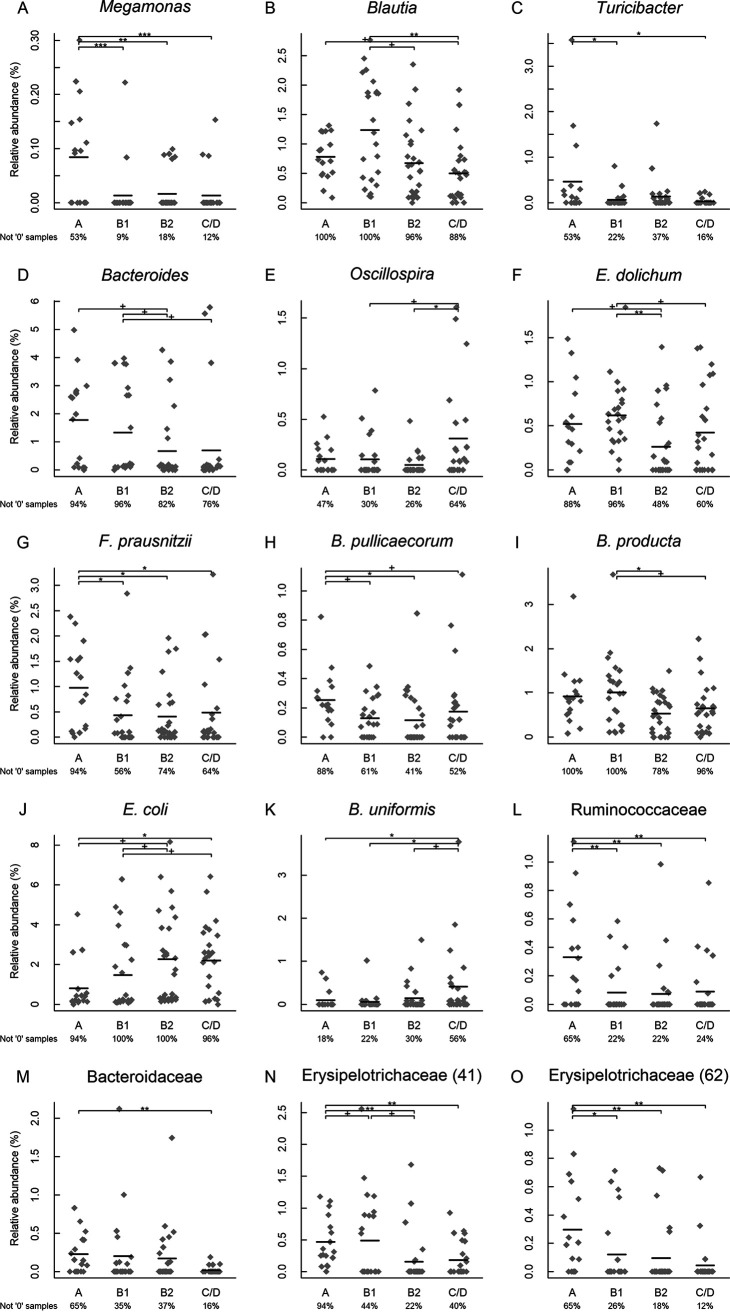
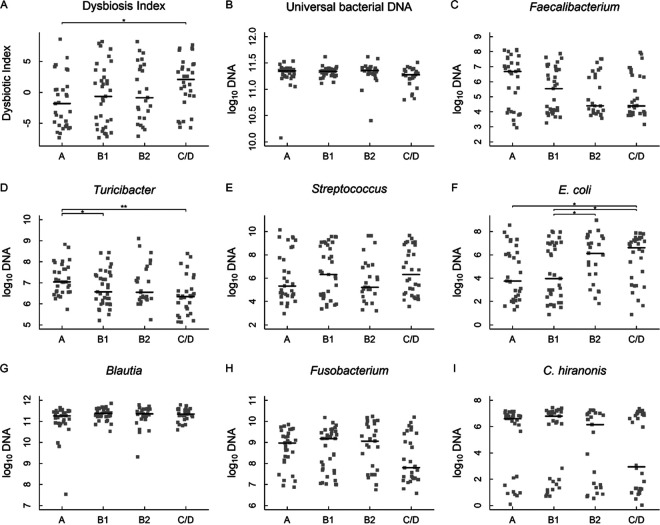
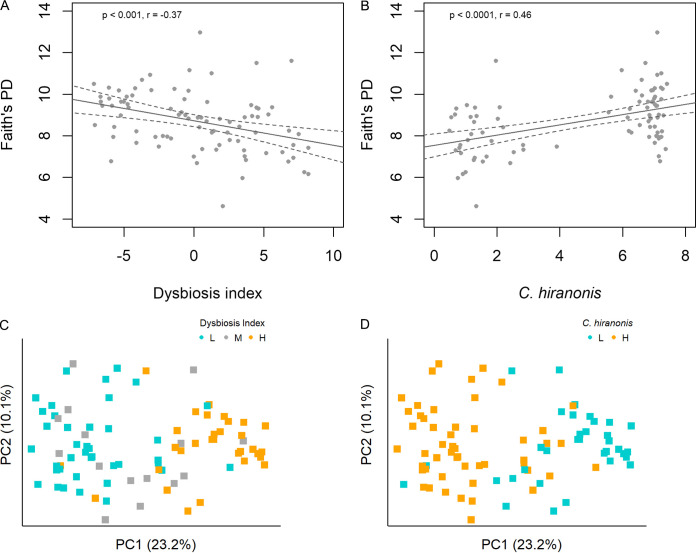
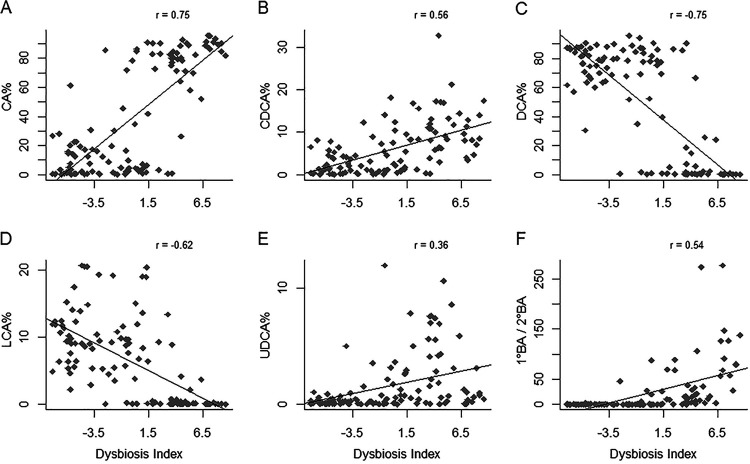
Gut dysbiosis and gut microbiota-derived metabolites, including bile acid (BA), short-chain fatty acid, and trimethylamine -oxide (TMAO), are associated with cardiovascular disease. Canine myxomatous mitral valve disease (MMVD) is a model for human MMVD. The aim of the study is to evaluate gut microbial dysbiosis and its relationship with gut-produced metabolites in dogs with MMVD. Fecal samples from 92 privately owned dogs, including 17 healthy, 23 and 27 asymptomatic MMVD dogs without (stage B1) and with (stage B2) secondary cardiac enlargement, respectively, and 25 MMVD dogs with history of congestive heart failure (stage C or D), were analyzed by 16S rRNA sequencing. Alpha and beta diversities were different between healthy and MMVD dogs (adjusted < 0.05). The average dysbiosis indexes were -1.48, -0.6, 0.01, and 1.47 for healthy, B1, B2, and C/D dogs, respectively ( = 0.07). Dysbiosis index was negatively correlated with ( < 0.0001, = -0.79). , capable of trimethylamine production in the gut, had an increased abundance (adjusted < 0.05) and may be responsible for the increased circulating TMAO levels in stage B2 and C/D MMVD dogs. Primary and secondary BAs showed opposite associations with , a key BA converter ( < 0.0001 for both, = -0.94 and 0.95, respectively). Secondary BAs appeared to promote the growth of and but inhibit that of Multivariate analysis revealed significant but weak associations between gut microbiota and several circulating metabolites, including short-chain acylcarnitines and TMAO. Our study expands the current "gut hypothesis" to include gut dysbiosis at the preclinical stage, prior to the onset of heart failure. Gut dysbiosis index increases in proportion to the severity of myxomatous mitral valve disease (MMVD) and is inversely associated with , a key bile acid (BA) converter in the gut. Secondary BAs appear to promote the growth of beneficial bacteria but inhibit that of harmful ones. An intricate interplay between gut microbiota, gut microbiota-produced metabolites, and MMVD pathophysiological progression is implicated.
肠道微生物群失调以及肠道微生物群衍生的代谢产物,包括胆汁酸(BA)、短链脂肪酸和氧化三甲胺(TMAO),与心血管疾病有关。犬黏液瘤性二尖瓣疾病(MMVD)是人类MMVD的一种模型。本研究的目的是评估患有MMVD的犬的肠道微生物失调及其与肠道产生的代谢产物的关系。对92只私人饲养犬的粪便样本进行了16S rRNA测序分析,这些犬包括17只健康犬、23只和27只分别无(B1期)和有(B2期)继发性心脏扩大的无症状MMVD犬,以及25只具有充血性心力衰竭病史(C或D期)的MMVD犬。健康犬和MMVD犬之间的α和β多样性存在差异(校正后<0.05)。健康犬、B1期、B2期和C/D期犬的平均失调指数分别为-1.48、-0.6、0.01和1.47(P = 0.07)。失调指数与血清BA呈负相关(P<0.0001,r = -0.79)。能够在肠道中产生三甲胺的[某种菌]丰度增加(校正后<0.05),可能是B2期和C/D期MMVD犬循环TMAO水平升高的原因。初级和次级BA与关键BA转化菌[某种菌]呈现相反的关联(两者P均<0.0001,r分别为-0.94和0.95)。次级BA似乎促进[某些有益菌]和[另一些有益菌]的生长,但抑制[某种有害菌]的生长。多变量分析显示肠道微生物群与几种循环代谢产物之间存在显著但微弱的关联,包括短链酰基肉碱和TMAO。我们的研究扩展了当前的“肠道假说”,将心力衰竭发作前临床前期的肠道微生物失调纳入其中。肠道失调指数与黏液瘤性二尖瓣疾病(MMVD)的严重程度成正比增加,并且与肠道中关键胆汁酸(BA)转化菌[某种菌]呈负相关。次级BA似乎促进有益菌生长,但抑制有害菌生长。这暗示了肠道微生物群、肠道微生物群产生的代谢产物与MMVD病理生理进展之间存在复杂的相互作用。