Institute for Memory Impairments and Neurological Disorders, University of California, Irvine, CA, USA.
Department of Neurobiology and Behavior, University of California, Irvine, CA, USA.
Nat Commun. 2021 Apr 23;12(1):2421. doi: 10.1038/s41467-021-22624-z.
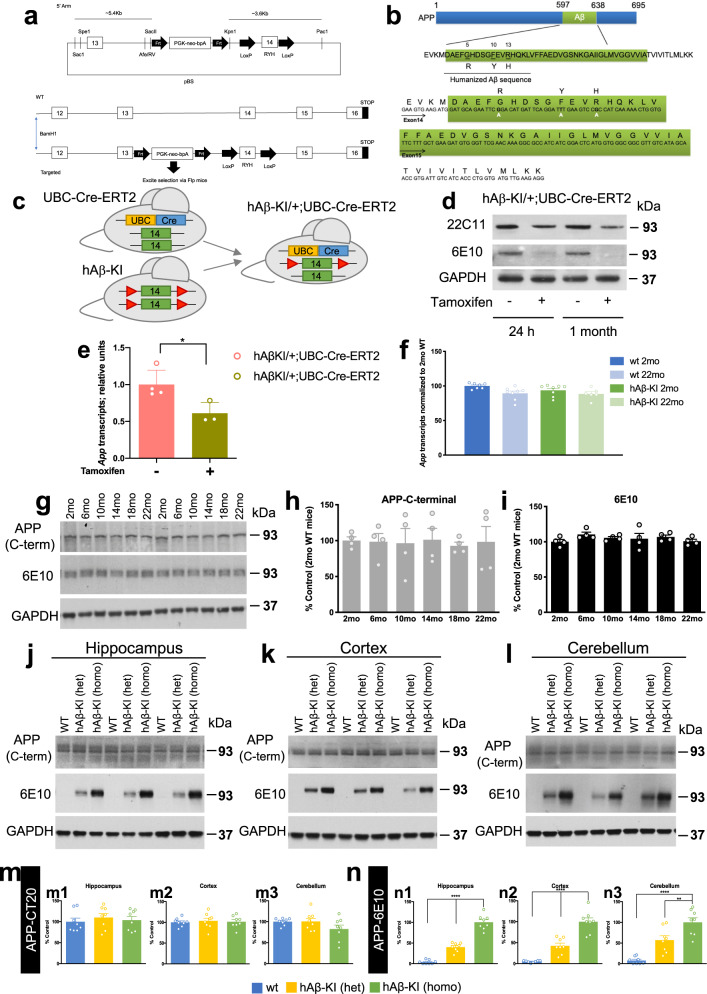
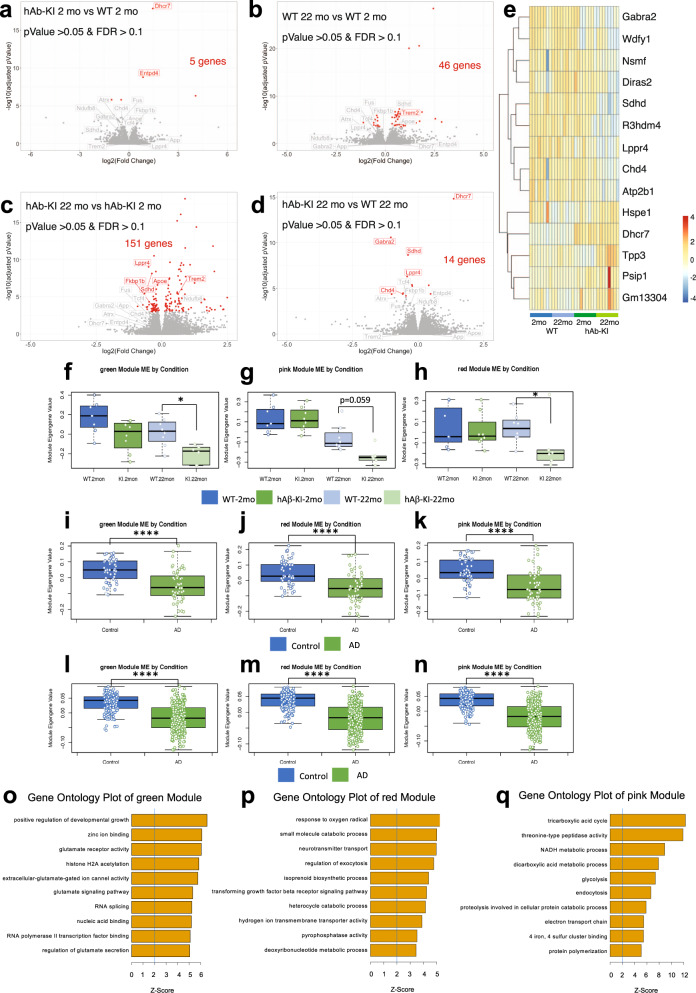
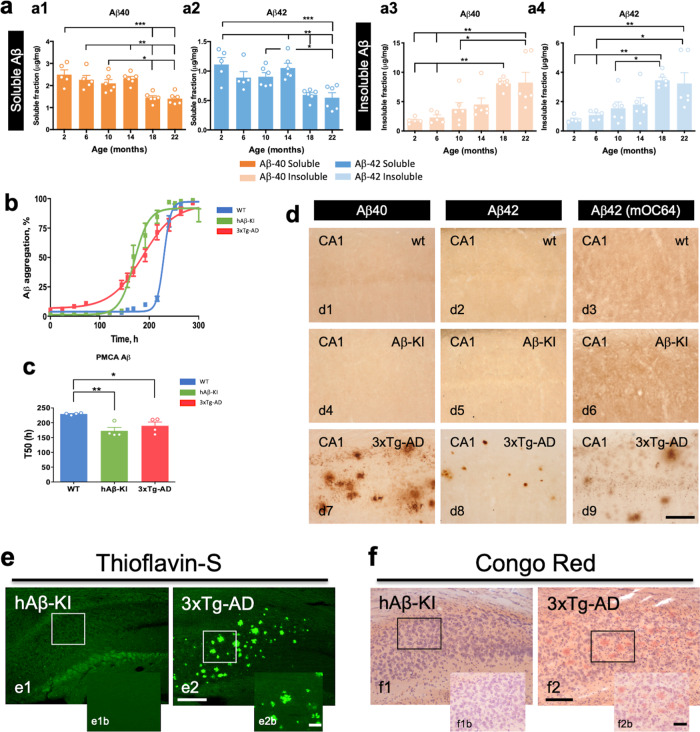
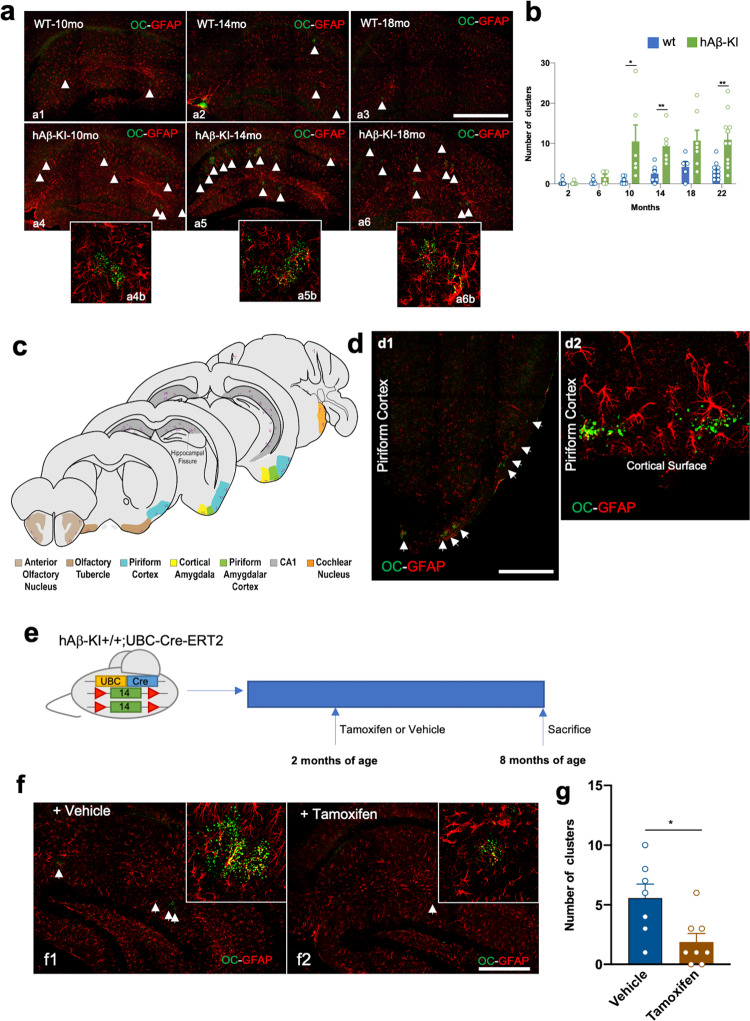
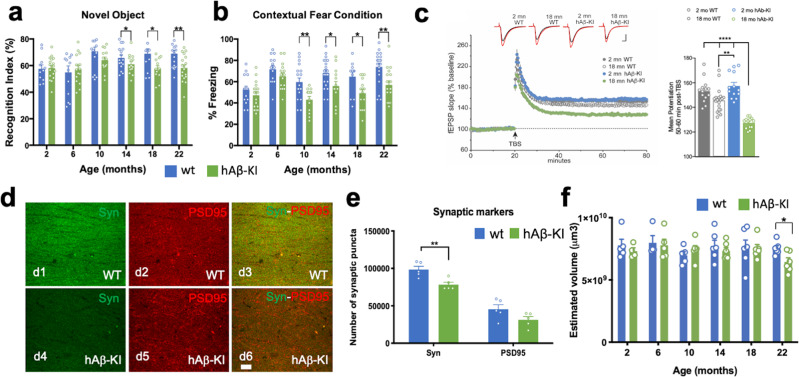
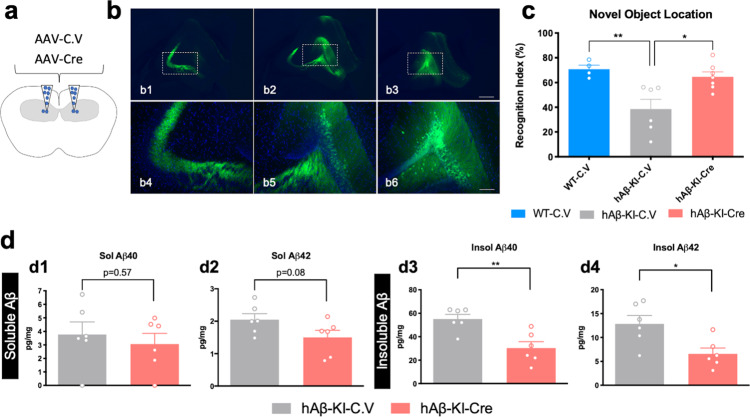
The majority of Alzheimer's disease (AD) cases are late-onset and occur sporadically, however most mouse models of the disease harbor pathogenic mutations, rendering them better representations of familial autosomal-dominant forms of the disease. Here, we generated knock-in mice that express wildtype human Aβ under control of the mouse App locus. Remarkably, changing 3 amino acids in the mouse Aβ sequence to its wild-type human counterpart leads to age-dependent impairments in cognition and synaptic plasticity, brain volumetric changes, inflammatory alterations, the appearance of Periodic Acid-Schiff (PAS) granules and changes in gene expression. In addition, when exon 14 encoding the Aβ sequence was flanked by loxP sites we show that Cre-mediated excision of exon 14 ablates hAβ expression, rescues cognition and reduces the formation of PAS granules.
大多数阿尔茨海默病(AD)病例为迟发性且散发性发生,然而,该疾病的大多数小鼠模型都携带有致病性突变,使它们更能代表家族性常染色体显性形式的疾病。在这里,我们生成了敲入小鼠,使其在小鼠 App 基因座的控制下表达野生型人类 Aβ。值得注意的是,将小鼠 Aβ 序列中的 3 个氨基酸改变为其野生型人类对应物,会导致认知和突触可塑性、脑容量变化、炎症改变、周期性酸-Schiff(PAS)颗粒的出现以及基因表达的改变,呈年龄依赖性。此外,当编码 Aβ 序列的外显子 14 被loxP 位点包围时,我们表明 Cre 介导的外显子 14 的切除可消除 hAβ 的表达,挽救认知并减少 PAS 颗粒的形成。