Department of Anatomy, Animal Production and Clinical Veterinary Sciences, Faculty of Veterinary, University of Santiago de Compostela, Av Carballo Calero s/n, 27002, Lugo, Spain.
Department of Zoology, Genetics and Physical Anthropology, Faculty of Veterinary, University of Santiago de Compostela, Lugo, Spain.
Sci Rep. 2021 Apr 23;11(1):8865. doi: 10.1038/s41598-021-88317-1.
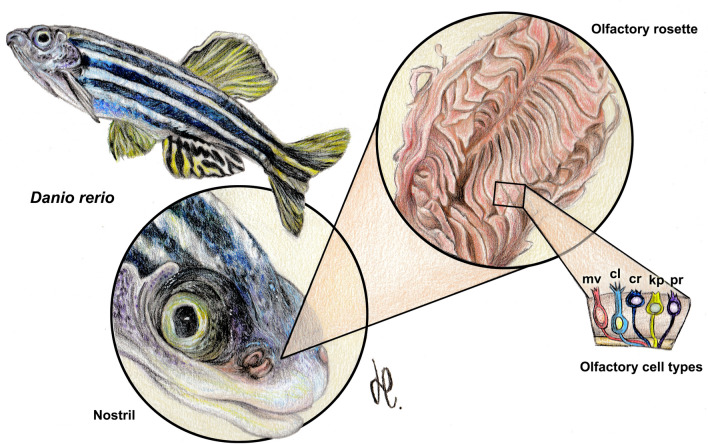
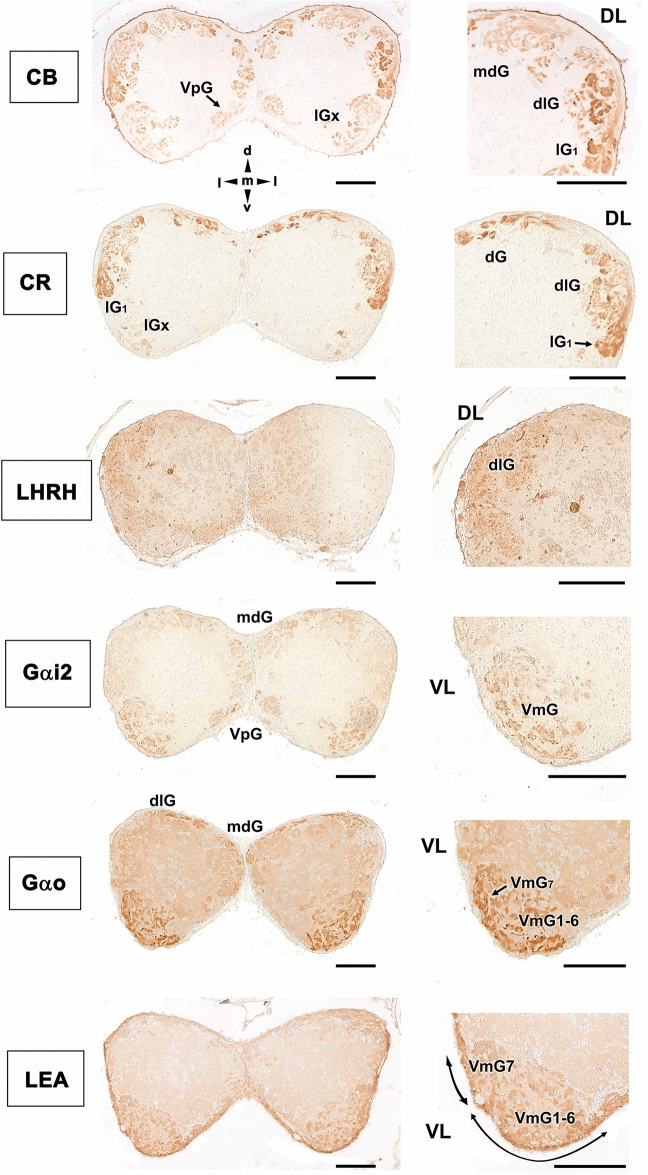
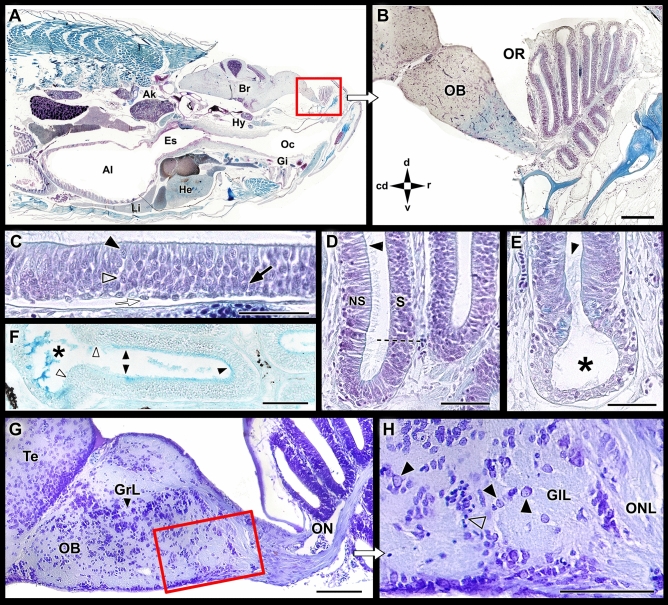
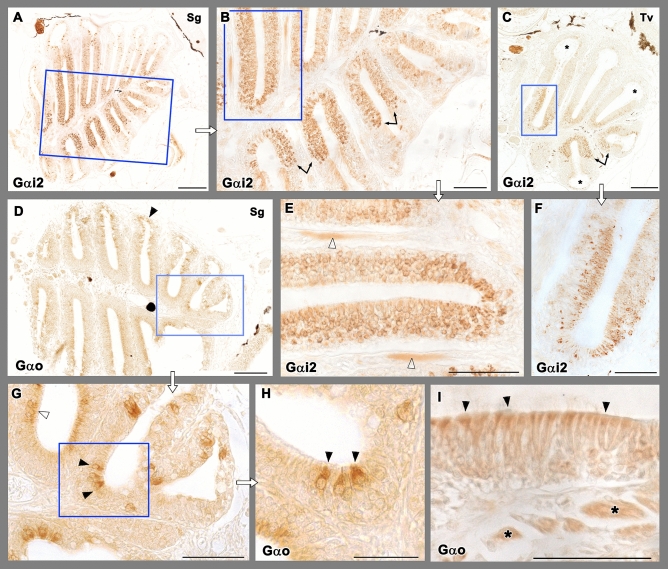
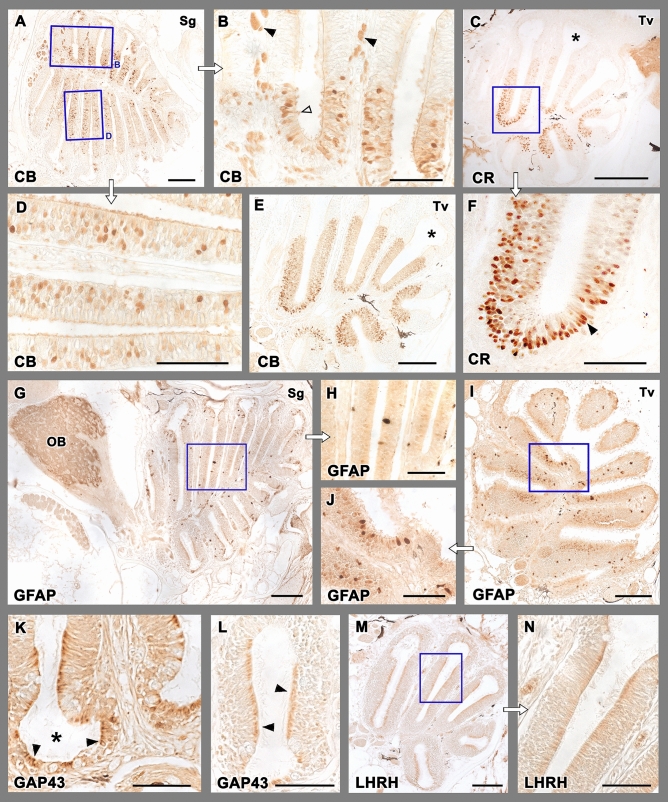
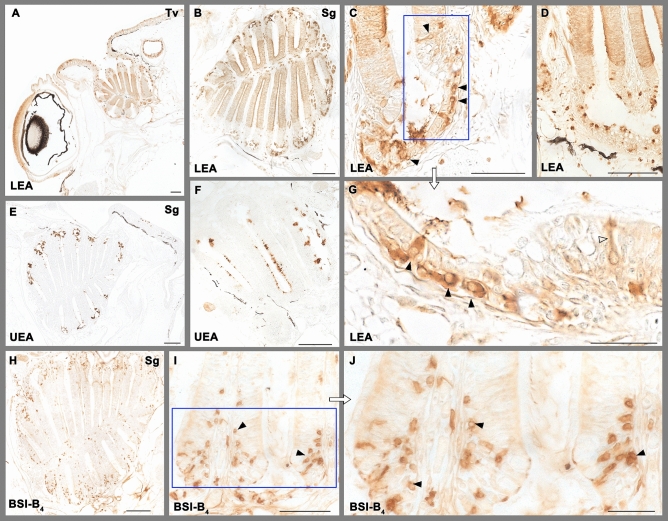
Fish chemosensory olfactory receptors allow them to detect a wide range of water-soluble chemicals, that mediate fundamental behaviours. Zebrafish possess a well-developed sense of smell which governs reproduction, appetite, and fear responses. The spatial organization of functional properties within the olfactory epithelium and bulb are comparable to those of mammals, making this species suitable for studies of olfactory differentiation and regeneration and neuronal representation of olfactory information. The advent of genomic techniques has been decisive for the discovery of specific olfactory cell types and the identification of cell populations expressing vomeronasal receptors. These advances have marched ahead of morphological and neurochemical studies. This study aims to fill the existing gap in specific histological, lectin-histochemical and immunohistochemical studies on the olfactory rosette and the olfactory bulb of the zebrafish. Tissue dissection and microdissection techniques were employed, followed by histological staining techniques, lectin-histochemical labelling (UEA, LEA, BSI-B) and immunohistochemistry using antibodies against G proteins subunits αo and αi2, growth-associated protein-43, calbindin, calretinin, glial-fibrillary-acidic-protein and luteinizing-hormone-releasing-hormone. The results obtained enrich the available information on the neurochemical patterns of the zebrafish olfactory system, pointing to a greater complexity than the one currently considered, especially when taking into account the peculiarities of the nonsensory epithelium.
鱼类的化学感觉嗅觉受体使它们能够检测到广泛的水溶性化学物质,这些物质介导着基本的行为。斑马鱼拥有高度发达的嗅觉,它控制着繁殖、食欲和恐惧反应。嗅觉上皮和嗅球内功能特性的空间组织与哺乳动物相当,这使得该物种适合用于嗅觉分化和再生以及嗅觉信息的神经元表示的研究。基因组技术的出现对于发现特定的嗅觉细胞类型和鉴定表达犁鼻器受体的细胞群体至关重要。这些进展领先于形态学和神经化学研究。本研究旨在填补斑马鱼嗅觉蔷薇和嗅球的特定组织学、凝集素组织化学和免疫组织化学研究的现有空白。采用组织解剖和显微解剖技术,然后进行组织学染色技术、凝集素组织化学标记(UEA、LEA、BSI-B)和使用针对 G 蛋白亚基 αo 和 αi2、生长相关蛋白-43、钙结合蛋白、钙调蛋白、胶质原纤维酸性蛋白和促黄体激素释放激素的抗体进行免疫组织化学染色。所得结果丰富了有关斑马鱼嗅觉系统神经化学模式的现有信息,表明其复杂性超出了目前的认识,尤其是考虑到非感觉上皮的特殊性时。