Sekine Kazutaka, Carandang Rogie Royce, Ong Ken Ing Cherng, Tamang Anand, Jimba Masamine
Department of Community and Global Health, The University of Tokyo, Bunkyo-ku, Japan
Department of Community and Global Health, The University of Tokyo, Bunkyo-ku, Japan.
BMJ Open. 2021 Apr 24;11(4):e043532. doi: 10.1136/bmjopen-2020-043532.
This study aimed to investigate whether child marriage had causal effects on unmet needs for modern contraception, and unintended pregnancy, by estimating the marginal (population-averaged) treatment effect of child marriage.
This study used secondary data from the Nepal Demographic and Health Survey 2016. Applying one-to-one nearest-neighbour matching with replacement within a calliper range of ±0.01, 15-49 years old women married before the age of 18 were matched with similar women who were married at 18 or above to reduce selection bias.
Nationally representative population survey data.
The sample consisted of 7833 women aged 15-49 years who were married for more than 5 years.
Unmet needs for modern contraception and unintended pregnancy.
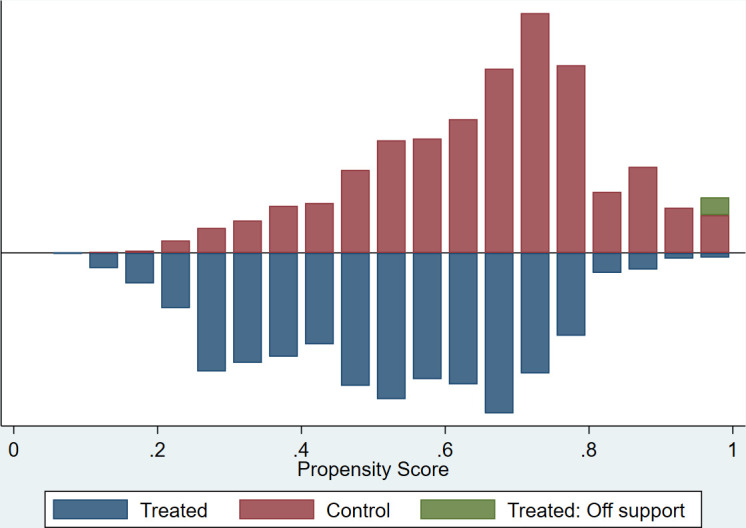
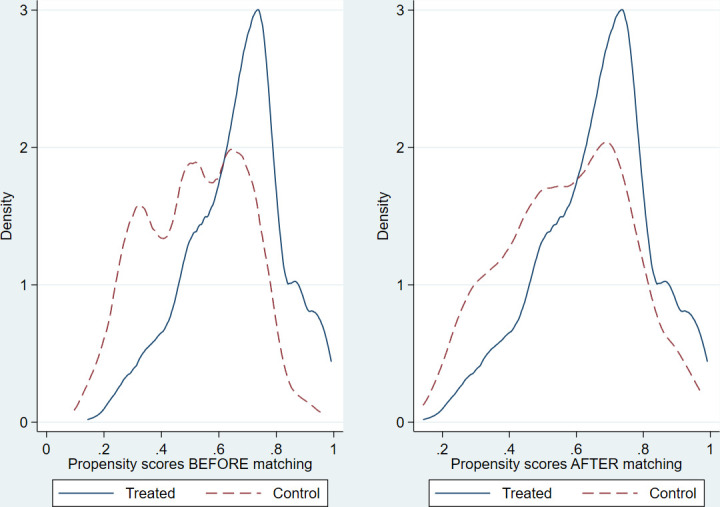
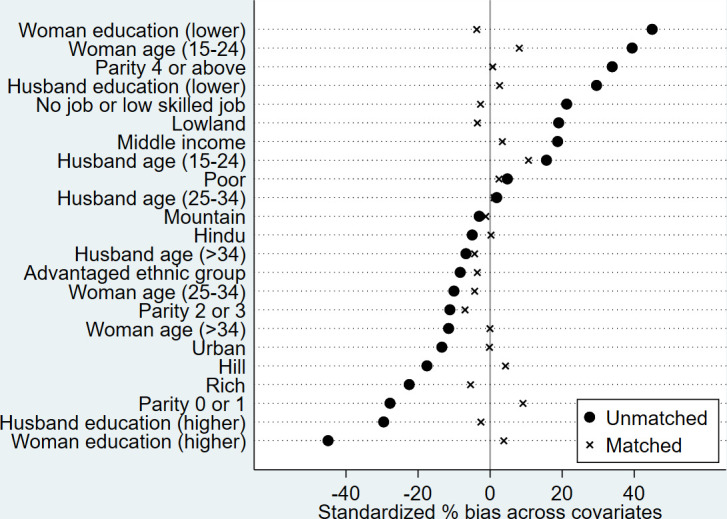
The matching method achieved adequate overlap in the propensity score distributions and balance in measured covariates between treatment and control groups with the same propensity score. Propensity score matching analysis showed that the risk of unmet needs for modern contraception, and unintended pregnancy among women married as children were a 14.3 percentage point (95 % CI 10.3 to 18.2) and a 10.1 percentage point (95 % CI 3.7 to 16.4) higher, respectively, than among women married as adults. Sensitivity analysis indicated that the estimated effects were robust to unmeasured covariates.
Child marriage appears to increase the risk of unmet needs for modern contraception and unintended pregnancy. These findings call for social development and public health programmes that promote delayed entry into marriage and childbearing to improve reproductive health and rights.
本研究旨在通过估计童婚的边际(总体平均)治疗效果,调查童婚是否对现代避孕未满足需求和意外怀孕有因果影响。
本研究使用了2016年尼泊尔人口与健康调查的二手数据。在±0.01的卡尺范围内应用带放回的一对一最近邻匹配,将18岁之前结婚的15 - 49岁女性与18岁及以上结婚的类似女性进行匹配,以减少选择偏倚。
具有全国代表性的人口调查数据。
样本包括7833名15 - 49岁且结婚超过5年的女性。
现代避孕未满足需求和意外怀孕。
匹配方法在倾向得分分布上实现了充分重叠,并且在治疗组和对照组之间具有相同倾向得分的测量协变量上达到了平衡。倾向得分匹配分析表明,童婚女性中现代避孕未满足需求的风险和意外怀孕的风险分别比成年结婚女性高14.3个百分点(95%CI 10.3至18.2)和10.1个百分点(95%CI 3.7至16.4)。敏感性分析表明,估计结果对未测量的协变量具有稳健性。
童婚似乎会增加现代避孕未满足需求和意外怀孕的风险。这些发现呼吁开展社会发展和公共卫生项目,以促进晚婚晚育,从而改善生殖健康和权利。