Zhang Ling, Guo Yankai, Xiaokereti Jiasuoer, Cao Guiqiu, Li Hongliang, Sun Huaxin, Li Kai, Zhou Xianhui, Tang Baopeng
Xinjiang Key Laboratory of Cardiac Electrophysiology and Cardiac Remodeling, The First Affiliated Hospital of Xinjiang Medical University, Urumqi, China.
Cardiac Pacing and Electrophysiology Department, The First Affiliated Hospital of Xinjiang Medical University, Urumqi, China.
Front Physiol. 2021 Apr 9;12:640295. doi: 10.3389/fphys.2021.640295. eCollection 2021.
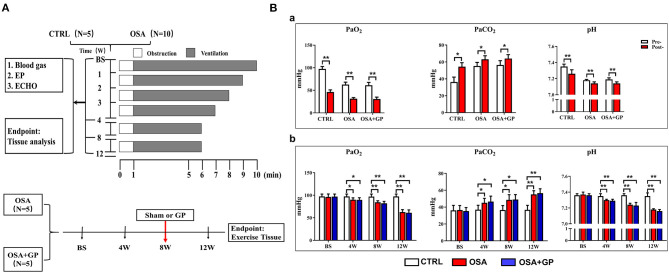
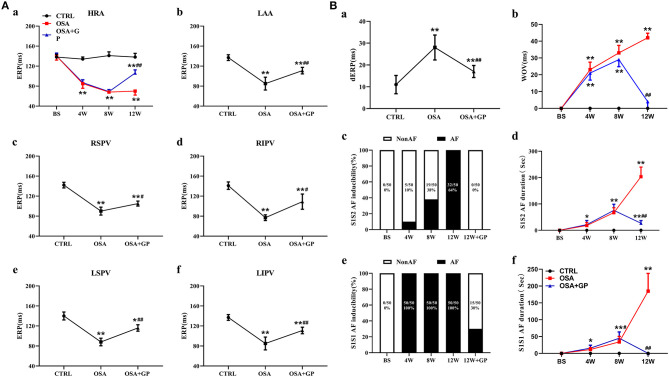
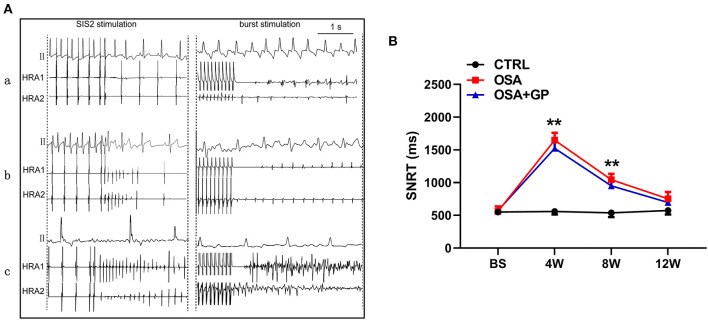
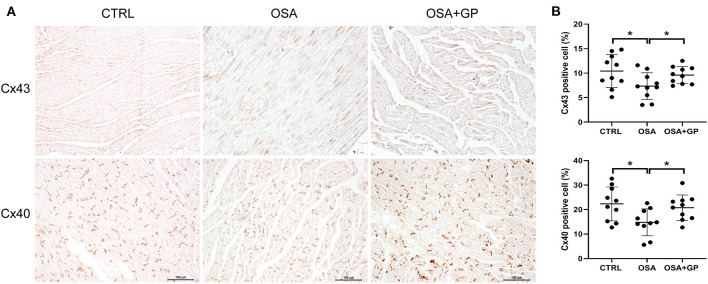
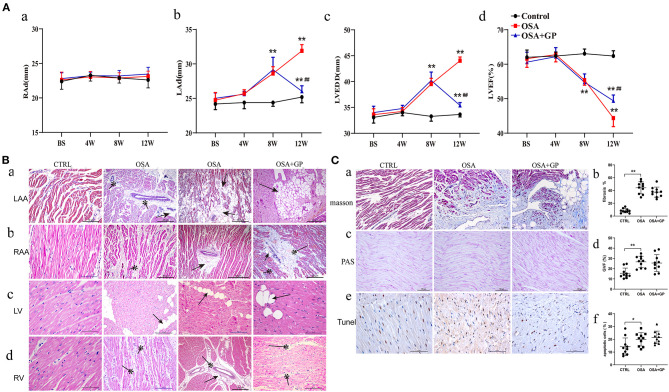
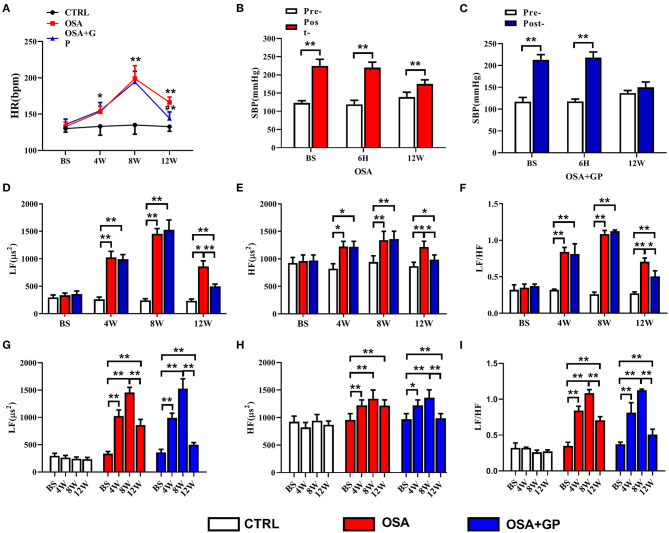
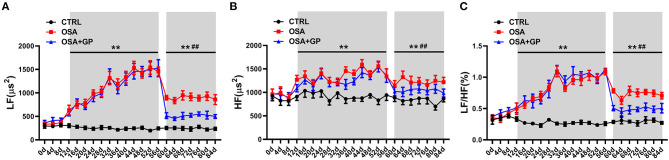
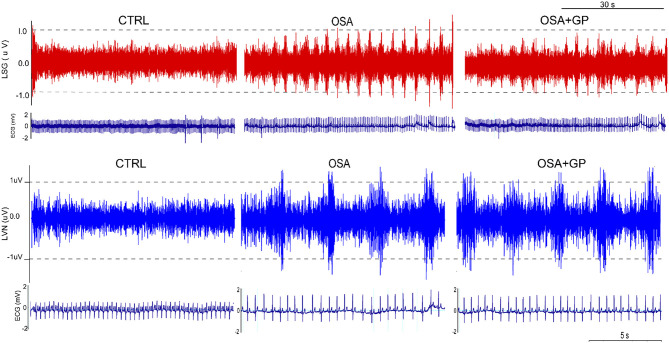
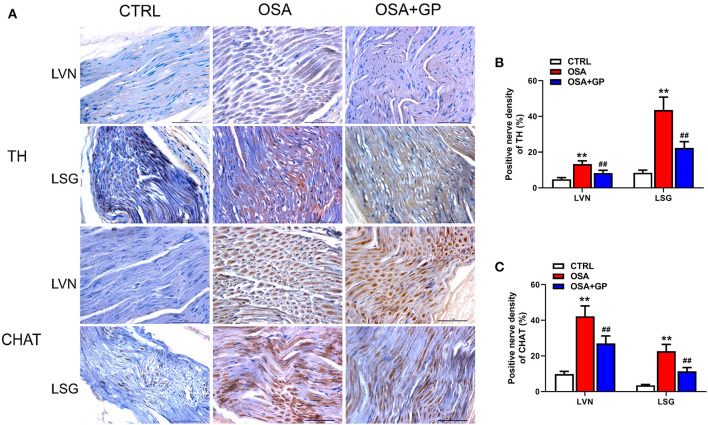
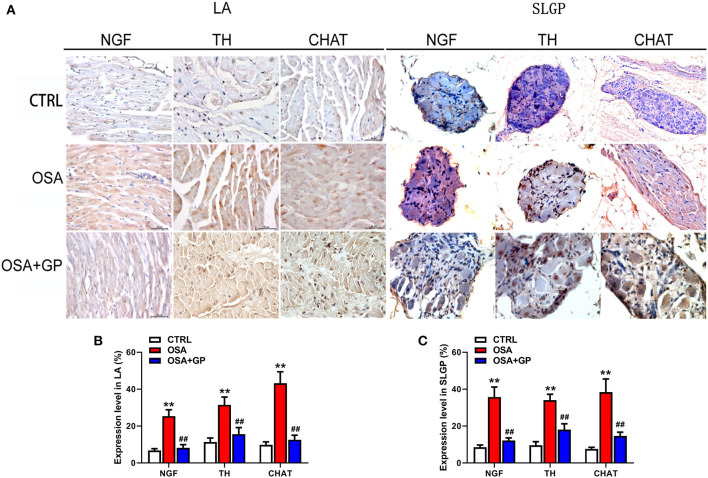
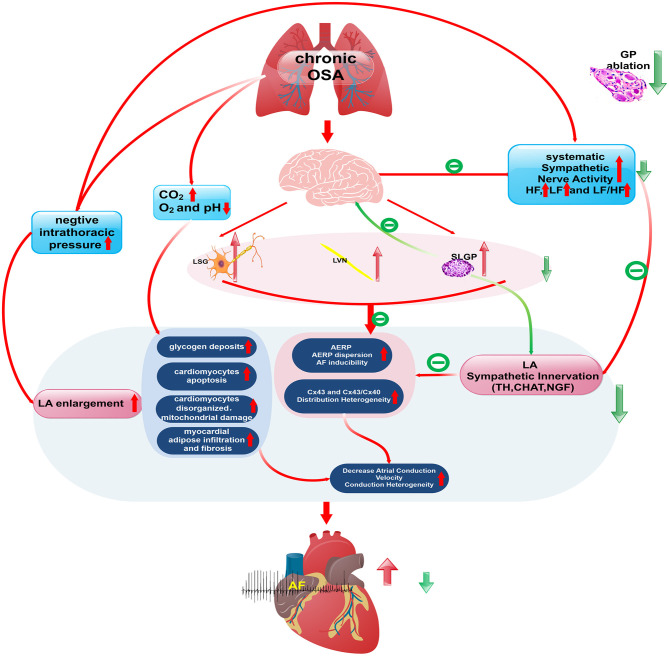
Previous studies have reported that right pulmonary artery ganglionated plexi (GP) ablation could suppress the onset of atrial fibrillation (AF) associated with obstructive sleep apnea (OSA) within 1 h. This study aimed to investigate the effect of superior left GP (SLGP) ablation on AF in a chronic OSA canine model. Fifteen beagles were randomly divided into three groups: control group (CTRL), OSA group (OSA), and OSA + GP ablation group (OSA + GP). All animals were intubated under general anesthesia, and ventilation-apnea events were subsequently repeated 4 h/day and 6 days/week for 12 weeks to establish a chronic OSA model. SLGP were ablated at the end of 8 weeks. SLGP ablation could attenuate the atrial effective refractory period (ERP) reduction and decrease ERP dispersion, the window of vulnerability, and AF inducibility. In addition, chronic OSA leads to left atrial (LA) enlargement, decreased left ventricular (LV) ejection fraction, glycogen deposition, increased necrosis, and myocardial fibrosis. SLGP ablation reduced the LA size and ameliorated LV dysfunction, while myocardial fibrosis could not be reversed. Additionally, SLGP ablation mainly reduced sympathovagal hyperactivity and post-apnea blood pressure and heart rate increases and decreased the expression of neural growth factor (NGF), tyrosine hydroxylase (TH), and choline acetyltransferase (CHAT) in the LA and SLGP. After SLGP ablation, the nucleotide-binding oligomerization domain (NOD)-like receptor signaling pathway, cholesterol metabolism pathway, and ferroptosis pathway were notably downregulated compared with OSA. SLGP ablation suppressed AF in a chronic OSA model by sympathovagal hyperactivity inhibition. However, there were no significant changes in myocardial fibrosis.
先前的研究报道,右肺动脉神经节丛(GP)消融可在1小时内抑制与阻塞性睡眠呼吸暂停(OSA)相关的房颤(AF)发作。本研究旨在探讨在慢性OSA犬模型中,左上神经节丛(SLGP)消融对房颤的影响。15只比格犬被随机分为三组:对照组(CTRL)、OSA组(OSA)和OSA+GP消融组(OSA+GP)。所有动物均在全身麻醉下插管,随后每天重复通气-呼吸暂停事件4小时,每周6天,持续12周,以建立慢性OSA模型。在第8周结束时进行SLGP消融。SLGP消融可减轻心房有效不应期(ERP)缩短,并降低ERP离散度、易损窗口和房颤诱发率。此外,慢性OSA导致左心房(LA)扩大、左心室(LV)射血分数降低、糖原沉积、坏死增加和心肌纤维化。SLGP消融减小了LA大小并改善了LV功能障碍,但心肌纤维化无法逆转。此外,SLGP消融主要降低了交感迷走神经活动亢进以及呼吸暂停后血压和心率的升高,并降低了LA和SLGP中神经生长因子(NGF)、酪氨酸羟化酶(TH)和胆碱乙酰转移酶(CHAT)的表达。与OSA组相比,SLGP消融后,核苷酸结合寡聚化结构域(NOD)样受体信号通路、胆固醇代谢通路和铁死亡通路显著下调。SLGP消融通过抑制交感迷走神经活动亢进抑制了慢性OSA模型中的房颤。然而,心肌纤维化没有显著变化。