Nitsch Louisa, Schneider Linda, Zimmermann Julian, Müller Marcus
Department of Neurology, University Hospital Bonn, Bonn, Germany.
Department of Surgery, University Hospital Bonn, Bonn, Germany.
Front Neurol. 2021 Apr 7;12:639353. doi: 10.3389/fneur.2021.639353. eCollection 2021.
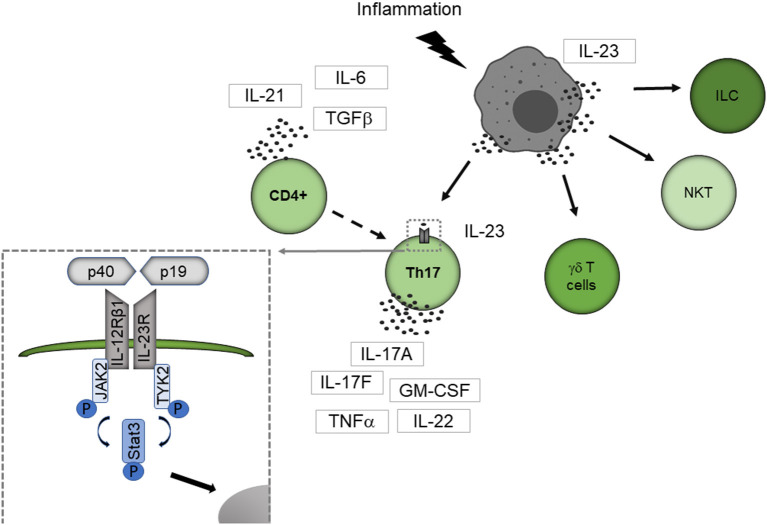
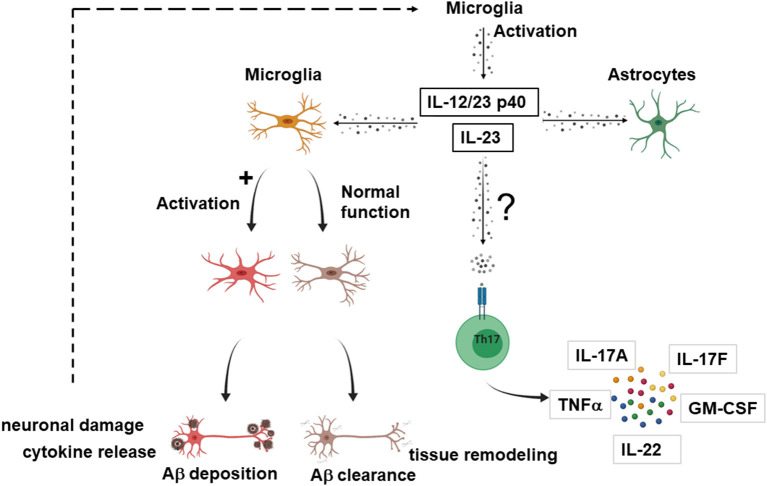
Neuronal cell death, amyloid β plaque formation and development of neurofibrillary tangles are among the characteristics of Alzheimer's disease (AD). In addition to neurodegeneration, inflammatory processes such as activation of microglia and astrocytes are crucial in the pathogenesis and progression of AD. Cytokines are essential immune mediators of the immune response in AD. Recent data suggest a role of interleukin 23 (IL-23) and its p40 subunit in the pathogenesis of AD and corresponding animal models, in particular concerning microglia activation and amyloid β plaque formation. Moreover, in animal models, the injection of anti-p40 antibodies resulted in reduced amyloid β plaque formation and improved cognitive performance. Here, we discuss the pathomechanism of IL-23 mediated inflammation and its role in AD.
神经元细胞死亡、淀粉样β蛋白斑块形成以及神经纤维缠结的出现是阿尔茨海默病(AD)的特征。除神经退行性变外,诸如小胶质细胞和星形胶质细胞激活等炎症过程在AD的发病机制和进展中至关重要。细胞因子是AD免疫反应中必不可少的免疫介质。最新数据表明白细胞介素23(IL-23)及其p40亚基在AD发病机制及相应动物模型中发挥作用,尤其涉及小胶质细胞激活和淀粉样β蛋白斑块形成。此外,在动物模型中,注射抗p40抗体可减少淀粉样β蛋白斑块形成并改善认知功能。在此,我们讨论IL-23介导的炎症的发病机制及其在AD中的作用。