Vu Giang Huong, Nguyen Hai Duc
Department of Public Heath, Hong Bang Health Center, Hai Phong, Vietnam.
Department of Pharmacy, College of Pharmacy and Research Institute of Life and Pharmaceutical Sciences, Sunchon National University, Suncheon, 57922 Republic of Korea.
In Silico Pharmacol. 2024 Nov 1;12(2):96. doi: 10.1007/s40203-024-00267-4. eCollection 2024.
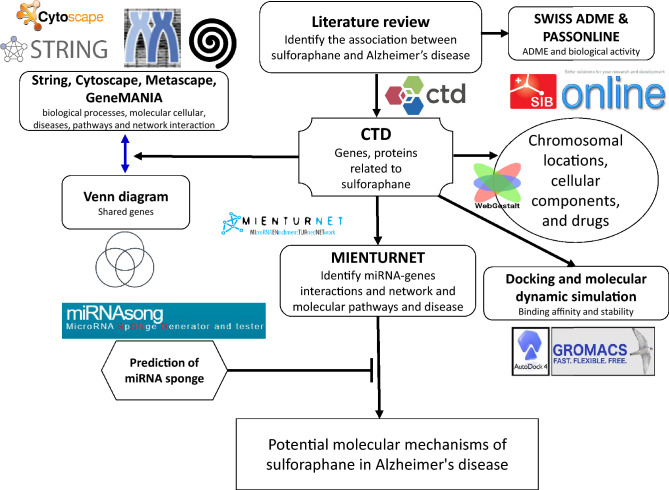
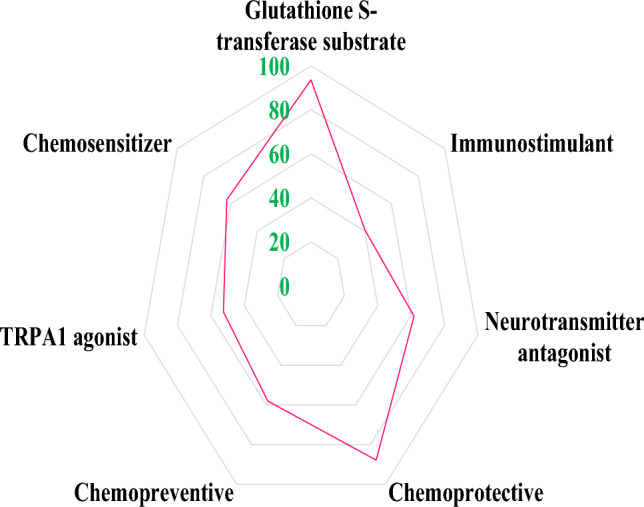
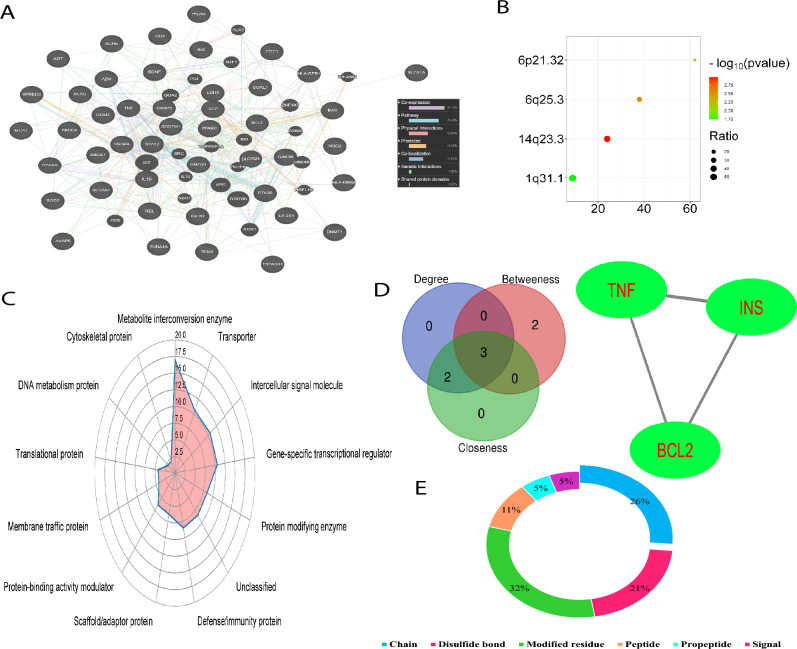
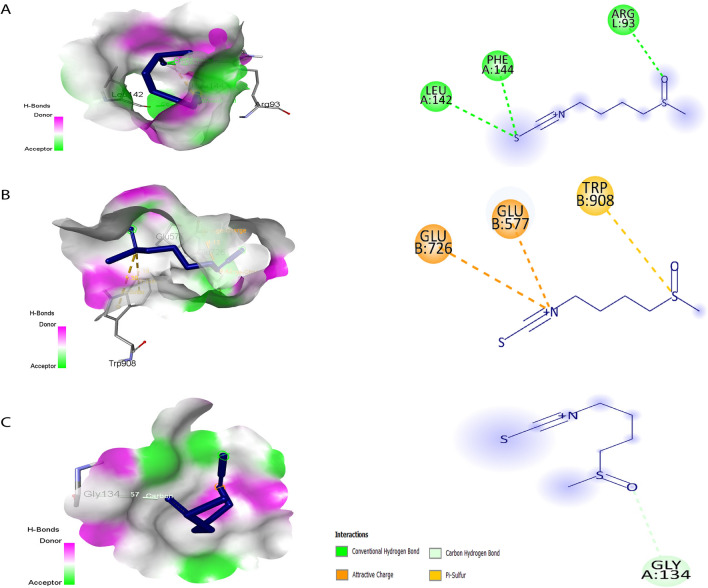
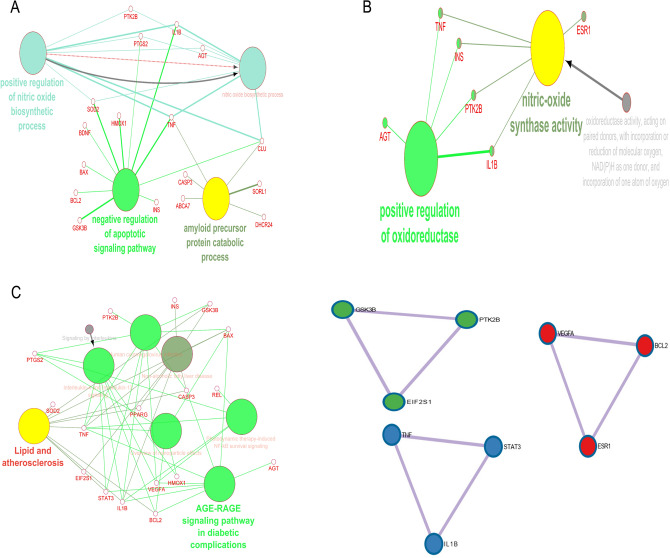
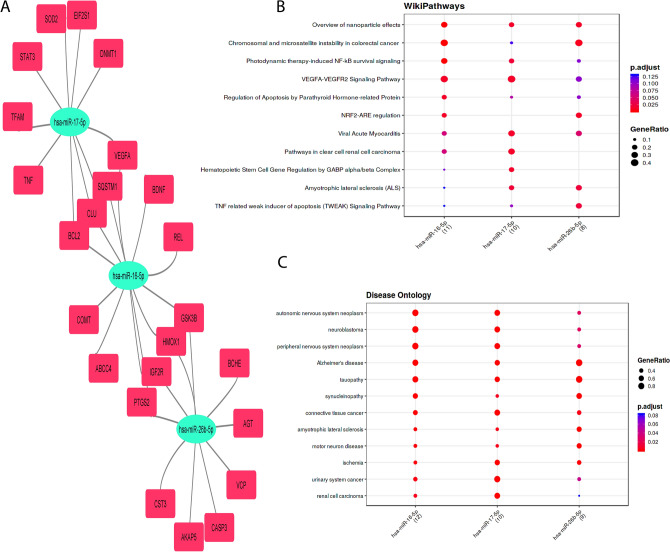
This study was to identify the molecular pathways that may explain sulforaphane's Alzheimer's disease (AD) benefits using multiple advanced in silico approaches. We found that sulforaphane regulates 45 targets, including TNF, INS, and BCL2. Therefore, it may help treat AD by reducing neuroinflammation, insulin resistance, and apoptosis. The important relationships were co-expression and pathways. 45 targets were linked to the midbrain, metabolite interconversion enzymes, 14q23.3 and 1q31.1 chromosomes, and modified residues. "Amyloid precursor protein catabolic process", "regulation of apoptotic signaling pathway", and "positive regulation of nitric oxide biosynthetic process" were the main pathways, while NFKB1, SP1, RELA, hsa-miR-17-5p, hsa-miR-16-5p, and hsa-miR-26b-5p were transcription factors and miRNAs implicated in sulforaphane In AD treatment, miRNA sponges, dexibuprofen, and sulforaphane may be effective. Furthermore, its unique physicochemical, pharmacokinetic, and biological qualities make sulforaphane an effective AD treatment, including efficient gastrointestinal absorption, drug-like properties, absence of CYP450 enzyme inhibition, not being a substrate for P-glycoprotein, ability to cross the blood-brain barrier, glutathione S-transferase substrate, immunostimulant effects, and antagonistic neurotransmitter effects. Sulforaphane is a promising compound for AD management. Further work is needed to elucidate its therapeutic effects based on our findings, including genes, miRNAs, molecular pathways, and transcription factors.
The online version contains supplementary material available at 10.1007/s40203-024-00267-4.
本研究旨在使用多种先进的计算机模拟方法,确定可能解释萝卜硫素对阿尔茨海默病(AD)有益作用的分子途径。我们发现萝卜硫素调节45个靶点,包括肿瘤坏死因子(TNF)、胰岛素(INS)和B细胞淋巴瘤2(BCL2)。因此,它可能通过减少神经炎症、胰岛素抵抗和细胞凋亡来帮助治疗AD。重要的关系是共表达和途径。45个靶点与中脑、代谢物相互转化酶、14号染色体q23.3区域和1号染色体q31.1区域以及修饰残基相关。“淀粉样前体蛋白分解代谢过程”、“凋亡信号通路的调节”和“一氧化氮生物合成过程的正调节”是主要途径,而核因子κB亚基1(NFKB1)、特异性蛋白1(SP1)、 RELA原癌基因蛋白(RELA)、人微小RNA17 - 5p(hsa-miR-17-5p)、人微小RNA16 - 5p(hsa-miR-16-5p)和人微小RNA26b - 5p(hsa-miR-26b-5p)是参与萝卜硫素治疗AD的转录因子和微小RNA。在AD治疗中,微小RNA海绵、右布洛芬和萝卜硫素可能有效。此外,萝卜硫素独特的物理化学、药代动力学和生物学特性使其成为一种有效的AD治疗药物,包括高效的胃肠道吸收、类药物特性、不抑制细胞色素P450酶、不是P-糖蛋白的底物、能够穿过血脑屏障、是谷胱甘肽S-转移酶的底物、具有免疫刺激作用和拮抗神经递质作用。萝卜硫素是一种有前途的AD治疗化合物。需要进一步开展工作,根据我们的发现阐明其治疗作用,包括基因、微小RNA、分子途径和转录因子。
在线版本包含可在10.1007/s40203-024-00267-4获取的补充材料。