Ravelli Flavia Naranjo, Goldust Mohamad, Kroumpouzos George
Department of Dermatology, University of Santo Amaro, São Paulo, Brazil.
Department of Dermatology, University of Rome Guglielmo Marconi, Rome, Italy.
Int J Womens Dermatol. 2020 Jun 30;6(5):384-389. doi: 10.1016/j.ijwd.2020.06.011. eCollection 2020 Dec.
Prurigo of pregnancy (PP), a specific pregnancy dermatosis, has been associated with atopic background in the patient and/or the patient's family. However, this association was not validated in some studies, and cases without atopic background have been reported.
This study aimed to evaluate the clinical features of PP not related to atopic background and search for comorbid conditions in medical and obstetric records.
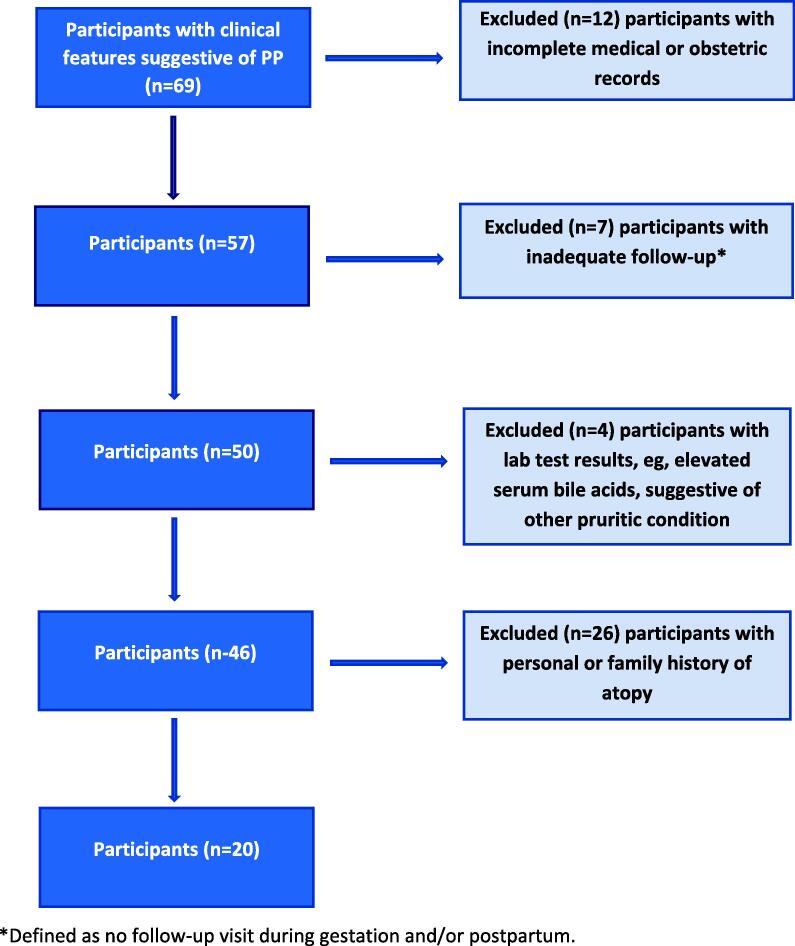
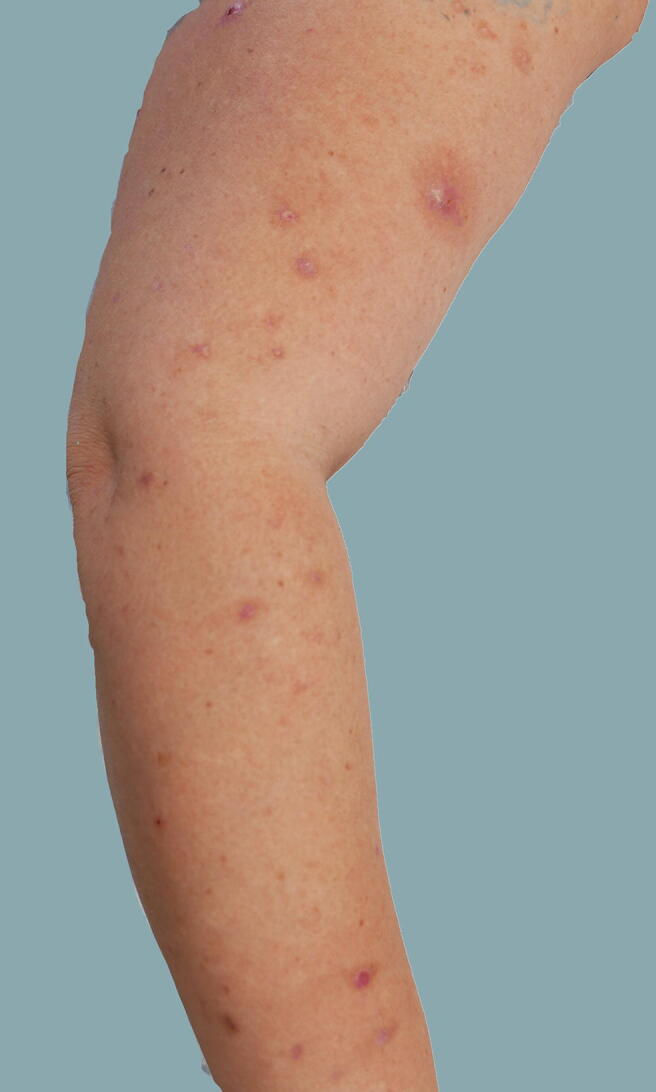
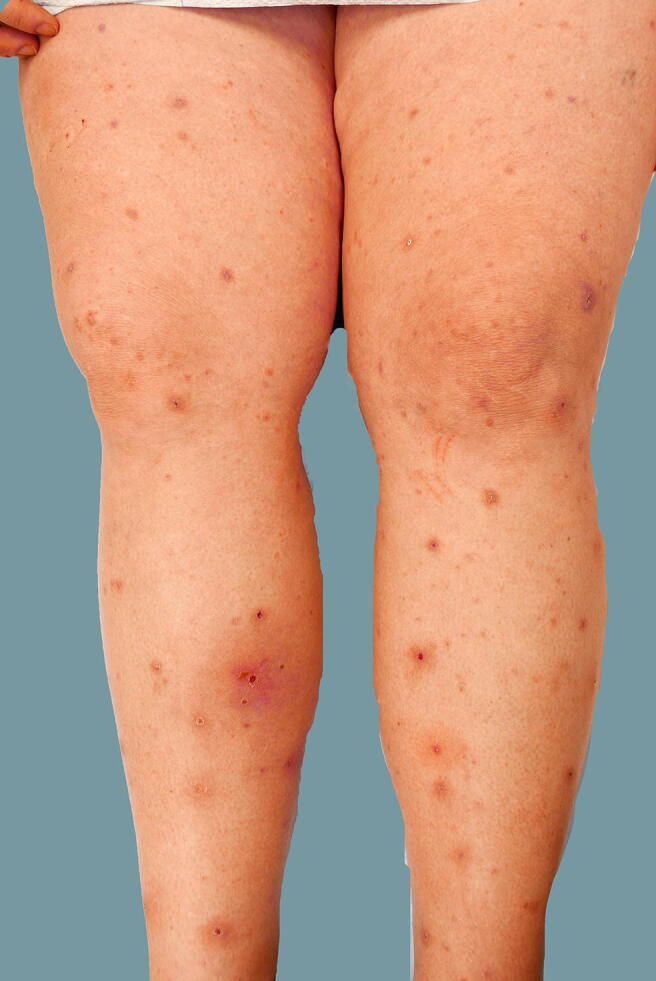
In this case series, patients with typical PP presentation (i.e., pruritic, discrete papulonodules on the extensor surfaces of the extremities) diagnosed at the dermatology clinics of tertiary referral hospitals were evaluated. The exclusion criteria included missing historical data, inadequate follow-up, laboratory test results suggestive of other pruritic conditions, history of atopic disease, and family history of atopy. Clinical and laboratory data including course, response to treatment, serum total immunoglobulin E level, and comorbidities in the medical and obstetric history were collected.
Twenty patients developed PP predominantly during the late second or early third trimester. Nine patients reported that itching developed first, versus 10 patients who reported that lesions started first (one patient was uncertain about onset). There was no recurrence postpartum (mean postpartum follow-up, 17 months). Serum total immunoglobulin E level was elevated in 3 of 14 patients tested (21.4%). Obstetric history (n = 12) included polymorphic eruption of pregnancy (16.6%), PP (16.6%), and gestational pruritus (8.3%). Two of 20 patients (10%) had a history of pruritic skin condition (prurigo nodularis and pruritus of unclear etiology) while not pregnant. Medical history (n = 20) included psychiatric disease (20%) (obsessive compulsive disorder and anxiety), hypothyroidism (10%), and obesity (10%).
PP can develop in patients without an atopic background. This finding should be considered when classifying specific pregnancy dermatoses. A thorough medical and family history with a focus on atopy should be obtained from every patient with a gestational eruption, and patients should be counseled accordingly.
妊娠性痒疹(PP)是一种特殊的妊娠皮肤病,与患者本人和/或其家族的特应性背景有关。然而,这种关联在一些研究中并未得到证实,并且已有无特应性背景的病例报道。
本研究旨在评估与特应性背景无关的PP的临床特征,并在医疗和产科记录中寻找合并症。
在这个病例系列中,对在三级转诊医院皮肤科诊所诊断为典型PP表现(即四肢伸侧瘙痒性、散在丘疹结节)的患者进行评估。排除标准包括历史数据缺失、随访不充分、实验室检查结果提示其他瘙痒性疾病、特应性疾病史和特应性家族史。收集临床和实验室数据,包括病程、治疗反应、血清总免疫球蛋白E水平以及医疗和产科病史中的合并症。
20例患者主要在妊娠晚期第二个月或第三个月早期发生PP。9例患者报告瘙痒先出现,10例患者报告皮疹先出现(1例患者对发病情况不确定)。产后无复发(平均产后随访17个月)。14例接受检测的患者中有3例(21.4%)血清总免疫球蛋白E水平升高。产科病史(n = 12)包括妊娠多形性皮疹(16.6%)、PP(16.6%)和妊娠瘙痒症(8.3%)。20例患者中有2例(10%)在非妊娠时有瘙痒性皮肤病史(结节性痒疹和病因不明的瘙痒症)。病史(n = 20)包括精神疾病(20%)(强迫症和焦虑症)、甲状腺功能减退症(10%)和肥胖症(10%)。
无特应性背景的患者也可发生PP。在对特定妊娠皮肤病进行分类时应考虑这一发现。对于每一位有妊娠期皮疹的患者,都应详细询问其医疗和家族病史,重点关注特应性情况,并据此为患者提供咨询。