IBM Research, San Jose, 95120, USA.
Sci Rep. 2021 Apr 26;11(1):8988. doi: 10.1038/s41598-021-88532-w.
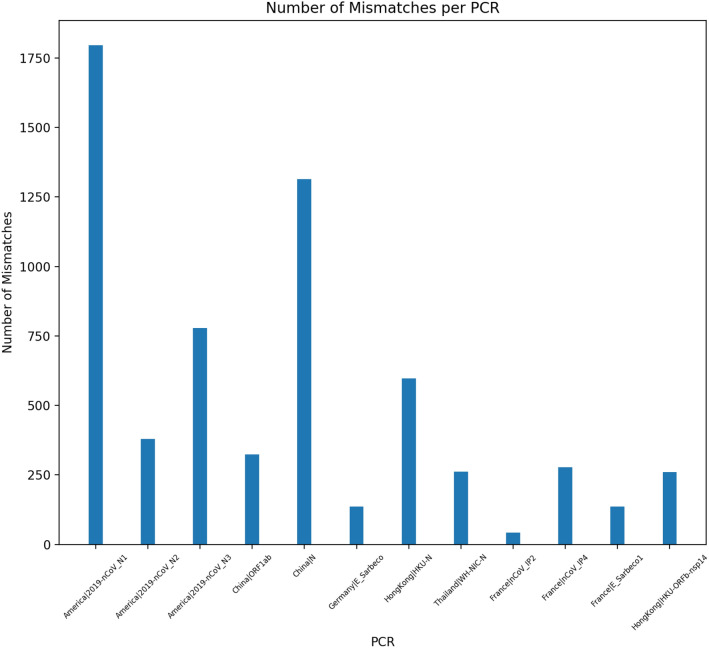
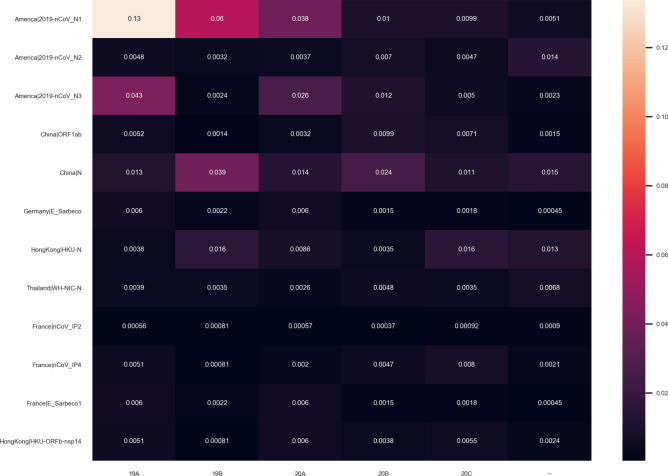
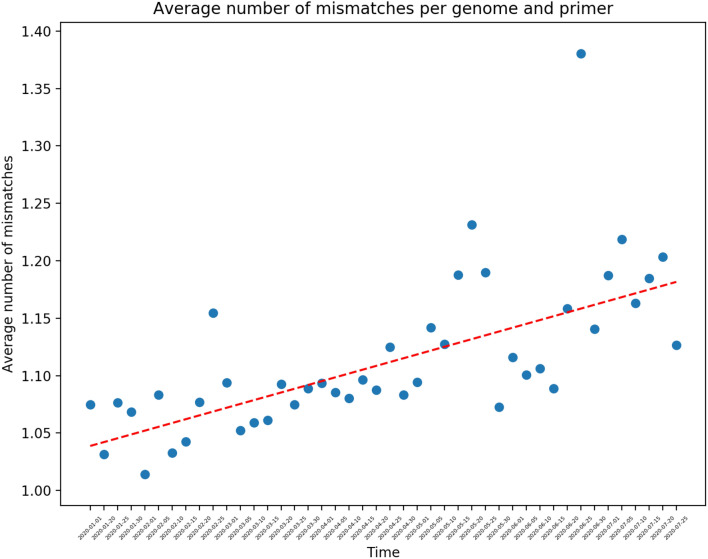
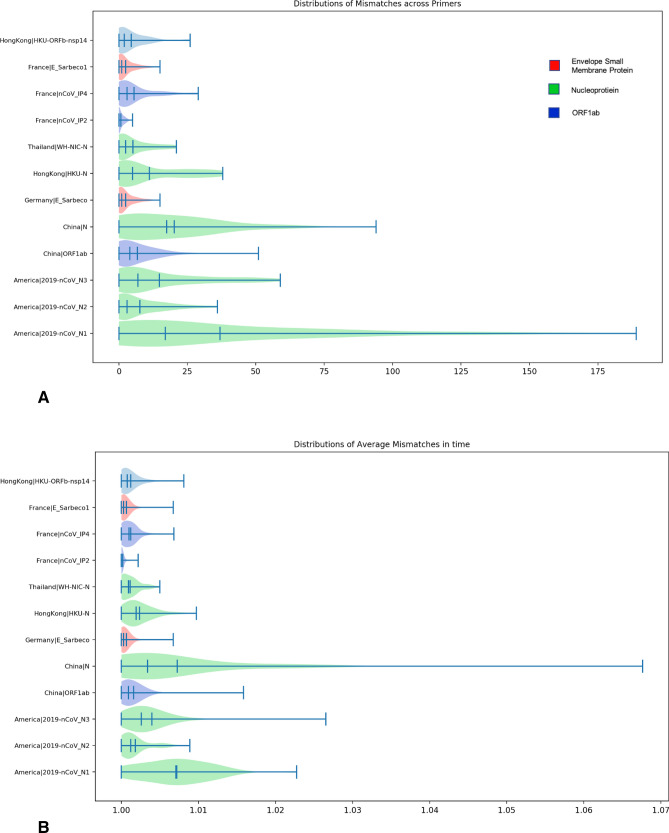
Rapid tests for active SARS-CoV-2 infections rely on reverse transcription polymerase chain reaction (RT-PCR). RT-PCR uses reverse transcription of RNA into complementary DNA (cDNA) and amplification of specific DNA (primer and probe) targets using polymerase chain reaction (PCR). The technology makes rapid and specific identification of the virus possible based on sequence homology of nucleic acid sequence and is much faster than tissue culture or animal cell models. However the technique can lose sensitivity over time as the virus evolves and the target sequences diverge from the selective primer sequences. Different primer sequences have been adopted in different geographic regions. As we rely on these existing RT-PCR primers to track and manage the spread of the Coronavirus, it is imperative to understand how SARS-CoV-2 mutations, over time and geographically, diverge from existing primers used today. In this study, we analyze the performance of the SARS-CoV-2 primers in use today by measuring the number of mismatches between primer sequence and genome targets over time and spatially. We find that there is a growing number of mismatches, an increase by 2% per month, as well as a high specificity of virus based on geographic location.
快速检测活 SARS-CoV-2 感染依赖于逆转录聚合酶链反应 (RT-PCR)。RT-PCR 使用逆转录将 RNA 转化为互补 DNA (cDNA),并使用聚合酶链反应 (PCR) 对特定的 DNA (引物和探针) 进行扩增。该技术基于核酸序列的序列同源性,能够快速、特异性地识别病毒,比组织培养或动物细胞模型更快。然而,随着病毒的进化和目标序列与选择性引物序列的差异,该技术的灵敏度会逐渐降低。不同的引物序列已在不同的地理区域采用。由于我们依赖这些现有的 RT-PCR 引物来跟踪和管理冠状病毒的传播,因此了解 SARS-CoV-2 突变如何随时间和地理上与当今使用的现有引物发生分歧至关重要。在这项研究中,我们通过测量引物序列与基因组靶标之间的错配数量随时间和空间的变化,分析了当今使用的 SARS-CoV-2 引物的性能。我们发现,随着时间的推移,错配数量不断增加,每月增加 2%,并且基于地理位置具有很高的病毒特异性。