Laboratory for Molecular Medicine and Metabolism, Biotechnology Center, University of Yaoundé 1, 3851, Yaoundé, Cameroon.
Department of Virology, Centre Pasteur of Cameroon, Yaoundé, Cameroon.
Sci Rep. 2021 Apr 26;11(1):8968. doi: 10.1038/s41598-021-88598-6.
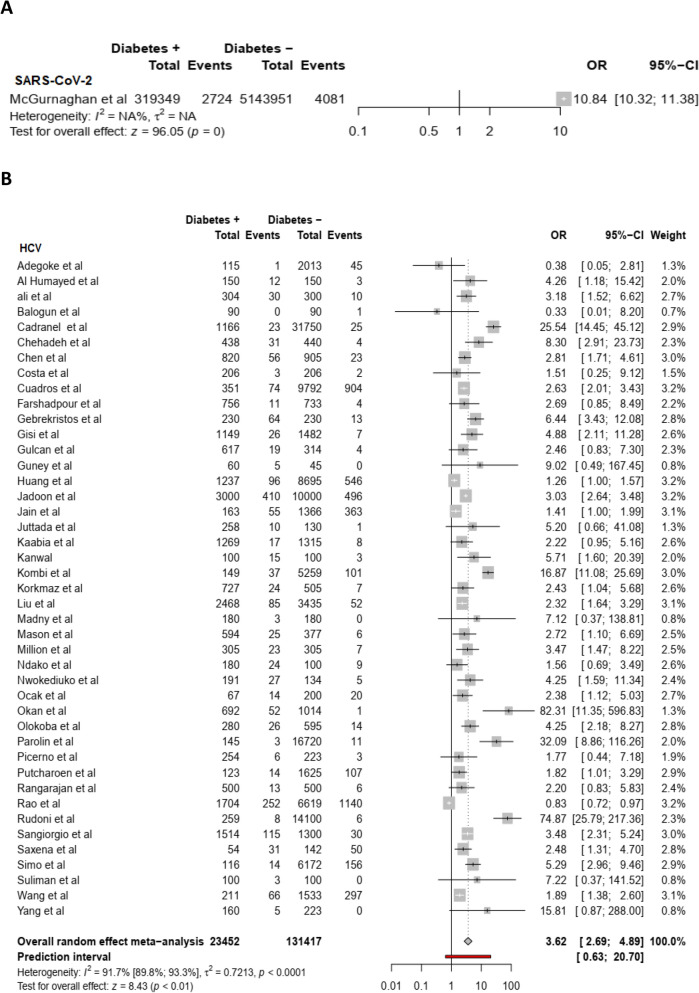
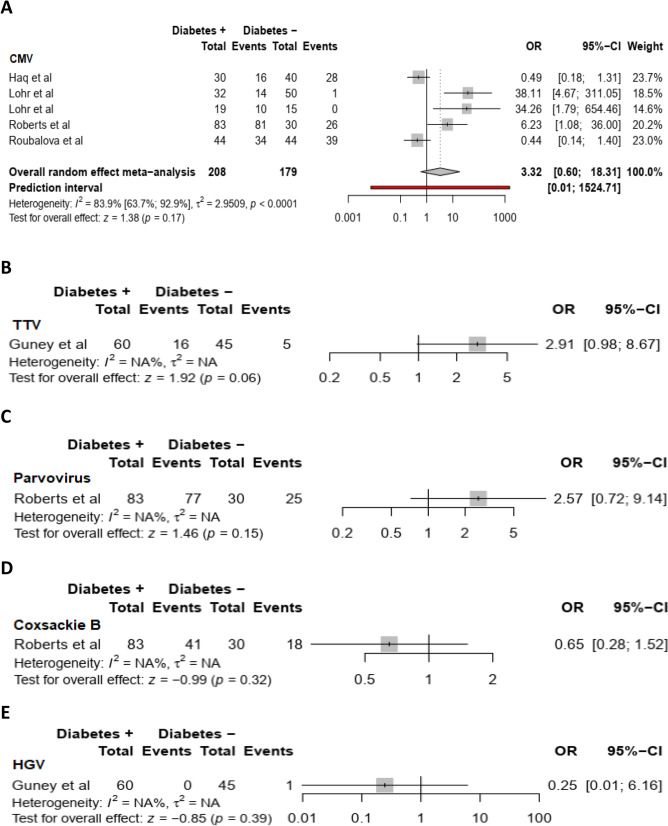
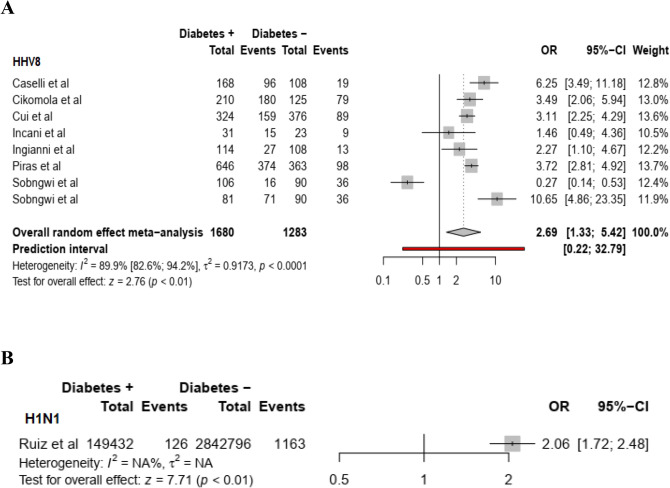
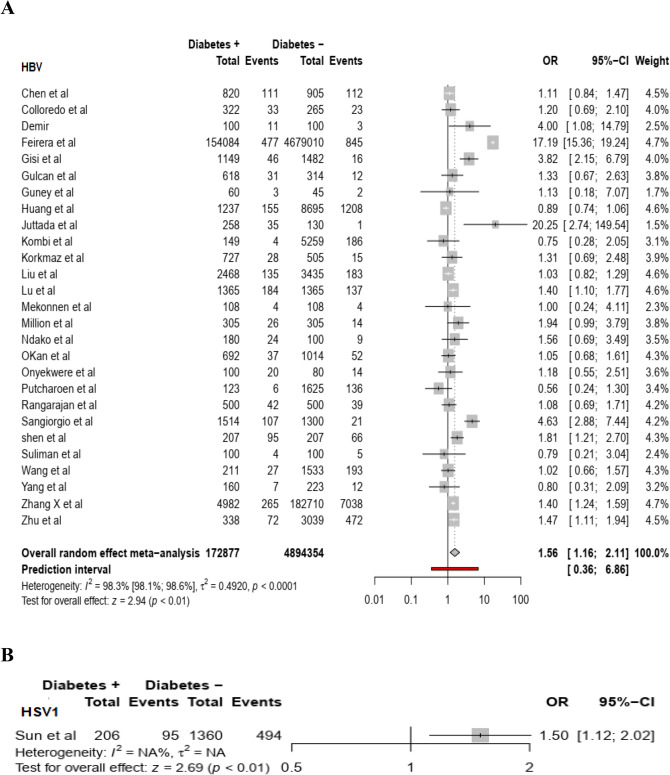
A significant number of studies invoked diabetes as a risk factor for virus infections, but the issue remains controversial. We aimed to examine whether non-autoimmune diabetes mellitus enhances the risk of virus infections compared with the risk in healthy individuals without non-autoimmune diabetes mellitus. In this systematic review and meta-analysis, we assessed case-control and cohort studies on the association between non-autoimmune diabetes and viruses. We searched PubMed, Embase, Cochrane Database of Systematic Reviews, Cochrane Central Register of Controlled Trials, and Web of Science with no language restriction, to identify articles published until February 15, 2021. The main outcome assessment was the risk of virus infection in individuals with non-autoimmune diabetes. We used a random-effects model to pool individual studies and assessed heterogeneity (I) using the χ2 test on Cochrane's Q statistic. This study is registered with PROSPERO, number CRD42019134142. Out of 3136 articles identified, we included 68 articles (90 studies, as the number of virus and or diabetes phenotype varied between included articles). The summary OR between non-autoimmune diabetes and virus infections risk were, 10.8(95% CI: 10.3-11.4; 1-study) for SARS-CoV-2; 3.6(95%CI: 2.7-4.9, I = 91.7%; 43-studies) for HCV; 2.7(95% CI: 1.3-5.4, I = 89.9%, 8-studies;) for HHV8; 2.1(95% CI: 1.7-2.5; 1-study) for H1N1 virus; 1.6(95% CI: 1.2-2.13, I = 98.3%, 27-studies) for HBV; 1.5(95% CI: 1.1-2.0; 1-study) for HSV1; 3.5(95% CI: 0.6-18.3 , I = 83.9%, 5-studies) for CMV; 2.9(95% CI: 1-8.7, 1-study) for TTV; 2.6(95% CI: 0.7-9.1, 1-study) for Parvovirus B19; 0.7(95% CI: 0.3-1.5 , 1-study) for coxsackie B virus; and 0.2(95% CI: 0-6.2; 1-study) for HGV. Our findings suggest that, non-autoimmune diabetes is associated with increased susceptibility to viruses especially SARS-CoV-2, HCV, HHV8, H1N1 virus, HBV and HSV1. Thus, these viruses deserve more attention from diabetes health-care providers, researchers, policy makers, and stakeholders for improved detection, overall proper management, and efficient control of viruses in people with non-autoimmune diabetes.
大量研究表明糖尿病是病毒感染的一个风险因素,但这一问题仍存在争议。我们旨在研究与非自身免疫性糖尿病患者相比,非自身免疫性糖尿病是否会增加病毒感染的风险。在这项系统评价和荟萃分析中,我们评估了非自身免疫性糖尿病与病毒之间关联的病例对照和队列研究。我们在 PubMed、Embase、Cochrane 系统评价数据库、Cochrane 对照试验中心注册库和 Web of Science 上进行了无语言限制的检索,以确定截至 2021 年 2 月 15 日发表的文章。主要结局评估是个体患非自身免疫性糖尿病时发生病毒感染的风险。我们使用随机效应模型对个体研究进行汇总,并使用 Cochrane's Q 统计量的 χ2 检验评估异质性 (I)。本研究已在 PROSPERO 注册,注册号为 CRD42019134142。在 3136 篇文章中,我们纳入了 68 篇文章(90 项研究,因为纳入文章中病毒和/或糖尿病表型的数量不同)。非自身免疫性糖尿病与病毒感染风险之间的汇总 OR 为:SARS-CoV-2 为 10.8(95%CI:10.3-11.4;1 项研究);丙型肝炎病毒为 3.6(95%CI:2.7-4.9,I=91.7%;43 项研究);HHV8 为 2.7(95%CI:1.3-5.4,I=89.9%,8 项研究);甲型 H1N1 病毒为 2.1(95%CI:1.7-2.5;1 项研究);乙型肝炎病毒为 1.6(95%CI:1.2-2.13,I=98.3%,27 项研究);单纯疱疹病毒 1 型为 1.5(95%CI:1.1-2.0;1 项研究);巨细胞病毒为 3.5(95%CI:0.6-18.3,I=83.9%,5 项研究);TTV 为 2.9(95%CI:1-8.7,1 项研究);细小病毒 B19 为 2.6(95%CI:0.7-9.1,1 项研究);柯萨奇 B 病毒为 0.7(95%CI:0.3-1.5,1 项研究);庚型肝炎病毒为 0.2(95%CI:0-6.2;1 项研究)。我们的研究结果表明,非自身免疫性糖尿病与病毒易感性增加有关,特别是 SARS-CoV-2、丙型肝炎病毒、HHV8、甲型 H1N1 病毒、乙型肝炎病毒和单纯疱疹病毒 1 型。因此,这些病毒值得糖尿病医护人员、研究人员、政策制定者和利益相关者给予更多关注,以提高对非自身免疫性糖尿病患者中病毒的检测、全面适当的管理和有效控制。