Vivian L. Smith Department of Neurosurgery, University of Texas Health Science Center at Houston, Houston, Texas 77030, United States.
Department of Neurosurgery, Brigham and Women's Hospital, Harvard Medical School, Boston, Massachusetts 02115, United States.
ACS Appl Mater Interfaces. 2021 May 12;13(18):20960-20973. doi: 10.1021/acsami.0c22587. Epub 2021 Apr 27.
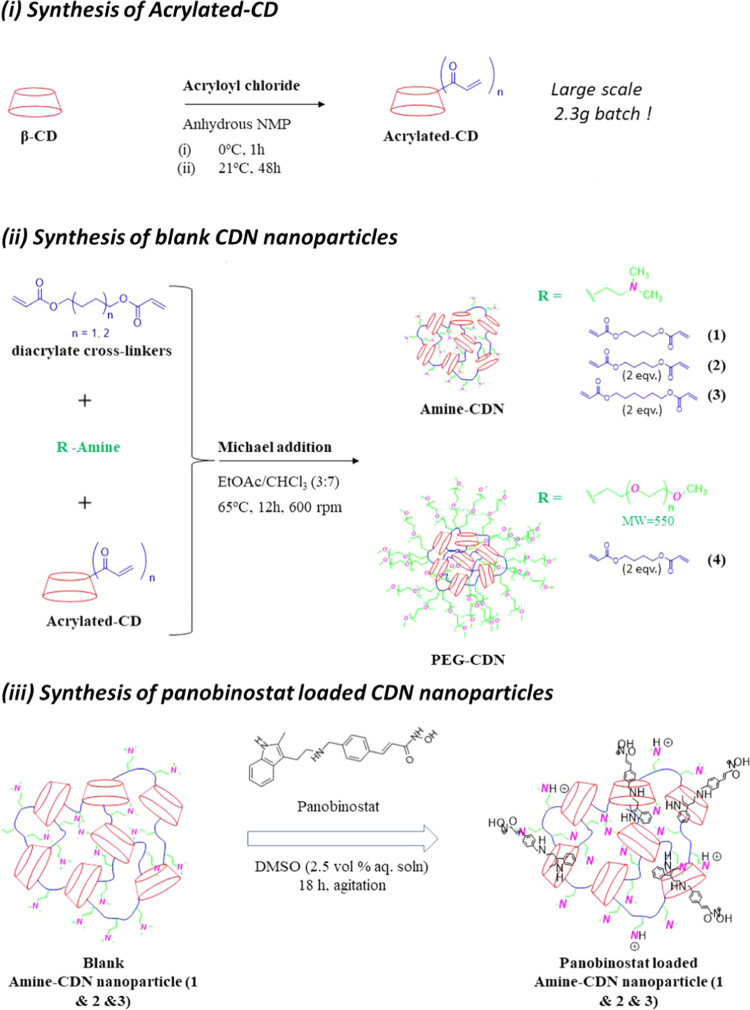
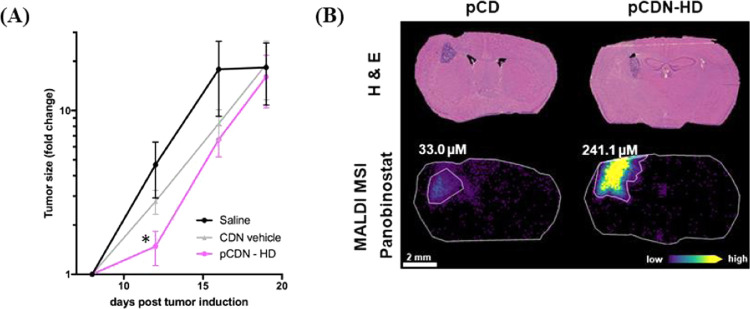
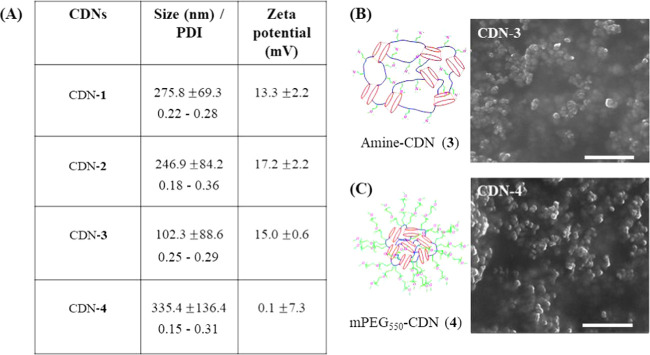
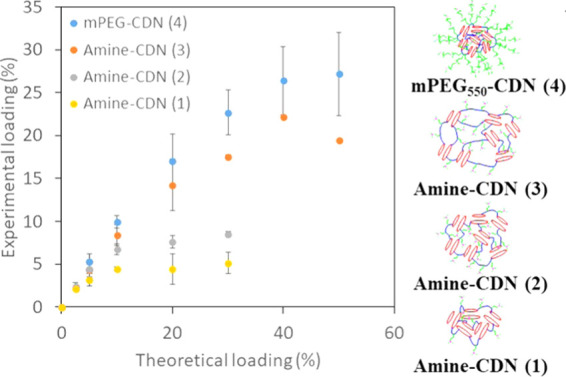
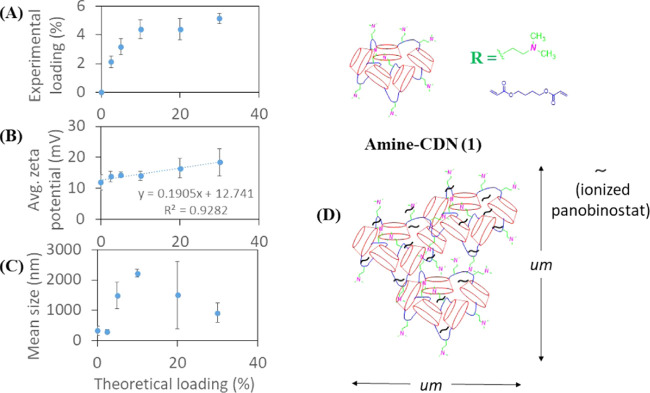
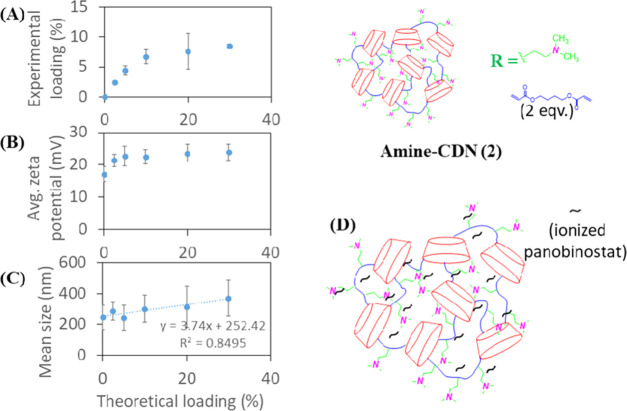
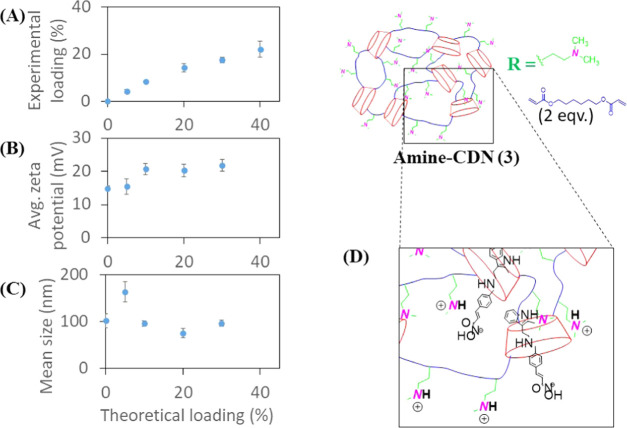
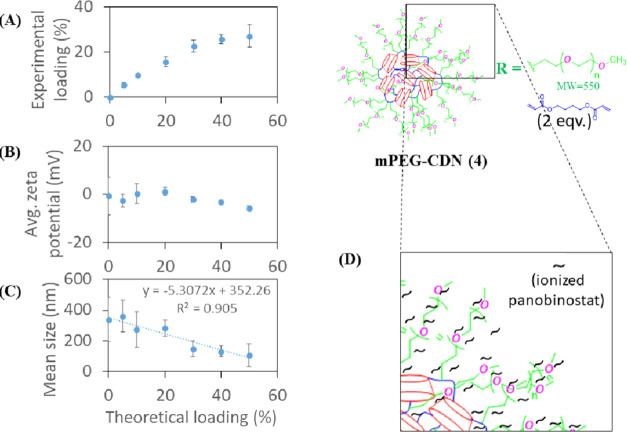
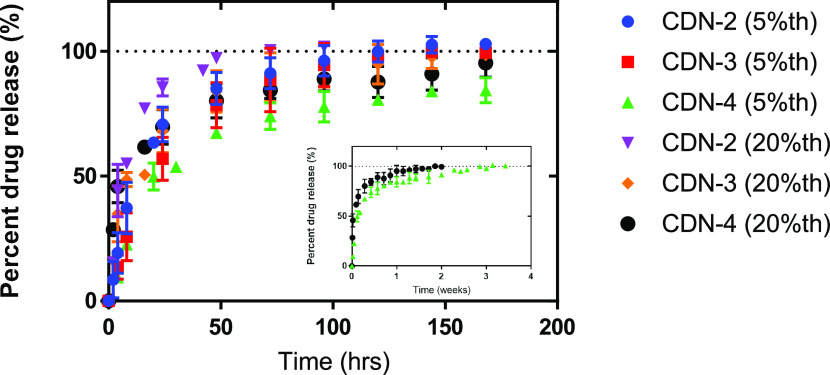
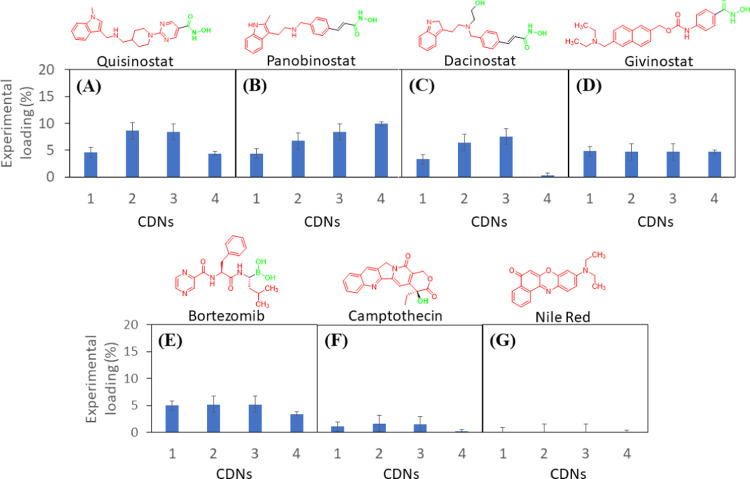
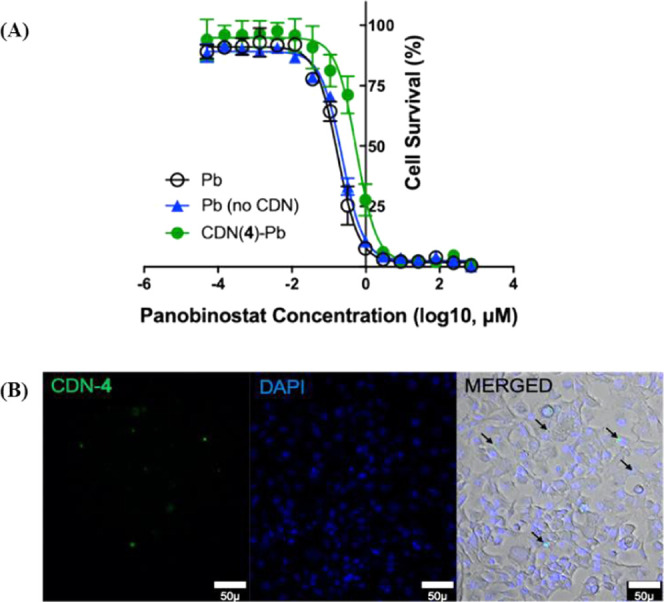
Therapeutic development of histone deacetylase inhibitors (HDACi) has been hampered by a number of barriers to drug delivery, including poor solubility and inadequate tissue penetration. Nanoparticle encapsulation could be one approach to improve the delivery of HDACi to target tissues; however, effective and generalizable loading of HDACi within nanoparticle systems remains a long-term challenge. We hypothesized that the common terminally ionizable moiety on many HDACi molecules could be capitalized upon for loading in polymeric nanoparticles. Here, we describe the simple, efficient formulation of a novel library of β-cyclodextrin-poly (β-amino ester) networks (CDN) to achieve this goal. We observed that network architecture was a critical determinant of CDN encapsulation of candidate molecules, with a more hydrophobic core enabling effective self-assembly and a PEGylated surface enabling high loading (up to ∼30% w/w), effective self-assembly of the nanoparticle, and slow release of drug into aqueous media (up to 24 days) for the model HDACi panobinostat. We next constructed a library of CDNs to encapsulate various small, hydrophobic, terminally ionizable molecules (panobinostat, quisinostat, dacinostat, givinostat, bortezomib, camptothecin, nile red, and cytarabine), which yielded important insights into the structural requirements for effective drug loading and CDN self-assembly. Optimized CDN nanoparticles were taken up by GL261 cells in culture and a released panobinostat was confirmed to be bioactive. Panobinostat-loaded CDNs were next administered by convection-enhanced delivery (CED) to mice bearing intracranial GL261 tumors. These studies confirm that CDN encapsulation enables a higher deliverable dose of drug to effectively slow tumor growth. Matrix-assisted laser desorption/ionization (MALDI) analysis on tissue sections confirms higher exposure of tumor to drug, which likely accounts for the therapeutic effects. Taken in sum, these studies present a novel nanocarrier platform for encapsulation of HDACi via both ionic and hydrophobic interactions, which is an important step toward better treatment of disease via HDACi therapy.
组蛋白去乙酰化酶抑制剂(HDACi)的治疗开发受到许多药物输送障碍的阻碍,包括溶解度差和组织渗透不足。纳米颗粒包封可能是提高 HDACi 递送到靶组织的一种方法;然而,在纳米颗粒系统中有效和可推广地加载 HDACi 仍然是一个长期挑战。我们假设,许多 HDACi 分子上常见的末端可离子化部分可以被利用来在聚合物纳米颗粒中加载。在这里,我们描述了一种新型β-环糊精-聚(β-氨基酯)网络(CDN)的简单、高效配方,以实现这一目标。我们观察到网络结构是 CDN 封装候选分子的关键决定因素,具有更疏水核的结构能够实现有效的自组装,而具有 PEG 化表面的结构能够实现高载药量(高达约 30%w/w)、有效的纳米颗粒自组装和药物在水性介质中的缓慢释放(长达 24 天),用于模型 HDACi 帕比司他。接下来,我们构建了一个 CDN 文库,以封装各种小的、疏水的、末端可离子化的分子(帕比司他、奎斯他汀、达昔司他汀、吉维司他、硼替佐米、喜树碱、尼罗红和阿糖胞苷),这为有效药物加载和 CDN 自组装的结构要求提供了重要的见解。优化的 CDN 纳米颗粒被培养中的 GL261 细胞摄取,释放的帕比司他被证实具有生物活性。随后,通过对流增强递送(CED)将载有帕比司他的 CDN 递送至颅内携带 GL261 肿瘤的小鼠。这些研究证实,CDN 包封能够使更多的药物有效递送到肿瘤部位,从而减缓肿瘤生长。组织切片的基质辅助激光解吸/电离(MALDI)分析证实了肿瘤对药物的更高暴露,这可能是治疗效果的原因。总之,这些研究提出了一种新的纳米载体平台,用于通过离子和疏水相互作用封装 HDACi,这是通过 HDACi 治疗更好地治疗疾病的重要一步。