Umuhoza Therese, Bulimo Wallace D, Oyugi Julius, Musabyimana Jean Pierre, Kinengyere Alison A, Mancuso James D
Institute of Tropical and Infectious Diseases, University of Nairobi, Nairobi, Kenya.
Department of Emerging Infectious Diseases, United States Army Medical Directorate - Africa, Nairobi, Kenya.
PLoS One. 2021 Apr 27;16(4):e0249992. doi: 10.1371/journal.pone.0249992. eCollection 2021.
Viruses are responsible for a large proportion of acute respiratory tract infections (ARTIs). Human influenza, parainfluenza, respiratory-syncytial-virus, and adenoviruses are among the leading cause of ARTIs. Epidemiological evidence of those respiratory viruses is limited in the East Africa Community (EAC) region. This review sought to identify the prevalence of respiratory syncytial virus, parainfluenza, and adenoviruses among cases of ARTI in the EAC from 2007 to 2020.
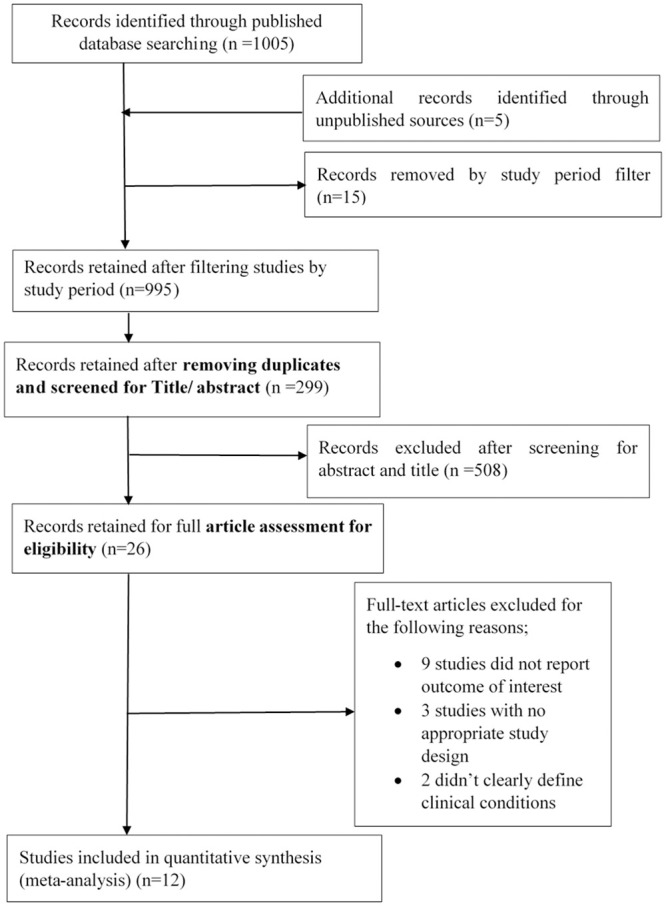
A literature search was conducted in Medline, Global Index Medicus, and the grey literature from public health institutions and programs in the EAC. Two independent reviewers performed data extraction. We used a random effects model to pool the prevalence estimate across studies. We assessed heterogeneity with the I2 statistic, and Cochran's Q test, and further we did subgroup analysis. This review was registered with PROSPERO under registration number CRD42018110186.
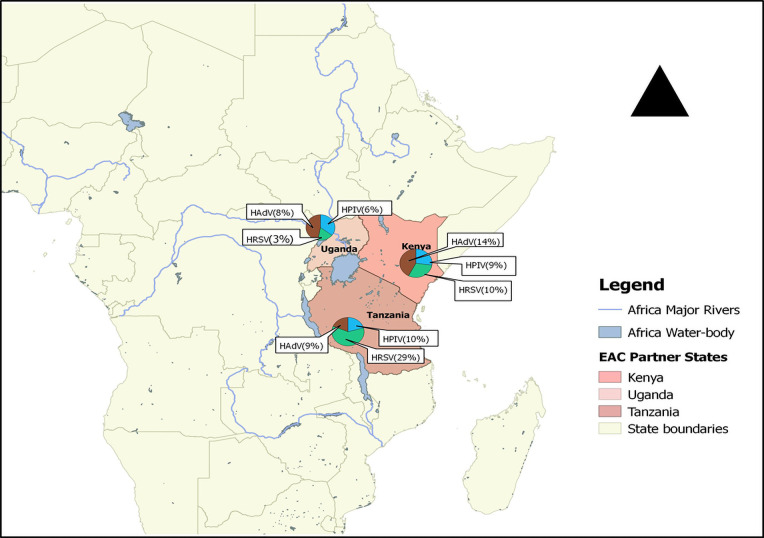
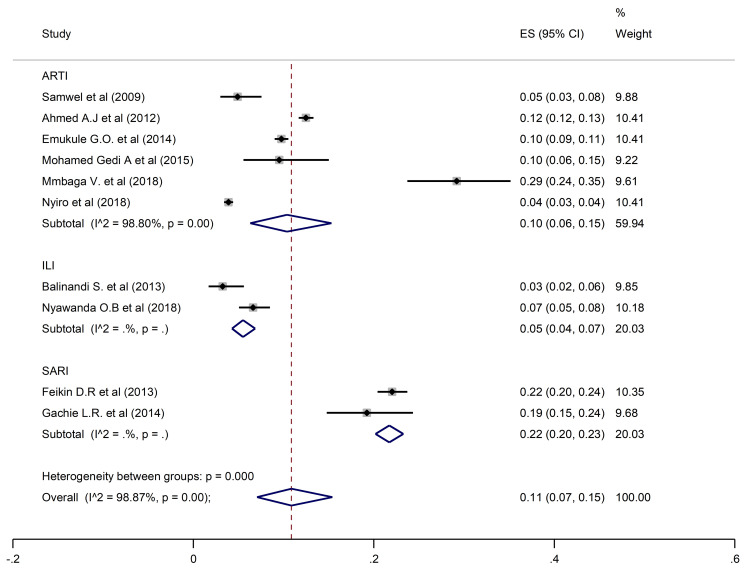
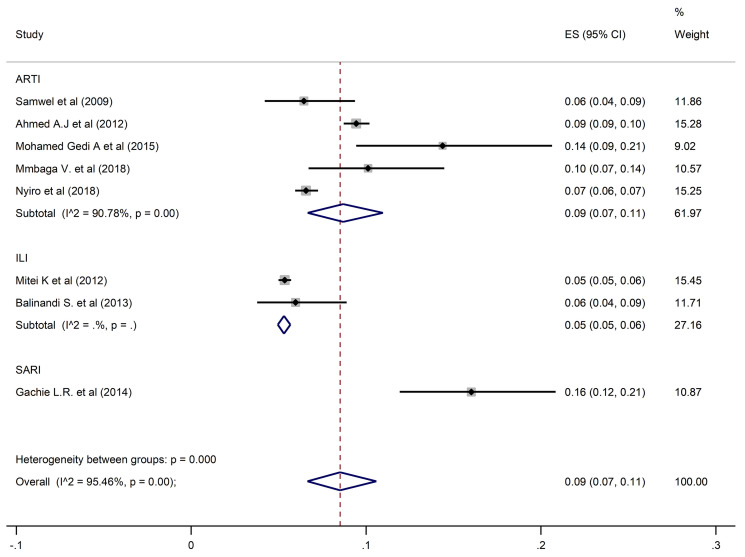
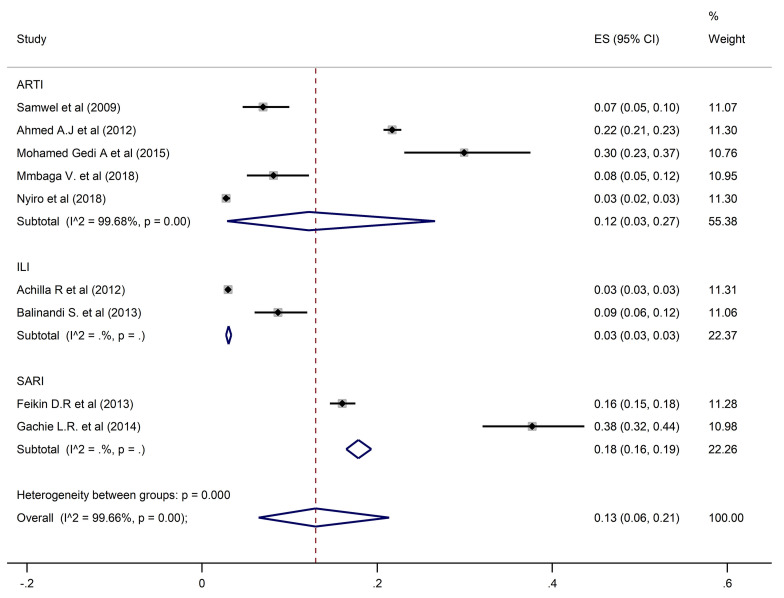
A total of 12 studies met the eligibility criteria for the studies documented from 2007 to 2020. The overall pooled prevalence of adenoviruses was 13% (95% confidence interval [CI]: 6-21, N = 28829), respiratory syncytial virus 11% (95% CI: 7-15, N = 22627), and parainfluenza was 9% (95% CI: 7-11, N = 28363). Pooled prevalence of reported ARTIs, all ages, and locality varied in the included studies. Studies among participants with severe acute respiratory disease had a higher pooled prevalence of all the three viruses. Considerable heterogeneity was noted overall and in subgroup analysis.
Our findings indicate that human adenoviruses, respiratory syncytial virus and parainfluenza virus are prevalent in Kenya, Tanzania, and Uganda. These three respiratory viruses contribute substantially to ARTIs in the EAC, particularly among those with severe disease and those aged five and above.
病毒是导致大部分急性呼吸道感染(ARTIs)的原因。人类流感病毒、副流感病毒、呼吸道合胞病毒和腺病毒是急性呼吸道感染的主要病因。在东非共同体(EAC)地区,关于这些呼吸道病毒的流行病学证据有限。本综述旨在确定2007年至2020年期间东非共同体急性呼吸道感染病例中呼吸道合胞病毒、副流感病毒和腺病毒的流行情况。
在医学文献数据库(Medline)、全球医学索引(Global Index Medicus)以及东非共同体公共卫生机构和项目的灰色文献中进行文献检索。两名独立的评审员进行数据提取。我们使用随机效应模型汇总各项研究的患病率估计值。我们用I²统计量和 Cochr an Q检验评估异质性,并进一步进行亚组分析。本综述已在国际系统评价前瞻性注册库(PROSPERO)注册,注册号为CRD42018110186。
共有12项研究符合2007年至2020年记录的研究纳入标准。腺病毒的总体合并患病率为13%(95%置信区间[CI]:6 - 21,N = 28829),呼吸道合胞病毒为11%(95% CI:7 - 15,N = 22627),副流感病毒为9%(95% CI:7 - 11,N = 28363)。纳入研究中,报告的急性呼吸道感染、所有年龄段和地区的合并患病率各不相同。在患有严重急性呼吸道疾病的参与者中进行的研究,这三种病毒的合并患病率更高。总体及亚组分析均发现存在相当大的异质性。
我们的研究结果表明,人类腺病毒、呼吸道合胞病毒和副流感病毒在肯尼亚、坦桑尼亚和乌干达流行。这三种呼吸道病毒在很大程度上导致了东非共同体的急性呼吸道感染,特别是在患有严重疾病的人群以及五岁及以上人群中。