Nyiro Joyce Uchi, Munywoki Patrick, Kamau Everlyn, Agoti Charles, Gichuki Alex, Etyang Timothy, Otieno Grieven, Nokes D James
Virus Epidemiology and Control, KEMRI-Wellcome Trust Research programme, Kilifi, +254, Kenya.
Public Health, Pwani University, Kilifi, +254, Kenya.
Wellcome Open Res. 2018 Jul 25;3:89. doi: 10.12688/wellcomeopenres.14662.1. eCollection 2018.
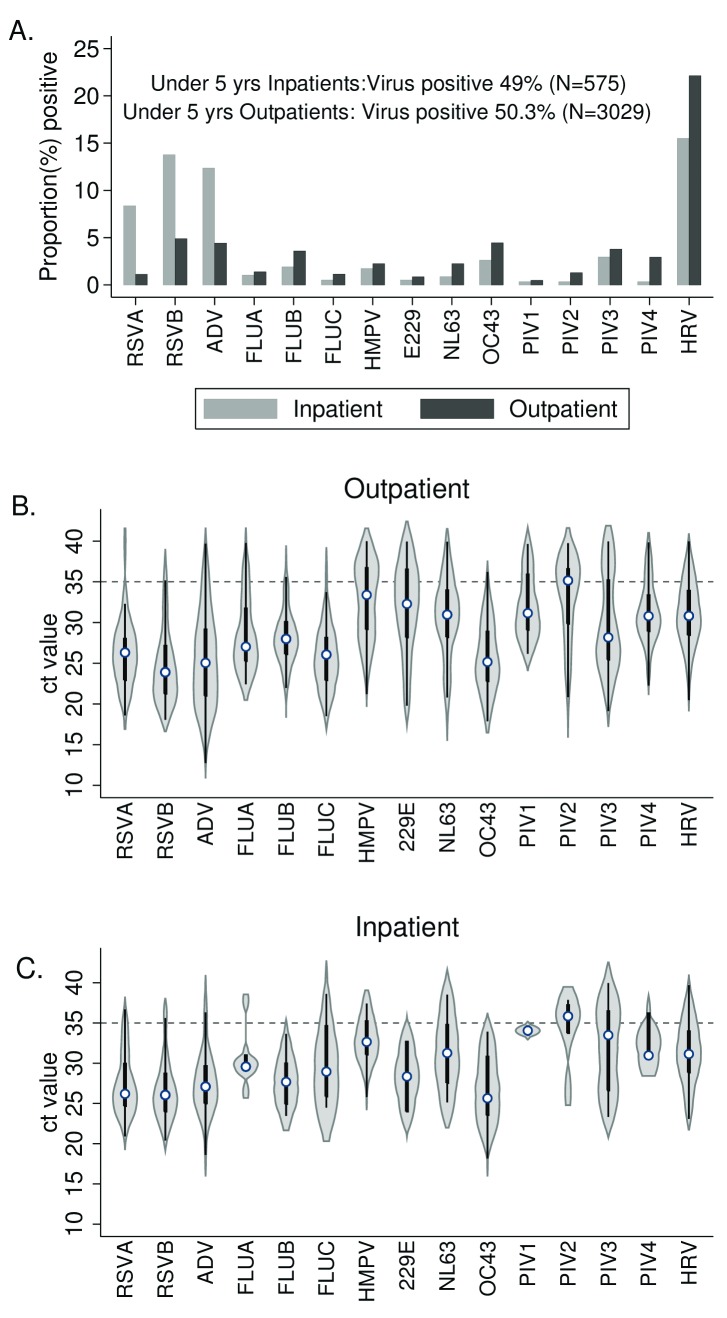
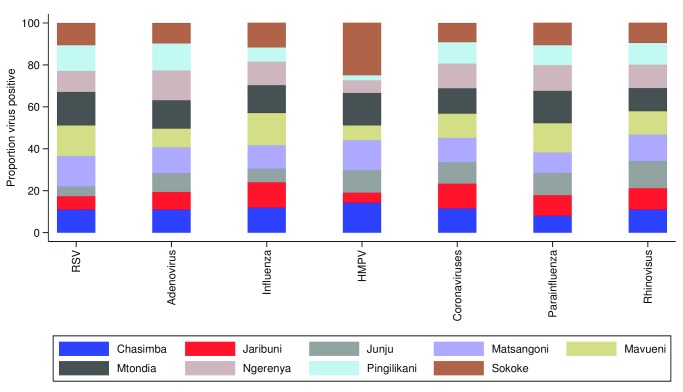
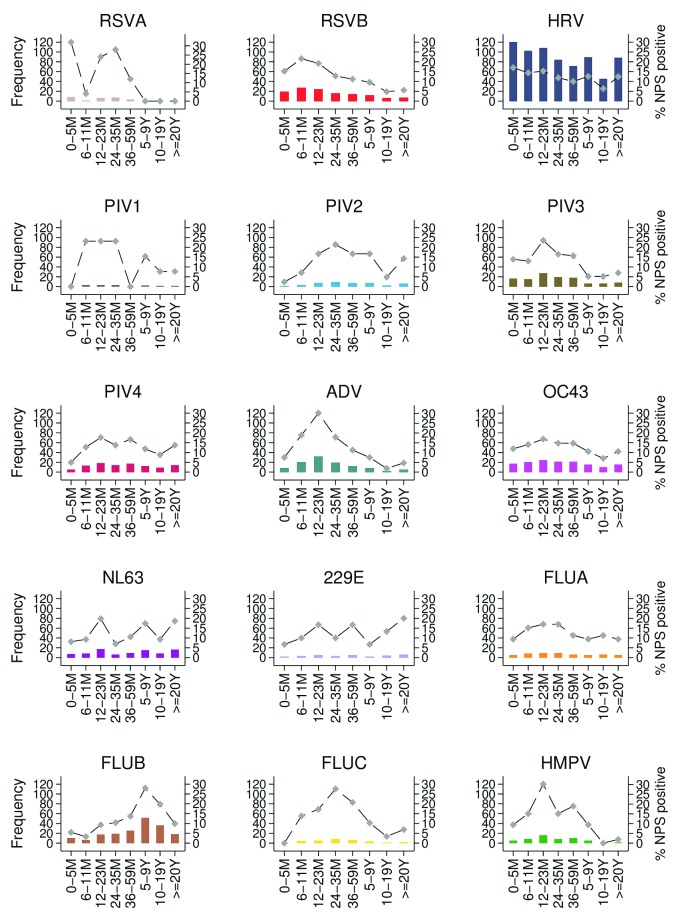
Endemic and seasonally recurring respiratory viruses are a major cause of disease and death globally. The burden is particularly severe in developing countries. Improved understanding of the source of infection, pathways of spread and persistence in communities would be of benefit in devising intervention strategies. We report epidemiological data obtained through surveillance of respiratory viruses at nine outpatient health facilities within the Kilifi Health and Demographic Surveillance System, Kilifi County, coastal Kenya, between January and December 2016. Nasopharyngeal swabs were collected from individuals of all ages presenting with acute respiratory infection (ARI) symptoms (up to 15 swabs per week per facility) and screened for 15 respiratory viruses using real-time PCR. Paediatric inpatient surveillance at Kilifi County Hospital for respiratory viruses provided comparative data. Over the year, 5,647 participants were sampled, of which 3,029 (53.7%) were aged <5 years. At least one target respiratory virus was detected in 2,380 (42.2%) of the samples; the most common being rhinovirus 18.6% (1,050), influenza virus 6.9% (390), coronavirus 6.8% (387), parainfluenza virus 6.6% (371), respiratory syncytial virus (RSV) 3.9% (219) and adenovirus 2.7% (155). Virus detections were higher among <5-year-olds compared to older children and adults (50.3% vs 32.7%, respectively; χ (1) =177.3, P=0.0001). Frequency of viruses did not differ significantly by facility (χ (8) =13.38, P=0.072). However, prevalence was significantly higher among inpatients than outpatients in <5-year-olds for RSV (22.1% vs 6.0%; χ (1) = 159.4, P=0.0001), and adenovirus (12.4% vs 4.4%, χ (1) =56.6, P=0.0001). Respiratory virus infections are common amongst ARI outpatients in this coastal Kenya setting, particularly in young children. Rhinovirus predominance warrants further studies on the health and socio-economic implications. RSV and adenovirus were more commonly associated with severe disease. Further analysis will explore epidemiological transmission patterns with the addition of virus sequence data.
地方性和季节性复发的呼吸道病毒是全球疾病和死亡的主要原因。在发展中国家,这一负担尤为严重。更好地了解感染源、传播途径以及在社区中的持续存在情况,将有助于制定干预策略。我们报告了2016年1月至12月期间在肯尼亚沿海基利菲县基利菲健康与人口监测系统内的9个门诊医疗机构对呼吸道病毒进行监测所获得的流行病学数据。从所有出现急性呼吸道感染(ARI)症状的各年龄段个体中采集鼻咽拭子(每个机构每周最多采集15份拭子),并使用实时聚合酶链反应(PCR)对15种呼吸道病毒进行筛查。基利菲县医院对呼吸道病毒的儿科住院患者监测提供了对比数据。在这一年中,共对5647名参与者进行了采样,其中3029名(53.7%)年龄小于5岁。在2380份(42.2%)样本中检测到至少一种目标呼吸道病毒;最常见的是鼻病毒,占18.6%(1050例),流感病毒占6.9%(390例),冠状病毒占6.8%(387例),副流感病毒占6.6%(371例),呼吸道合胞病毒(RSV)占3.9%(219例),腺病毒占2.7%(155例)。与大龄儿童和成年人相比,5岁以下儿童的病毒检测率更高(分别为50.3%和32.7%;χ²(1)=177.3,P=0.0001)。各医疗机构的病毒检出频率无显著差异(χ²(8)=13.38,P=0.072)。然而,在5岁以下儿童中,住院患者的RSV患病率显著高于门诊患者(22.1%对6.0%;χ²(1)=159.4,P=0.0001),腺病毒患病率也显著高于门诊患者(12.4%对4.4%,χ²(1)=56.6,P=0.0001)。在肯尼亚沿海地区的ARI门诊患者中,呼吸道病毒感染很常见,尤其是在幼儿中。鼻病毒占主导地位,有必要进一步研究其对健康和社会经济的影响。RSV和腺病毒与严重疾病的关联更为常见。进一步的分析将结合病毒序列数据探索流行病学传播模式。