Departments of Pediatrics and Medical and Molecular Genetics Indiana University School of Medicine Indianapolis IN.
Monroe Carell Jr. Children's Hospital at Vanderbilt Nashville TN.
J Am Heart Assoc. 2021 May 4;10(9):e017731. doi: 10.1161/JAHA.120.017731. Epub 2021 Apr 28.
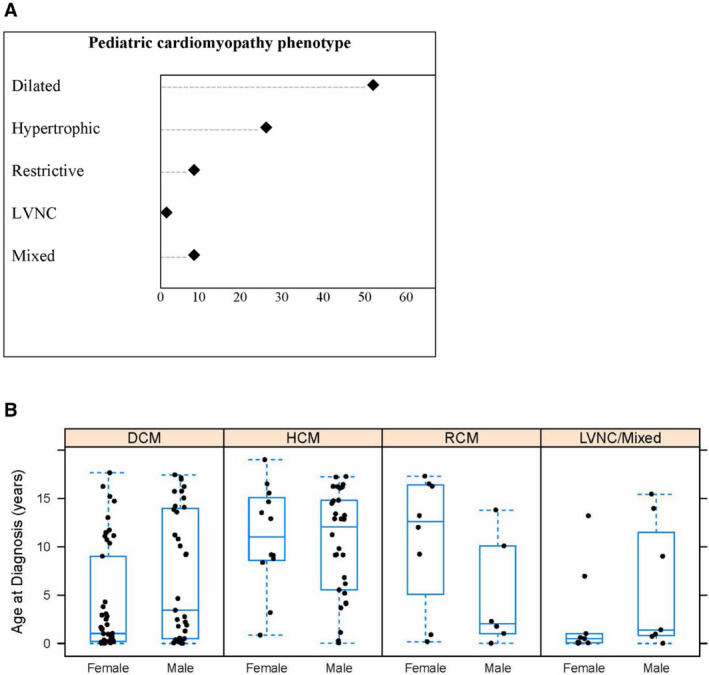
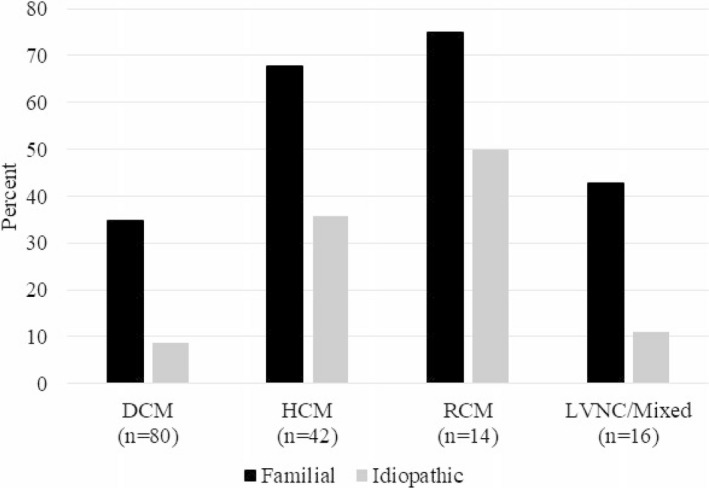
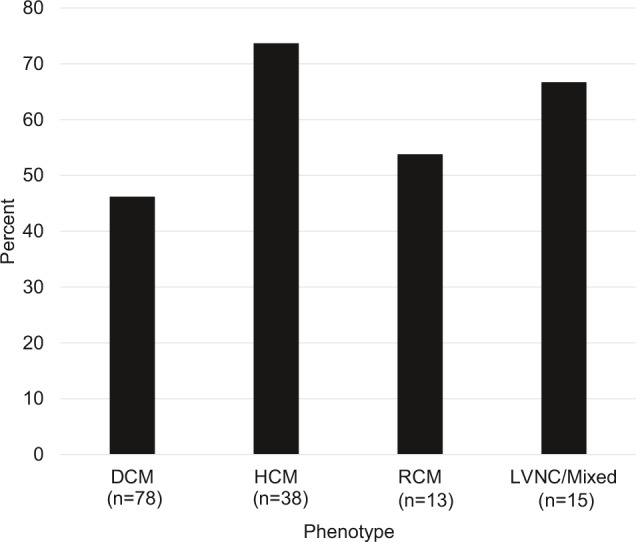
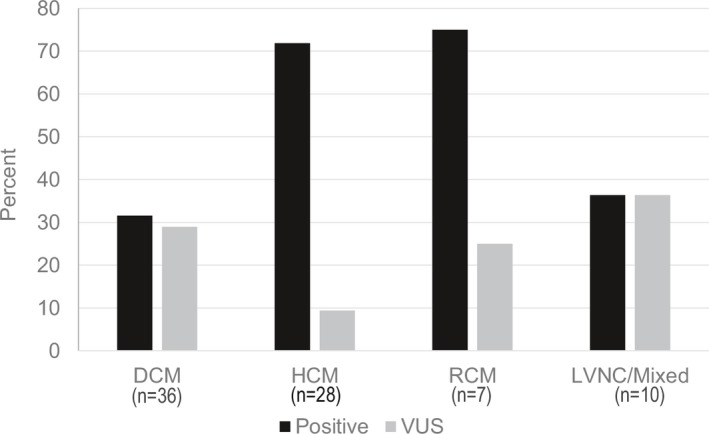
Background Pediatric cardiomyopathy is a genetically heterogeneous disease with substantial morbidity and mortality. Current guidelines recommend genetic testing in children with hypertrophic, dilated, or restrictive cardiomyopathy, but practice variations exist. Robust data on clinical testing practices and diagnostic yield in children are lacking. This study aimed to identify the genetic causes of cardiomyopathy in children and to investigate clinical genetic testing practices. Methods and Results Children with familial or idiopathic cardiomyopathy were enrolled from 14 institutions in North America. Probands underwent exome sequencing. Rare sequence variants in 37 known cardiomyopathy genes were assessed for pathogenicity using consensus clinical interpretation guidelines. Of the 152 enrolled probands, 41% had a family history of cardiomyopathy. Of 81 (53%) who had undergone clinical genetic testing for cardiomyopathy before enrollment, 39 (48%) had a positive result. Genetic testing rates varied from 0% to 97% between sites. A positive family history and hypertrophic cardiomyopathy subtype were associated with increased likelihood of genetic testing (=0.005 and =0.03, respectively). A molecular cause was identified in an additional 21% of the 63 children who did not undergo clinical testing, with positive results identified in both familial and idiopathic cases and across all phenotypic subtypes. Conclusions A definitive molecular genetic diagnosis can be made in a substantial proportion of children for whom the cause and heritable nature of their cardiomyopathy was previously unknown. Practice variations in genetic testing are great and should be reduced. Improvements can be made in comprehensive cardiac screening and predictive genetic testing in first-degree relatives. Overall, our results support use of routine genetic testing in cases of both familial and idiopathic cardiomyopathy. Registration URL: https://www.clinicaltrials.gov; Unique identifier: NCT01873963.
儿科心肌病是一种遗传异质性疾病,发病率和死亡率都很高。目前的指南建议对肥厚型、扩张型或限制型心肌病患儿进行基因检测,但实践中存在差异。缺乏儿童临床检测实践和诊断收益的可靠数据。本研究旨在确定儿童心肌病的遗传原因,并调查临床基因检测实践。
北美 14 家机构招募了有家族性或特发性心肌病的儿童。先证者接受外显子组测序。使用共识临床解读指南评估 37 种已知心肌病基因中的罕见序列变异是否具有致病性。在 152 名入组的先证者中,41%有心肌病家族史。在 81 名(53%)入组前已接受过心肌病临床基因检测的患者中,39 名(48%)检测结果阳性。各中心的基因检测率在 0%至 97%之间不等。阳性家族史和肥厚型心肌病亚型与基因检测可能性增加相关(=0.005 和 =0.03)。在未接受临床检测的 63 名儿童中,又有 21%确定了分子病因,阳性结果在家族性和特发性病例以及所有表型亚型中均有发现。
对于之前病因不明且遗传性质未知的儿童,相当一部分可明确分子遗传学诊断。基因检测的实践差异很大,应予以减少。可在一级亲属的全面心脏筛查和预测性基因检测中做出改进。总的来说,我们的研究结果支持对家族性和特发性心肌病病例常规进行基因检测。