Spiech Katherine M, Tripathy Purnima R, Woodcock Alex M, Sheth Nehal A, Collins Kimberly S, Kannegolla Karthik, Sinha Arjun D, Sharfuddin Asif A, Pratt Victoria M, Khalid Myda, Hains David S, Moe Sharon M, Skaar Todd C, Moorthi Ranjani N, Eadon Michael T
Department of Medicine, Indiana University School of Medicine, Indianapolis, IN 46202, USA.
Department of Medical and Molecular Genetics, Indiana University School of Medicine, Indianapolis, IN 46202, USA.
Life (Basel). 2020 Mar 26;10(4):32. doi: 10.3390/life10040032.
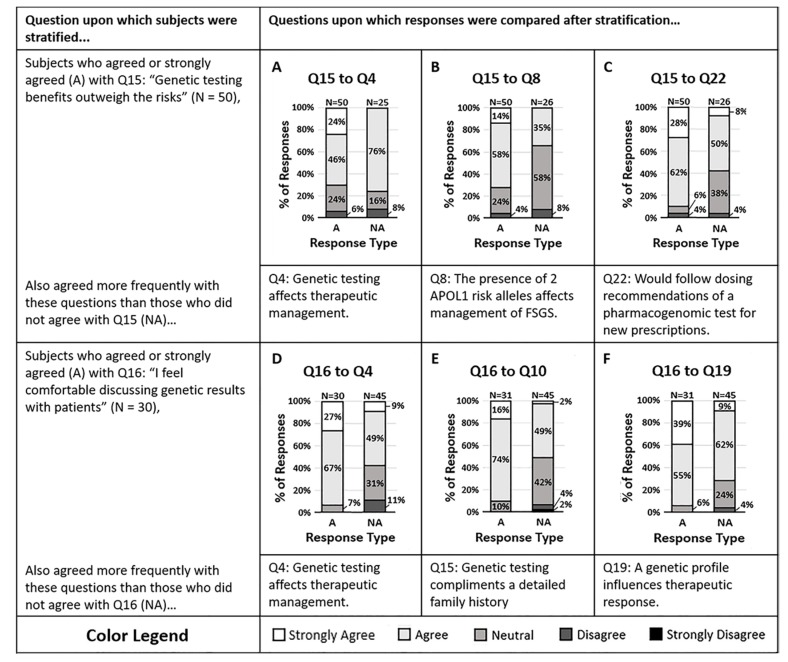
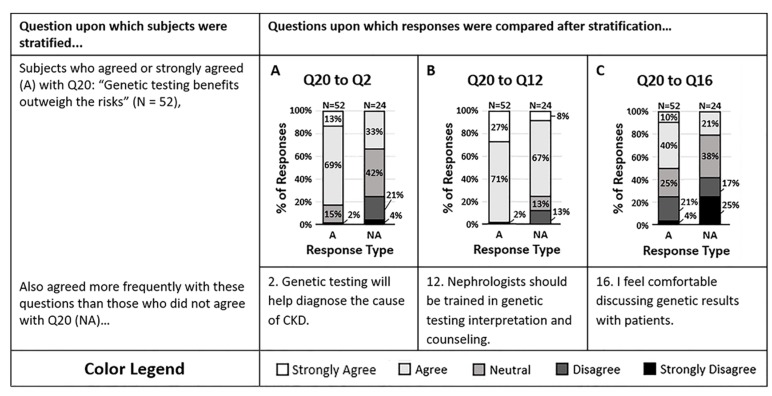
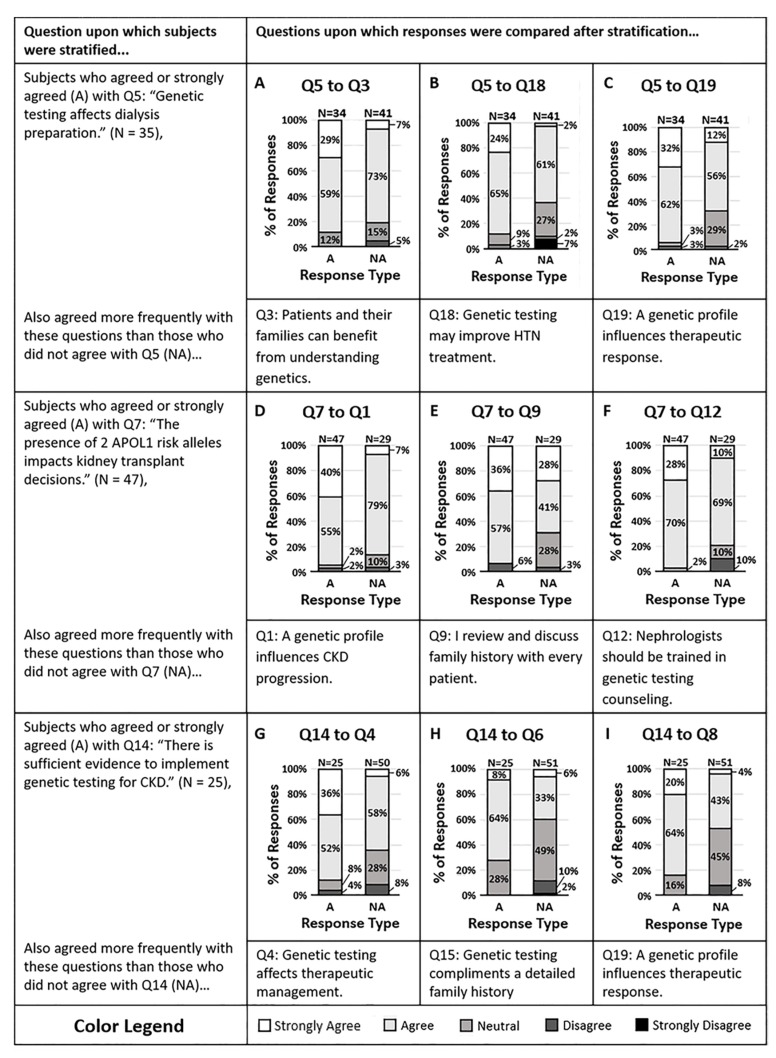
A precision health initiative was implemented across a multi-hospital health system, wherein a panel of genetic variants was tested and utilized in the clinical care of chronic kidney disease (CKD) patients. Pharmacogenomic predictors of antihypertensive response and genomic predictors of CKD were provided to clinicians caring for nephrology patients. To assess clinician knowledge, attitudes, and willingness to act on genetic testing results, a Likert-scale survey was sent to and self-administered by these nephrology providers (N = 76). Most respondents agreed that utilizing pharmacogenomic-guided antihypertensive prescribing is valuable (4.0 ± 0.7 on a scale of 1 to 5, where 5 indicates strong agreement). However, the respondents also expressed reluctance to use genetic testing for CKD risk stratification due to a perceived lack of supporting evidence (3.2 ± 0.9). Exploratory sub-group analyses associated this reluctance with negative responses to both knowledge and attitude discipline questions, thus suggesting reduced exposure to and comfort with genetic information. Given the evolving nature of genomic implementation in clinical care, further education is warranted to help overcome these perception barriers.
一项精准医疗计划在一个多医院医疗系统中实施,在该计划中,对一组基因变异进行了检测,并将其应用于慢性肾脏病(CKD)患者的临床护理中。为治疗肾脏病患者的临床医生提供了抗高血压反应的药物基因组学预测指标和CKD的基因组预测指标。为了评估临床医生对基因检测结果的了解程度、态度和采取行动的意愿,向这些肾脏病医疗服务提供者(N = 76)发送了一份李克特量表调查问卷,由他们自行填写。大多数受访者认为利用药物基因组学指导抗高血压药物处方是有价值的(在1至5分的量表上为4.0±0.7,其中5分表示强烈同意)。然而,由于认为缺乏支持证据,受访者也表示不愿将基因检测用于CKD风险分层(3.2±0.9)。探索性亚组分析将这种不愿与对知识和态度学科问题的负面回答联系起来,从而表明对基因信息的接触和接受程度较低。鉴于临床护理中基因组实施的不断发展,有必要进行进一步的教育,以帮助克服这些认知障碍。